The upcoming deployment of India’s Project Kusha—formally known as the Extended Range Air Defence System (ERADS)—promises a major shift in South Asia's security dynamics.
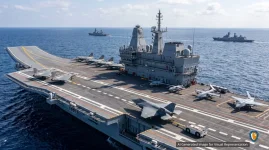
Spearheaded by the Defence Research and Development Organisation (DRDO), this homegrown initiative will work alongside the Indian Air Force's (IAF) existing S-400 Triumf systems to forge a comprehensive, multi-layered shield against diverse aerial dangers.
For rival military planners, this new long-range capability introduces a formidable anti-access/area-denial (A2/AD) challenge.
As the system moves closer to its projected phased induction between 2028 and 2030, defence experts are actively debating how regional forces will be forced to adapt to this highly protected airspace.
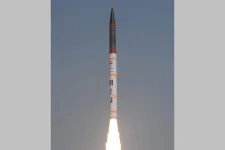
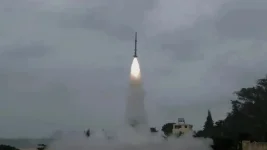
Recently, in July 2026, DRDO marked a major milestone by successfully conducting the first flight test of the Kusha interceptor at APJ Abdul Kalam Island off the coast of Odisha, validating its core technology against simulated high-speed threats.
Expanding the Layered Air Defence Network
Project Kusha operates on a robust three-tier defence model, utilising M1, M2, and M3 interceptor missiles to engage targets at varying distances.The M1 variant is built to neutralise hostile aircraft and cruise missiles at ranges between 120 and 150 kilometres.
The M2 stretches this protective envelope up to 250 kilometres, while the M3 serves as the ultimate long-range sentinel, capable of taking down airborne early warning aircraft and other strategic assets at 350 to 400 kilometres.
Crucially, the objective is not to immediately replace the Russian-built S-400, but to integrate seamlessly with it. This strategic overlap will significantly enhance the protection of vital infrastructure, military bases, and key national assets.
By employing multiple interceptors tailored for different altitudes and ranges, the system ensures outstanding operational resilience.
Altering Operational Planning and Forcing Stand-Off Tactics
The reality of modern air combat is that strike aircraft prefer to operate safely beyond the reach of enemy missiles. However, advanced long-range surface-to-air systems rapidly erode this safety buffer.Faced with an integrated web of long-range interceptors, adversary air forces must completely rethink their traditional attack strategies.
Flying close to fiercely defended zones now carries immense risks, especially when interception batteries are backed by powerful surveillance tools and early warning networks.
While this does not make aerial assaults impossible, it forces attackers to rely heavily on meticulous planning, electronic warfare support, flawless intelligence, and stand-off attack capabilities.
Consequently, one of the defining trends in current warfare is the shift towards stand-off precision weaponry.
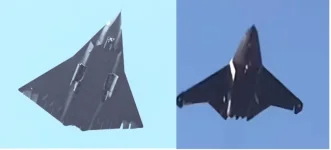
To avoid flying crewed aircraft directly into heavily fortified airspace, global air forces are heavily investing in long-range cruise missiles and unmanned aerial vehicles (UAVs) that can be launched from a safe distance.
The sheer reach of systems like Project Kusha will only accelerate this shift. Future enemy strike plans will inevitably prioritise keeping expensive, high-value jets far away from these lethal engagement zones.
Network-Centric Warfare and Electronic Countermeasures
Today, a nation's air defence is not defined by standalone missile launchers but by a highly interconnected network.Modern platforms merge advanced long-range radars, command centres, secure communications, and firing units into a unified battlefield picture.
Open-source data indicates that Project Kusha will feature an advanced S-band Active Electronically Scanned Array (AESA) radar with surveillance coverage exceeding 500 kilometres, directly linked to the IAF's Integrated Air Command and Control System (IACCS).
As both sides of the combat spectrum become increasingly digitised, maintaining secure communications and clear situational awareness is just as critical as the missiles themselves.
Electronic warfare (EW) is another indispensable pillar of modern conflict.
Instead of relying exclusively on physical missiles, militaries now use electronic attack and protection methods to disrupt enemy systems and secure their own.
As advanced air defence platforms integrate better digital sensors, electronic countermeasures evolve in tandem to jam or confuse them. This relentless technological race between sophisticated radars and jamming tools remains a central feature of 21st-century aerial combat.
Survivability Through Mobility and Intelligence
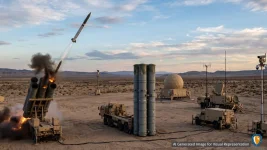
Mobility is a defining trait of modern long-range defence architectures, significantly boosting their chances of survival.By mounting radars, command posts, and launchers on mobile vehicles, operators can constantly shift their positions, making it incredibly difficult for the enemy to pinpoint and destroy them.
Project Kusha relies heavily on Transporter-Erector-Launchers (TELs) for swift and flexible deployment across various terrains.
Even with massive leaps in radar technology, the physical environment continues to shape military engagements. Mountains, deep valleys, and the natural curve of the Earth can create blind spots in radar coverage and disrupt communications.
Future air operations will increasingly require a seamless blend of geographic awareness and cutting-edge sensor data. In this era of highly mobile and networked defences, real-time intelligence is the ultimate deciding factor.
High-resolution satellite imagery, airborne reconnaissance, and signal intelligence allow commanders to see the entire battlefield clearly, while mobile units try to hide their tracks through camouflage and disciplined emissions control.
A Milestone for Indigenous Defence
Beyond its tactical brilliance, Project Kusha is a monumental achievement for India’s self-reliance in the defence sector.Granted Acceptance of Necessity (AoN) by the Ministry of Defence in September 2023 with a budget of ₹21,700 crore for five IAF squadrons, this domestic programme drastically cuts down the nation's reliance on imported weaponry.
Built with the help of domestic partners like Bharat Electronics (BEL) for radars, and Bharat Dynamics Limited alongside Solar Industries for the missiles, it reinforces India's growing industrial ecosystem.
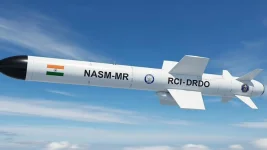
When operational, it will work hand-in-hand with other indigenous systems like the Akash and MR-SAM to form an impenetrable domestic shield.
The gradual rollout of Project Kusha signifies a new chapter in the South Asian balance of power. Comprehensive, long-range air defence networks are now the bedrock of national security, fundamentally dictating how adversaries design missions and allocate resources.
Rather than making aerial attacks entirely obsolete, robust systems like Project Kusha drastically increase the risks and financial costs of executing them, forcing regional rivals to rethink their strategies in India's highly defended skies.