- Views: 4K
- Replies: 15
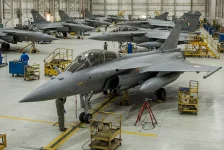
In a major boost to the country's aerospace capabilities, India is preparing to formally issue a Request for Proposal (RFP) to French manufacturer Dassault Aviation by the middle of next month.
This upcoming milestone represents a crucial leap forward for the Indian Air Force’s (IAF) Multi-Role Fighter Aircraft (MRFA) acquisition programme.
The formal RFP follows the vital Acceptance of Necessity (AoN) granted by the Defence Acquisition Council (DAC), chaired by Defence Minister Rajnath Singh, on February 12.
Valued at an estimated ₹3.25 lakh crore, the mega deal will enter rigorous contract negotiations once the tender is officially released.
The massive procurement framework involves acquiring a total of 114 advanced multi-role fighter jets.
The plan has been carefully designed to meet immediate combat readiness needs while simultaneously cultivating India's domestic aviation industry.
According to the approved strategy, the first 18 jets will be delivered directly from France in a ready-to-fly condition.
This immediate supply will help the IAF swiftly reinforce its operational fleet as it grapples with depleting fighter squadron numbers.
The remaining 96 aircraft will be built on Indian soil, ensuring that over half of the components are sourced locally, firmly supporting the national mission for total defence self-reliance.
Open-source reports indicate that these new fighters are expected to feature the advanced F4 standard, bringing enhanced radar and electronic warfare capabilities to the skies.
By structuring the purchase in two distinct phases, the government is executing a balanced strategy.
The off-the-shelf jets will act as an immediate stopgap for pressing security requirements, whereas the domestic production phase aims to lay the foundation for a robust, long-term aerospace manufacturing hub in India.
This substantial localisation drive will require deep technology transfer from Dassault, the establishment of vast supply chains, and extensive collaboration with both public and private Indian enterprises.
Furthermore, to guarantee seamless weapons integration, India plans to mandate an Interface Control Document (ICD) within the contract.
This critical engineering framework will allow the IAF to independently arm the jets with indigenous weapon systems—such as the Astra beyond-visual-range air-to-air missile and the BrahMos supersonic cruise missile—without relying on foreign proprietary source codes.
Procuring these advanced jets is a fundamental part of the IAF’s broader vision to restore its combat fleet toward the officially sanctioned strength of 42 squadrons.
At present, the force is facing a capability deficit as older aircraft, notably the venerable MiG-21 fleet, reach the end of their service lives.
With several other legacy platforms scheduled for retirement over the coming decade, rapidly inducting state-of-the-art replacements has become a paramount strategic necessity to maintain regional deterrence.
As the RFP is issued, the ensuing negotiations will be closely scrutinised, revolving around critical elements such as total costs, the exact depth of technology transfer, strict delivery schedules, and the role of the Indian industry as a strategic partner.
Given the sheer scale of the investment and the stringent demands for high local manufacturing content, this acquisition stands out as one of the most intricate and transformative defence projects currently underway in the country.