In a major push for advanced military technology, the Indian Army has launched a new initiative under the ADITI 4.0 (Acing Development of Innovative Technologies with iDEX) framework, calling on the Indian defence industry to develop a Ramjet-Powered Supersonic Loitering Munition System.
This move signals a clear transition toward next-generation warfare, focusing on weapons that can outmanoeuvre modern air defence systems and execute swift, highly accurate strikes using domestic research and development.
The early stages of modern warfare rely heavily on unmanned aerial vehicles (UAVs), small missiles, and loitering munitions—often known as "kamikaze drones"—to dismantle enemy radar and defensive networks.
However, most current loitering munitions fly at subsonic speeds. While they are relatively inexpensive and keep soldiers out of harm's way, their slow pace makes them easy targets for advanced surface-to-air missiles, electronic warfare jamming, and counter-drone technologies.
To overcome these weaknesses, the military is turning to ramjet propulsion to build a supersonic variant.
A ramjet is an "air-breathing" engine that operates without moving parts like compressors or turbines; instead, it uses the forward motion of the vehicle to compress incoming air before igniting the fuel.
This allows the munition to maintain speeds far exceeding the speed of sound (Mach 2 and beyond), slashing the enemy's reaction window from minutes down to mere seconds.
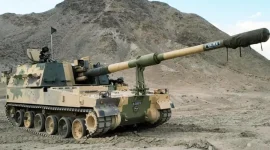
Notably, institutions like IIT-Madras are already pioneering similar ramjet applications for Indian artillery, showcasing the nation's growing expertise and readiness in this sector.
The proposed weapon system will blend the best of two worlds: the long-endurance hovering capability of a drone with the devastating terminal speed of a missile.
This hybrid design means the munition can circle over a battlefield for extended periods to hunt and lock onto targets, before diving in for a high-speed, final attack with practically no warning.
Building this system requires overcoming challenges across several complex fields of engineering. Experts must perfect the aerodynamics and fuel controls of the ramjet engine to guarantee a stable flight at supersonic velocities.
Additionally, the weapon will need state-of-the-art guidance and navigation software, including artificial intelligence for target recognition, allowing it to engage critical threats either completely on its own or with minimal human input.
The explosive warhead and its detonation mechanism must also be custom-designed to guarantee the destruction of specific targets.
Furthermore, flying at supersonic speeds generates immense heat due to air friction.
Therefore, advanced materials and cooling technologies will be absolutely essential to protect the munition's internal electronics and maintain its structural strength during flight.
On the battlefield, this ramjet drone will be deployed against high-priority assets that need to be destroyed quickly, including mobile missile launchers, heavy tanks, and enemy communication centres.
Because it is both incredibly fast and capable of finding targets independently, it will be a highly effective tool for deep-strike operations and for neutralizing the enemy's own air defence networks (SEAD missions).
The military has set a strict goal for this project, demanding the delivery of three fully tested and functional prototypes. This specific requirement highlights the Army's focus on moving beyond theoretical designs and quickly bringing a practical, combat-ready weapon into service.
A successful rollout of this system will mark a massive upgrade to India's arsenal, placing the country among the global leaders in high-speed, autonomous weaponry.
It also perfectly supports the government's broader "Atmanirbhar Bharat" vision, driving domestic innovation in cutting-edge propulsion, smart drones, and precision firepower.