The Indian Army is currently looking for a specialized vehicle designed to quickly move and set up field artillery guns. This new requirement indicates a shift towards advanced, remote-controlled vehicles to support artillery operations.
Based on the initial details, the proposed vehicle will feature a 4x4 off-road design, an electric motor of 10 kilowatts, and the ability to pull loads up to 4,000 kg.
When fully loaded, it is expected to travel at speeds of 8 to 10 km/h, cover a distance of about 20 kilometres, and climb steep slopes with a 25 percent incline.
A key feature is its remote-control capability, though these technical details will be finalized when the official tender is released.
The most important element of this new system is its ability to be operated remotely, rather than just its pulling power.
Instead of relying on a traditional tractor with a driver, this platform is meant to work as an unmanned vehicle to shift artillery pieces from one spot to another.
This technological upgrade will significantly improve the safety and survival chances of artillery units on the battlefield.
In today's combat, artillery teams use a "shoot-and-scoot" tactic, meaning they fire and quickly change locations.
After a weapon is fired, enemy forces can track its location using drones, radar systems, and electronic surveillance to launch a counter-attack. The longer a weapon stays in one place, the more vulnerable it becomes to enemy strikes.
With this specialized vehicle, soldiers can focus entirely on firing the weapon, as the platform will quickly move the equipment away as soon as the attack is complete.
Because the vehicle can be controlled from a distance, the soldiers will not have to stay near the gun while it is moving, keeping them out of harm's way.
This search for a new towing platform is noteworthy because India's current military upgrades heavily rely on towed artillery.
The Indian Army uses lightweight M777 howitzers and is bringing in domestically built weapons like the Advanced Towed Artillery Gun System (ATAGS).
While the 155 mm ATAGS—developed by the Defence Research and Development Organisation (DRDO)—is a towed weapon, it still needs dedicated tractors for transport.
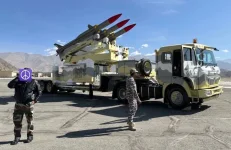
Standard artillery tractors, like the Ashok Leyland Field Artillery Tractor (FAT) used by the army, are large vehicles that need a human crew to operate.
These traditional trucks were built specifically to pull heavy guns, but their size and need for onboard drivers make them vastly different from the proposed unmanned platforms.
The army's latest interest points to a completely new strategy. The goal is to make the towing vehicle smaller, remote-controlled, and potentially cheaper to replace if destroyed, unlike traditional trucks that put human drivers at risk.
The choice of a 10-kilowatt electric motor is also significant. This smaller engine is well-suited for a vehicle meant to slowly pull heavy weights instead of speeding down highways.
The expected speed of 8 to 10 km/h shows that the platform is designed for short, tactical movements on the battlefield rather than long journeys.
While a 20-kilometre battery range seems low compared to standard military trucks, it perfectly fits the vehicle's specific role.
These unmanned platforms are not meant to completely replace regular artillery tractors. Rather, they will be used to quickly shift guns between nearby firing spots, hiding places, and backup locations.
The capacity to tow 4,000 kg is enough for various types of artillery, though its usefulness will depend on the exact weight of the guns and the difficulty of the terrain.
Since many of India's newer 155 mm weapons weigh much more than 4,000 kg, this new vehicle will likely be used for lighter classes of guns or specific equipment rather than the army's complete artillery inventory.
In the future, this system will be extremely useful in highly dangerous conflict zones. An unmanned vehicle can safely transport artillery through risky areas, keeping soldiers away from direct danger.
It also allows a gun unit to change positions without needing a large, manned truck to stay connected to the weapon at all times.
This project aligns with a global military trend that favours robotic transport and unmanned ground vehicles.
Rather than replacing every human-driven truck, armed forces worldwide are now looking to use remote-controlled and autonomous machines for specific, highly dangerous, or repetitive jobs.