Indian intelligence networks have reportedly observed the presence of Turkish-made Bayraktar TB2 unmanned aerial vehicles (UAVs) operated by Pakistan near the Line of Control (LoC).
Security assessments indicate these advanced drones are currently being utilised to monitor Indian Army positions and gather critical border intelligence.
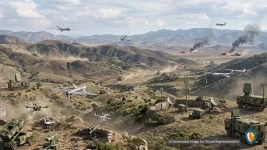
This escalation occurs against a backdrop of ongoing friction between the two nations, highlighting a modern shift in military strategy where both countries increasingly depend on automated aerial systems for border surveillance and tactical operations.
Manufactured by the Turkish defence company Baykar, the Bayraktar TB2 is a Medium Altitude Long Endurance (MALE) tactical UAV designed for intelligence, surveillance, reconnaissance (ISR), and targeted strike missions.
Capable of remaining airborne for up to 27 hours at altitudes approaching 27,000 feet, the aircraft is equipped with sophisticated electro-optical and infrared sensor payloads that provide high-resolution, real-time video feeds to command centres.
The TB2 gained global prominence for its combat effectiveness, particularly for its widely documented role in the Ukraine conflict where it successfully targeted Russian armoured columns, as well as its decisive use in the Nagorno-Karabakh war.
Pakistan officially inducted these drones into its armed forces around 2022.
National security agencies in India view this development with caution, primarily due to the extensive surveillance capabilities these long-endurance flights bring to the region.
Operating close to the LoC enables the Pakistani military to extensively map local terrain, track Indian troop movements, and analyse the layout of forward defence outposts.
This continuous data collection poses a strategic challenge, as it offers opposing forces an intimate understanding of India's border security framework and daily operational routines.
Furthermore, recent intelligence reports suggest that the Pakistani military has begun establishing essential ground control stations and mobile launch systems within Pakistan-occupied Jammu and Kashmir (PoJK).
These logistical hubs are reportedly being positioned in strategic sectors such as Muzaffarabad and Kotli.
By placing control infrastructure closer to the LoC, operators can significantly cut down the drone's transit time, thereby maximising its time spent loitering over sensitive border zones.
In response to these evolving aerial threats, the Indian defence establishment continues to heavily invest in and upgrade its own counter-drone technologies, surface-to-air missile systems, and comprehensive air defence networks along the border.