- Views: 5K
- Replies: 18
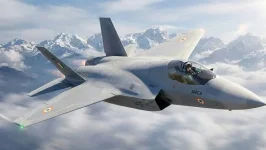
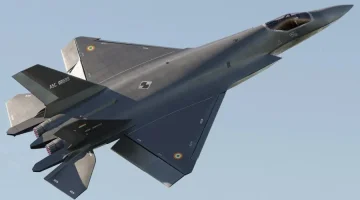
As of April 2026, India's ambitious fifth-generation fighter jet project, the Advanced Medium Combat Aircraft (AMCA), has moved into its most vital engineering stage.
Following the Cabinet Committee on Security's (CCS) approval of Rs 15,000 crore for Full-Scale Engineering Development (FSED) in March 2024, the Aeronautical Development Agency (ADA) is now aggressively focusing on making the aircraft ready for actual manufacturing.
The project has advanced far beyond early digital sketches and basic concepts.
Currently, engineers are immersed in the highly detailed, complex work required to transform a state-of-the-art stealth fighter from a computer blueprint into a real, flying machine that will eventually form the backbone of the Indian Air Force alongside existing platforms like the Su-30MKI.
The core of this current progress is a critical 24-month phase known as Systems Installation Detail Design (SIDD).
This step involves creating an incredibly precise "digital twin" of the aircraft and is considered the hardest part of the engineering journey.
Because a fifth-generation jet like the AMCA relies heavily on its stealth profile to evade enemy radar, the internal space is heavily restricted.
Engineers must figure out how to pack thousands of complex parts into this tight airframe without ruining the aircraft's aerodynamic performance, its structural strength, or its stealth capabilities.
The Stealth Challenge: Packing the Internals
A major part of the SIDD phase is fine-tuning the 3D layout to ensure no parts collide or interfere with one another.Unlike older aircraft, the AMCA carries its weapons inside a concealed 1,500 kg capacity internal weapons bay to maintain a low radar signature.
It also features specially curved "serpentine" air intakes to hide the engine blades from enemy sensors.
Because of these unique stealth features, every single internal system—from the powerful indigenous active electronically scanned array (AESA) radar to the cooling units—must be placed with microscopic accuracy.
Even the smallest error in placement right now could lead to massive delays and expensive corrections once actual production begins.
Another essential task is designing the brackets and mounts that will hold the aircraft's crucial electronic components, known as Line Replaceable Units (LRUs).
These are not standard brackets; they must be strong enough to withstand the intense gravity (G) forces of combat flying, absorb heavy vibrations, and keep sensitive flight systems perfectly aligned.
Furthermore, in a stealth fighter, the shape and location of even these small internal mounts can affect how the aircraft handles electromagnetic waves, turning a simple structural job into a complex stealth engineering problem.
Figuring out how to route the complex network of wiring, fuel lines from the massive 5-tonne internal tank, and hydraulic pipes is yet another major hurdle.
This intricate web must be carefully threaded through an airframe that has been shaped specifically for stealth.
The aircraft's internal weapons bay and curved engine intakes make finding a clear path for wires and pipes incredibly difficult.
The design team must guarantee that these pathways do not weaken the aircraft, create overheating issues, or make it impossible for mechanics to repair the jet later, all while ensuring nothing accidentally increases the jet's visibility on enemy radar.
A Strict Timeline for 2028
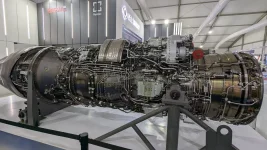
The schedule for this engineering phase is extremely strict and vital to the project's overall success.This 24-month effort will directly decide when the ADA can start ordering major components that take a long time to build, such as the imported GE F414 engines planned for the initial AMCA Mk1 variant, as well as specialized structural composites.
If the final blueprints are not finished by 2028, it will cause an immediate delay in unveiling the very first prototype, which is currently expected to roll out in late 2028 or early 2029. Therefore, completing this detailed design phase on time is the ultimate gatekeeper for the entire fighter program.
Boosting the Private Defence Sector
Looking beyond the technical achievements, this phase marks a major change in how India manages top-tier aerospace projects.Instead of relying entirely on state-owned Hindustan Aeronautics Limited (HAL), the ADA is handing out specific design tasks—like planning the wiring routes and designing the brackets—to private companies.
This includes smaller businesses (MSMEs) in tech hubs like Bengaluru, as well as large defence industry giants like Tata and Larsen & Toubro.
By dividing the work, multiple teams can operate at the same time.
This allows the ADA to focus on its specialties, such as writing flight control software and perfecting the stealth shape, while the private sector handles the mechanical details.
This strategy is a deliberate move to build up India's private defence industry, aligning with the government's broader push for self-reliance.
By involving private companies right from the design stage, India is preparing the ground to manufacture an estimated initial requirement of over 120 AMCA fighters in the future.
This ensures that the factories and supply chains needed for mass production, which is targeted to begin around 2035, are being built at the same time as the aircraft itself, rather than waiting until the prototype is validated.
A Digital Foundation for the Future
The entire operation is supported by highly advanced digital Product Lifecycle Management (PLM) software.The incredibly detailed 3D computer models currently being created will be sent directly to the factory floors of HAL and private defence contractors.
Keeping everything on a single continuous digital system prevents mistakes from happening when blueprints are handed over to the manufacturing teams. In the past, these types of translation errors have caused massive delays and budget increases in global aerospace projects.
While finishing a set of engineering drawings does not generate the same public excitement as seeing a new fighter jet take off for the first time, this current phase is arguably the most important turning point for the AMCA.
History shows that for most advanced stealth fighter programs around the world, the leap from a good idea to a set of perfect, ready-to-build engineering plans is where the biggest and most difficult challenges lie.