Hindustan Aeronautics Limited (HAL) has officially announced that the prototype for its Rotary Unmanned Aerial Vehicle (RUAV-200) is fully assembled and has entered the ground testing phase.
With its maiden flight anticipated in the near future, this domestically developed, pilotless helicopter marks a crucial milestone in India's push to create robust logistics drones.
These systems are specifically tailored to navigate the unforgiving altitudes and harsh terrains of mountainous borders.
Often referred to as a "Mule Drone," the RUAV-200 was engineered by HAL—in collaboration with the Defence Research and Development Organisation’s (DRDO) Aeronautical Development Establishment (ADE) and IIT Kanpur—to fill a vital gap in aerial supply chains.
Designated as a High-Altitude Logistics Drone (LD-HA), it aims to autonomously transport essential gear, rations, and payloads to forward military bases in regions like the Himalayas.
This will ensure supply lines remain active where traditional helicopters face severe weather limitations and high risks to human life.
Company representatives noted that the ongoing ground evaluations are comprehensive. Engineers are actively testing the engine's performance, examining the rotor mechanisms, and ensuring that the avionics and communication arrays function seamlessly together.
These rigorous checks, along with trials of the drone's independent flight control systems, are mandatory prerequisites before the aircraft takes to the skies for its initial flight trials.
At the heart of this homegrown aerial system is a unique coaxial twin-rotor architecture. By employing two main rotors spinning in opposite directions, HAL has deliberately crafted a design that maximises control and steadiness amidst the unpredictable wind currents typical of high-altitude zones.
This specific layout completely removes the requirement for a traditional tail rotor. As a result, the drone benefits from exceptional hovering precision and a more compact footprint, making it perfectly suited for landing in tight, challenging, or unprepared forward areas.
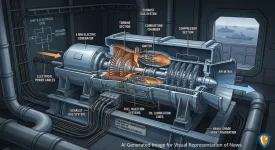
Propulsion is handled by a standard petrol-powered aviation engine, which open-source data suggests is a lightweight rotary Wankel engine. This powerplant is paired with advanced flight computers to guarantee consistent output regardless of the freezing temperatures or thin air encountered in the mountains.
HAL’s primary objective with the RUAV-200 is to heavily support military supply lines. By relying on an automated system, the armed forces can minimise the danger to human pilots while sustaining a steady flow of resources to isolated border outposts and elevated troop deployments.
The unmanned craft is built with a maximum take-off weight of 200 kilogrammes. Depending on the specific mission and altitude, it has the capacity to deliver payloads weighing up to 40 kilogrammes directly to front-line personnel.
When fully operational, the drone is projected to cover distances of up to 400 kilometres. Furthermore, it can remain airborne for anywhere between three to six hours, varying based on the weight of its cargo and the complexity of the flight path.
A standout feature of the RUAV-200 is its impressive service ceiling. Capable of reaching 6,000 metres (roughly 19,600 feet), it is engineered to function seamlessly in some of the most elevated and demanding combat zones on earth.
The drone is also built to survive extreme weather, remaining fully operational in temperatures plummeting to minus 35 degrees Celsius or soaring to 55 degrees Celsius.
Cruising at a targeted top speed of around 200 kilometres per hour, the aircraft can execute rapid delivery runs across mountainous valleys.
Additionally, reports indicate it is equipped with electro-optical day and night cameras, allowing it to double as an intelligence, surveillance, and reconnaissance (ISR) asset when not hauling cargo.
The system is designed to operate completely independently, executing take-offs, way-point navigation, and landings without manual piloting.
To further support these autonomous missions, the drone utilises Full Authority Digital Engine Control (FADEC). This technology automatically adjusts engine power to ensure maximum efficiency in the thin atmospheric conditions of extreme altitudes.
To protect against enemy interference, the RUAV-200 relies on an indigenously developed SLR-DC datalink. This secure communication system is highly resistant to jamming, ensuring that command signals remain unbroken in hostile electronic environments.
Looking ahead, the foundational design of the RUAV-200 also holds the potential for future armed variants, bringing network-centric warfare capabilities to India's unmanned defence fleet.