- Views: 3K
- Replies: 16
In a significant boost to India's pursuit of self-reliance in military aviation, Mishra Dhatu Nigam Limited (MIDHANI) has successfully formulated approximately 50 percent of the specialised alloy systems needed for the Advanced Medium Combat Aircraft (AMCA) engine.
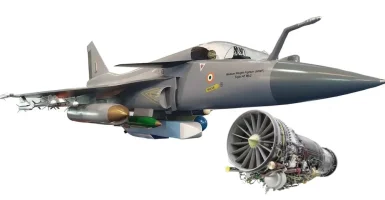
This upcoming 120kN high-thrust powerplant is slated for the AMCA Mk-2 stealth fighter and is being co-developed through a strategic joint venture between the Defence Research and Development Organisation’s Gas Turbine Research Establishment (GTRE) and French aerospace manufacturer Safran.
Program insiders reveal that of the alloy variants MIDHANI has produced so far for this advanced engine, almost 80 percent have already secured official clearance from the Centre for Military Airworthiness and Certification (CEMILAC).
This crucial certification guarantees that the homegrown materials comply with the rigorous safety and performance criteria demanded by modern military aerospace applications.
The rest of the newly developed alloys are currently progressing through rigorous testing phases prior to their final approval.
At the heart of this metallurgical breakthrough is the creation of high-performance superalloys designed to survive the punishing environment within a turbofan jet engine.
MIDHANI has successfully achieved series production certification for its advanced nickel-based—such as the recently unveiled SN-41—and cobalt-based superalloys.
These specialised metals are absolutely vital for fabricating critical hot-section components like turbine blades and discs, which face immense heat and physical stress during supersonic flight.
Mastering the production of these superalloys is a monumental achievement for India’s domestic aerospace industry.
Modern fighter engines are marvels of complex engineering, relying entirely on the availability of cutting-edge materials that can maintain their structural strength and shape while spinning at massive speeds in temperatures well over 1,000 degrees Celsius.
To ensure the AMCA engine timeline remains on track, MIDHANI has heavily modernised its manufacturing facilities.
A standout upgrade is the installation of a 6,000-ton near-isothermal forge press. This massive piece of industrial equipment is indispensable for the precise shaping and forging of high-strength alloys into complex, heavy-duty aero-engine structures, particularly the central turbine discs.
Furthermore, the state-run enterprise has enhanced its vacuum induction melting (VIM) furnaces to enable the creation of single-crystal superalloys.
These highly refined materials are the global standard for next-generation turbine blades due to their unmatched resistance to thermal fatigue.
By incorporating single-crystal technology, the future AMCA engine will be able to run hotter, thereby generating greater thrust and maximising fuel efficiency.
Historically, India’s aerospace and defence sectors have been forced to import roughly 70 to 80 percent of their specialised metallurgical requirements.
The successful domestic production of these critical 120kN engine alloys will drastically cut this foreign dependency.
Ultimately, this self-reliance will drive down the overall costs of India’s future combat aircraft programs while heavily insulating the national defence supply chain from global disruptions.