- Views: 3K
- Replies: 10
India's advanced Light Combat Aircraft (LCA) project, the Tejas Mk1A, is currently navigating a crucial phase.
The programme is managing simultaneous manufacturing, system fine-tuning, and operational testing.
This intricate, multi-layered development process continues to influence when the Indian Air Force (IAF) will finally receive its much-needed jets.
Secretary of Defence Production, Sanjeev Kumar, recently offered a strong reassurance regarding the timeline.
He stated that the Ministry of Defence is completely certain the first batch of fighters will be handed over during the current 2026-2027 financial year. He noted that the aircraft are essentially 90% finished.
However, the final 10% requires highly complex and essential technical work, meaning the ultimate induction date hinges on resolving several ongoing challenges.
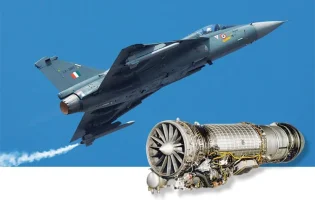
The most significant hurdle remains the delayed supply of F404-GE-IN20 engines from the American firm GE Aerospace.
This shortage acts as the primary roadblock preventing Hindustan Aeronautics Limited (HAL) from achieving a steady and reliable production rate.
These engine supply issues stem from broader global challenges within the aerospace industry.
Following the pandemic, a massive surge in commercial aviation demands placed unprecedented strain on jet engine manufacturers worldwide.
This spike, coupled with historically lower production rates for military engines, caused major disruptions throughout GE Aerospace's supply chain.
Currently, HAL has secured a small initial batch of six F404 engines, which have been fitted onto jets currently undergoing flight trials and system checks.
However, the remaining 15 to 20 powerplants needed for the initial production run will only arrive gradually over the next few months.
Consequently, manufacturing facilities in Bengaluru and Nashik are unable to shift into full-scale, rapid production just yet.
Adding to the complexity is the unique nature of the Tejas Mk1A's development.
HAL and the Defence Research and Development Organisation (DRDO) are constantly upgrading the jet's combat capabilities even as it is being built.
The design is not completely finalised; instead, it is in a continuous state of enhancement, with software, weapons systems, and electronic warfare (EW) technologies still being tested.
HAL officials have confirmed that even after engines are installed, the aircraft go through further adjustments and test flights.
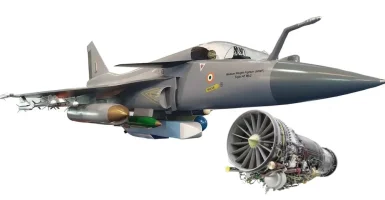
A major focus is validating the use of domestically built weapons, such as the Astra beyond-visual-range (BVR) air-to-air missile and the Rudram anti-radiation missile.
Both are considered vital for the aircraft to meet the IAF's rigorous combat standards.
The jet's electronic warfare capabilities also require ongoing adjustments.
Software integration has encountered unexpected hurdles, partly due to global supply chain issues stemming from geopolitical tensions in West Asia, which impacted the delivery of specific components.
Historically, the IAF has firmly demanded that any newly delivered aircraft arrive fully ready for combat.
They have wanted to avoid the logistical nightmare of inducting incomplete jets that would need major upgrades later.
However, recent discussions indicate a potential shift in strategy to break the current deadlock.
To expedite deliveries, the IAF might agree to accept the first few Tejas Mk1A jets with minor, non-critical features temporarily limited, provided the core combat abilities are fully functional.
For instance, the electronic warfare systems might initially rely on manual operations, with fully automated software updates added after the jets have joined the fleet.
This pragmatic approach would allow the first production aircraft to enter service while final software tweaks are completed in the background, directly addressing the IAF's pressing need to replace retiring fighter squadrons like the MiG-21.
The production schedule is now expected to follow a step-by-step approach over the coming months.
From May to July, HAL and DRDO will concentrate on finalising radar tests, weapon integration, and flight trials on the aircraft that already have engines.
This crucial period will determine if the jets can meet the stringent final operational clearance standards.
If engine deliveries and system integrations proceed without further setbacks, the earliest realistic timeframe for the IAF to receive its first mass-produced Tejas Mk1A fighters will likely be between August and September 2026.
A consistent and smooth manufacturing pace is anticipated later in 2026.
By then, steady shipments of GE engines should allow the assembly lines in Nashik and Bengaluru to operate at full capacity.
The Tejas Mk1A is of immense strategic importance to India. It is central to the IAF's strategy to restore its declining fighter squadron numbers, which currently face a shortfall due to older aircraft retirements.
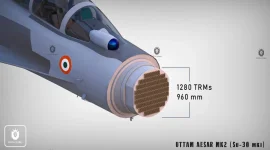
The Mk1A offers substantial upgrades over the baseline Tejas, featuring an Active Electronically Scanned Array (AESA) radar, a superior electronic warfare suite, easier maintenance, and the ability to carry a wider array of indigenous weapons.