Almost 30 years after India first introduced the Sukhoi fighter family, the Su-30MKI continues to be a central aircraft for the Indian Air Force (IAF).
What started in the late 1990s as a plan to acquire a powerful, long-range air-superiority jet has grown into a highly integrated Indian aerospace project.
Hindustan Aeronautics Limited (HAL) has taken the lead in building, repairing, and supporting the fleet, which currently consists of roughly 260 active aircraft.
The ongoing reliance on the Su-30MKI is particularly notable as the IAF navigates a major transition phase.
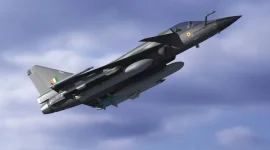
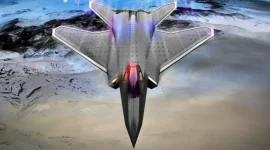
India is actively expanding its fleet of French-made Rafales, bringing in more Tejas Mk1A jets, preparing for the medium-weight Tejas Mk2, and developing the stealthy Advanced Medium Combat Aircraft (AMCA).
However, rather than being phased out as these newer planes arrive, the Su-30MKI is set to remain a vital element of the military's structure for decades.
A clear sign of the aircraft's enduring value is the government's commitment to keeping the fleet modern and operational.
In September 2024, the Ministry of Defence secured a major agreement with HAL to supply 240 AL-31FP engines for the Su-30MKI at a cost of over ₹26,000 crore.
These engines will be built at HAL’s Koraput facility over the next eight years. This move ensures the planes stay ready for action while boosting the percentage of locally manufactured parts.
India is also expanding the fleet with new orders. In December 2024, the Ministry of Defence signed a ₹13,500 crore contract with HAL for 12 additional Su-30MKI jets. These new planes, assembled at the Nashik facility, will feature over 60% indigenous components.
These procurement choices show that the government does not view the Su-30MKI as a temporary gap-filler until local jets are fully ready. Instead, it is treated as a permanent heavy combat asset designed to work alongside India's future aircraft.
The primary advantage of the Su-30MKI is its massive size and payload capacity. Unlike the lighter Tejas Mk1A, the Sukhoi can hold significantly more fuel and weaponry, allowing it to fly longer missions and stay in the air for extended periods.
This makes it highly useful for carrying heavy air-to-air missiles, dropping long-range bombs, and conducting maritime patrols. Its large airframe also provides ample room to integrate new Indian sensors and heavy weapons.
India has already demonstrated this capability by fitting the Su-30MKI with the BrahMos supersonic cruise missile, which allows the jet to strike targets from standoff ranges of about 300 kilometres.
HAL’s Nashik division has been instrumental in integrating local weapons onto the plane while also handling major repairs and maintenance.
The next significant evolution for the fleet will be the "Super Sukhoi" upgrade programme.
This ambitious overhaul will involve major updates to the plane’s electronics, most notably replacing the ageing Russian radar with the homegrown Virupaksha Active Electronically Scanned Array (AESA) radar.
Built with advanced Gallium Nitride technology, the new radar is expected to increase detection range by nearly 50% and provide strong resistance against enemy jamming.
An initial batch of 84 aircraft is expected to undergo this upgrade, which is estimated to cost between ₹60,000 and ₹65,000 crore.
This upgrade will deeply extend the fighting lifespan of the Su-30MKI. Instead of retiring the plane because its original Soviet-era systems are outdated, India will use the large airframe to house modern Indian data links, electronic warfare tools, and new weapons like the Astra series of air-to-air missiles.
This will result in a much more capable fighter jet without forcing the air force to wait for hundreds of next-generation planes to be manufactured.
This strategy is essential because India’s future air force will rely on different aircraft for specialized roles.
The Tejas Mk1A will serve as a compact multirole fighter, the Tejas Mk2 will handle medium-weight duties, and the AMCA will bring fifth-generation stealth. The Rafale will continue to act as a highly advanced multirole platform.
In this diverse mix, the Su-30MKI will command the heavy-fighter segment, offering a combination of range and weapon capacity that smaller planes simply cannot match.
Keeping the Su-30MKI relevant is also necessary because India’s active fighter squadron numbers remain lower than optimal.
Retiring a large number of Sukhois before enough Tejas and AMCA jets enter service would create a dangerous gap in the nation's defence capabilities.
Therefore, maintaining and upgrading the current fleet acts as a crucial bridge between today's combat forces and tomorrow's advanced fighter architecture.