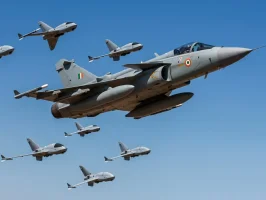
Hindustan Aeronautics Limited (HAL) has encountered a technical hurdle after one of the six recently delivered GE Aerospace F404-IN20 engines for the Light Combat Aircraft (LCA) Tejas Mk1A programme showed a defect during post-delivery checks.
While HAL has raised the matter with the American manufacturer to resolve the snag, the Indian company is concurrently pushing forward with the jet's integration and certification processes.
Reports indicate this affected unit is the sixth engine, which arrived at HAL's facilities in May.
The anomaly was spotted as part of the obligatory quality assurance checks that occur immediately after HAL receives aerospace components.
Insiders suggest that the defect is relatively minor—potentially linked to a routine transit issue—and is not considered a severe structural flaw that would endanger the broader fighter programme.
Following standard protocols, HAL has officially notified GE Aerospace of the discrepancy. A technical team from the United States is anticipated to examine the engine in India to determine the next steps.
If the problem is repairable on-site, it will be fixed locally; otherwise, a complete replacement may be necessary. Defence experts note that finding such discrepancies during initial evaluations is a standard and expected part of aviation quality control.
An official familiar with the situation explained that all incoming products face strict scrutiny upon arrival.
Whenever a component falls short of the required performance parameters or shows physical inconsistencies, the supplier is immediately alerted so that corrective measures can be taken—which is exactly what is happening in the current scenario.
Even with this temporary engine setback, HAL remains focused on preparing the rest of the aircraft for the Indian Air Force (IAF).
The manufacturer is actively continuing avionics testing, systems validation, and ensuring the jets meet all the rigorous Air Staff Qualitative Requirements mandated for full operational clearance.
The Tejas Mk1A initiative is already running more than two years behind schedule, largely due to the sluggish pace of engine deliveries from the United States. Out of the 99 engines ordered in 2021 under a ₹5,375-crore contract, HAL has only received six units so far. Five are currently cleared for aircraft assembly, while the sixth awaits repairs.
Furthermore, the fighter jets themselves must clear several critical hurdles before they can be officially handed over to the IAF.
These remaining milestones involve complex software validations, complete mission system integration, and final flight certifications to ensure they meet the air force's exacting combat standards.
Amid these delays, the Ministry of Defence has reportedly reminded HAL of potential financial penalties if contractual delivery timelines continue to slip, as the IAF urgently awaits the jets to bolster its declining squadron strength.
To address these ongoing challenges, the Ministry of Defence, along with other key stakeholders, is scheduled to hold a comprehensive review of the entire Tejas Mk1A programme this September.
Should the engine repairs and aircraft testing proceed smoothly over the coming months, authorities are expected to outline a realistic, updated delivery timeline for the first batch of fighters during this high-level meeting.
Ultimately, this specific engine fault is unlikely to cause massive disruptions to the project's long-term trajectory, provided it is fixed promptly.
The overarching obstacle for India's indigenous fighter programme remains GE Aerospace's delivery rate, as the manufacturer strives to scale up its supply chain to meet HAL's demanding assembly line schedule.