- Views: 3K
- Replies: 26
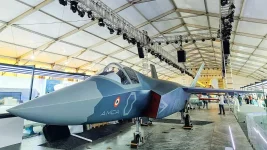
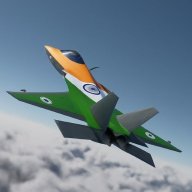
India's quest for an indigenous fifth-generation stealth fighter through the Advanced Medium Combat Aircraft (AMCA) programme is a cornerstone of its aerospace ambitions.
As New Delhi works to reduce its reliance on foreign combat jets, Russia is stepping in not as a rival, but as a strategic technology partner.
Moscow is actively proposing a comprehensive package that includes advanced propulsion systems, such as the new Product 177S engine, and local manufacturing of the Su-57E stealth fighter to support and complement India's defence goals.
Recognising India’s firm commitment to developing its own stealth fighter, Russia has adopted a highly cooperative stance.
Rather than viewing the AMCA as a threat to its own aerospace exports, Russian officials see an opportunity to deepen the historic bilateral defence partnership.
By offering high-end technologies, Moscow aims to position itself as an enabler of India’s next-generation combat aviation capabilities.
Senior Russian diplomats, including Ambassador to India Denis Alipov, have openly backed India’s fifth-generation aspirations.
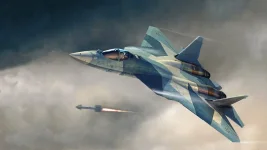
Concurrently, Russia is pitching the Su-57E—the export variant of the Su-57 Felon—as an interim platform that can operate alongside the AMCA.
Moscow has suggested building the Su-57 in India, presenting it as a practical way for Indian industries to gain immediate, hands-on experience with advanced stealth manufacturing and systems integration.
From Russia's viewpoint, this dual strategy secures its foothold in the Indian combat aircraft market while facilitating the transfer of critical aerospace knowledge.
While the Indian Air Force has not indicated any plans to substitute the AMCA with the Su-57, Russia continues to market the Felon as a formidable gap-filler that would boost India’s combat edge while the homegrown stealth fighter undergoes development and testing.
A major focus of Russia's pitch addresses the AMCA programme's most complex hurdle: securing a high-thrust jet engine.
The initial batch of AMCA Mk1 fighters will be powered by American GE F414-INS6 engines.
However, the advanced AMCA Mk2 requires a far more robust powerplant in the 110–130 kN thrust class to achieve superior payloads, enhanced stealth, and sustained supercruise (supersonic flight without using fuel-heavy afterburners).
To meet this need, Russia's United Engine Corporation (UEC) has aggressively marketed its new Izdeliye 177S (Product 177S) engine to India.
Based on the AL-41F1 but incorporating fifth-generation technologies from the next-generation AL-51, the 177S is a significant leap forward.
Open-source data indicates it delivers roughly 142 kN (14,500 kgf) of maximum thrust.
Crucially for a stealth fighter, it features serrated thrust-vectoring nozzles to minimise radar and infrared signatures, a fully digital engine control system (FADEC), and a robust design life of 6,000 hours with a reported 7% reduction in fuel consumption compared to older models.
To make this offer more attractive, Moscow is proposing extensive technology transfers and joint production under the "Make in India" initiative.
This includes sharing closely guarded hot-section engine technologies, which contrasts sharply with Western offers that often come with strict export controls and intellectual property limits.
Russia is also floating advanced versions of the RD-33 engine family, showcasing its ability to provide propulsion solutions across India's entire expanding fighter fleet.
Beyond engines, Russia is offering a broad spectrum of fifth-generation technologies.
This includes active electronically scanned array (AESA) radars, radar-absorbent materials, artificial intelligence for pilot assistance, and electronic warfare systems.
By presenting a full suite of aerospace technologies, Russia wants to be seen as a holistic defence partner, rather than just a parts supplier.
Geopolitics plays a significant role in this sales pitch. Russian officials frequently highlight the risks of relying too heavily on Western defence supply chains.
Pointing to the current delays in the delivery of American GE F404 engines for India's Tejas Mk1A programme, Moscow argues that Western suppliers are vulnerable to production bottlenecks and political restrictions that can stall vital defence projects.
Russia, by contrast, positions itself as a flexible partner willing to share sensitive technologies with fewer geopolitical strings attached, perfectly aligning with India's pursuit of strategic autonomy.
Despite these appealing offers, the Indian defence establishment is treading carefully.
Integrating a new Russian engine like the Product 177S into the AMCA is a monumental engineering challenge.
The AMCA's current airframe is specifically tailored around the dimensions and airflow requirements of the GE F414 engine family.
Switching to a completely different powerplant would require a massive redesign of the aircraft's fuselage, air intakes, cooling systems, and weight distribution.
This would inevitably lead to severe delays, increased costs, and higher programme risks. As a result, Indian aerospace planners have maintained that the integrity and timeline of the indigenous design must take priority.
Nevertheless, Russia's willingness to share fifth-generation engine technology provides New Delhi with immense bargaining power.
Having a viable alternative on the table allows India to demand better terms, greater technology transfer, and more comprehensive local manufacturing rights from Western engine manufacturers.
For Russia, remaining involved in the AMCA discourse is strategically vital. India is a premier defence partner, and by staying engaged with the AMCA project, Moscow ensures it remains a key player in India's rapidly modernising defence industrial base.
Ultimately, the AMCA remains a strictly homegrown endeavour.
Spearheaded by the Aeronautical Development Agency (ADA) and Hindustan Aeronautics Limited (HAL), the project is designed to propel India into the elite club of nations capable of independently building fifth-generation stealth fighters.
While foreign technology may be utilised for specific subsystems, India's unwavering focus remains on achieving total sovereign capability in design, production, and future aerospace innovation.