To counter the growing threat of advanced enemy air defence networks, the Indian Air Force (IAF) is rapidly building a highly versatile stand-off weapons stockpile.
Instead of putting all its faith in one type of long-range armament, the IAF is curating a multi-tiered arsenal comprising stealth missiles, supersonic projectiles, and smart glide bombs designed for a wide array of combat situations.
This evolving tactical doctrine ensures that military planners have numerous attack choices tailored to specific targets, ranges, and threat levels.
As a result, the Air Force is aggressively funding and acquiring an array of next-generation munitions, notably the BrahMos NG, the Combat Air Teaming System (CATS) Hunter, the indigenous Powered TARA kit, and further batches of the European-made SCALP-EG.
The Supersonic Backbone: BrahMos NG
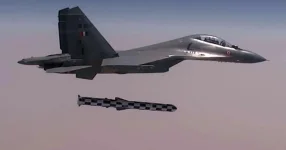
Leading this modernization effort is the BrahMos NG (Next Generation), poised to be the primary supersonic strike weapon for India.Developed by BrahMos Aerospace, this newer model weighs roughly 1,200 to 1,500 kilograms—about half the weight of the original missile. Its compact 6-metre length and reduced diameter allow it to be fitted on a much broader selection of fighter jets.
While the legacy BrahMos is primarily restricted to the heavy Su-30MKI, the NG version will equip lighter platforms like the Tejas Mk1A, Tejas Mk2, and potentially the Rafale.
Capable of hitting speeds around Mach 3.5, this smaller footprint means fighters like the Tejas can carry two missiles simultaneously, while a Su-30MKI could carry up to four, paving the way for devastating saturation strikes against high-value targets.
Stealth and Swarm: HAL CATS Hunter
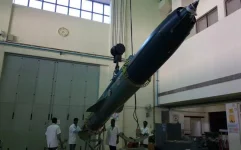
Working alongside the BrahMos NG is the Hindustan Aeronautics Limited (HAL) CATS Hunter. Designed as a stealthy, 600-kilogram air-launched cruise missile (ALCM), it is powered by HAL's PTAE-7 turbojet engine.The Hunter is a key component of India’s Combat Air Teaming System, a manned-unmanned teaming (MUM-T) concept where autonomous drones and munitions support piloted fighters in heavily guarded airspace.
It is modular, allowing ground crews to swap out payloads—such as a 250-kilogram unitary warhead or cluster munitions—based on the mission at hand.
Notably, elements of the system are designed to be recoverable and reusable after deploying their payloads, a unique feature aimed at cutting long-term operational costs and preserving valuable hardware.
Tactical Precision: Powered TARA
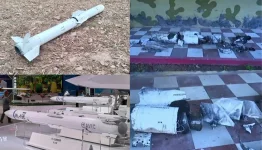
For tactical, shorter-range engagements, the Defence Research and Development Organisation (DRDO) has introduced the Tactical Advanced Range Augmentation (TARA) system.Unlike a traditional cruise missile, TARA is a modular glide kit that attaches to standard, unguided "dumb" bombs, transforming them into precision-guided stand-off weapons.
Recently tested in May 2026 from an IAF Jaguar fighter jet, TARA allows pilots to accurately strike targets from 80 to 150 kilometres away, safely out of reach from short-range air defence systems.
By utilizing existing bomb inventories, this provides a highly economical alternative to expensive cruise missiles for large-scale battlefield operations.
The Proven Heavyweight: SCALP-EG
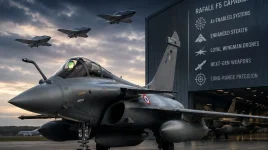
Providing proven, deep-strike capabilities is the SCALP-EG stealth cruise missile, actively deployed on the IAF’s Dassault Rafale fighters. This European-designed weapon approaches targets using a terrain-following flight path, masking its approach from enemy radar to destroy fortified infrastructure.Given its exceptional combat record on the global stage, the IAF considers it a critical asset and is reportedly looking to procure more units to maintain a robust stockpile while domestic long-range alternatives are perfected.
A Layered Strike Doctrine
Ultimately, these four distinct systems combine to form a comprehensive, layered strike capability. While BrahMos NG relies on blistering speed to take out time-critical targets, the CATS Hunter uses stealth to bypass advanced radars.Powered TARA serves as the cost-effective workhorse for tactical strikes, and the SCALP-EG remains the trusted sledgehammer for deep, strategic attacks. This mix ensures the IAF is not overly reliant on any single platform or flight profile.
In the coming years, this formidable inventory will only grow. India is actively advancing its Long-Range Land Attack Cruise Missile (LRLACM)—which had its maiden test in late 2024—and the Indigenous Technology Cruise Missile (ITCM).
These upcoming additions will solidify India's ability to dominate the skies and execute precision strikes across tactical, operational, and strategic domains for decades to come.