- Views: 5K
- Replies: 25
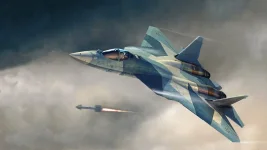
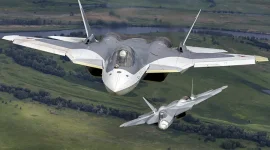
In a significant move to reclaim its position as a primary aerospace partner for New Delhi, Russia has offered India an advanced dual-seat version of its Su-57 stealth fighter.
This proposal, presented during the Wings India 2026 exhibition and recent high-level bilateral engagements, includes a comprehensive "full technology transfer" (ToT) package aimed at reviving the long-dormant Fifth Generation Fighter Aircraft (FGFA) collaboration.
A Strategic Pitch to Re-engage India
The United Aircraft Corporation (UAC) of Russia has reportedly detailed a plan that would allow India to manufacture critical components of the fifth-generation platform domestically.This "unrestricted" offer covers high-value technologies, including:
- Next-generation engines (specifically the Izdeliye 30 / AL-51F1).
- AESA radar systems and advanced optical sensors.
- Source code access, allowing for the integration of indigenous Indian weaponry like the Brahmos and Astra missiles.
- Artificial Intelligence (AI) elements for combat automation.
Since then, the Indian Air Force (IAF) has prioritised the indigenous Advanced Medium Combat Aircraft (AMCA).
However, with the AMCA prototype flight targeted for 2029 and mass production not expected until the mid-2030s, Russia is positioning the Su-57 as a vital "strategic bridge" to fill India's widening stealth capability gap.
The Power of Two: A New Tactical Concept
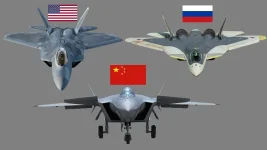
The centerpiece of the Russian offer is a multifunctional two-seat variant, which analysts believe may be designated as the Su-57M.Unlike American fifth-generation jets like the F-22 or F-35, which utilize single-seat configurations, Russia argues that a second crew member is essential for modern Manned-Unmanned Teaming (MUM-T).
In this arrangement, the rear-seat operator functions as a mission commander or "mini-AWACS." This officer would manage a "loyal wingman" drone swarm—such as the S-70 Okhotnik stealth UCAV—while the pilot focuses on flight manoeuvres and air-to-air engagements.
Patent documents filed by UAC describe the rear cockpit as an "airborne command post" equipped with panoramic displays designed for complex network-centric warfare.
Developmental Milestones and Future Outlook
The Russian defence industry indicates that the airframe for this twin-seat prototype is already under assembly at the Komsomolsk-on-Amur Aircraft Plant (KnAAZ).| Feature | Specification / Status |
|---|---|
| Engine | Izdeliye 30 (AL-51F1) - Flight testing since late 2025 |
| Speed | Exceeds Mach 2; capable of sustained supercruise |
| Role | Stealth strike, pilot training, and drone coordination |
| Prototype Flight | Projected for late 2026 or early 2027 |
While the IAF has shown renewed interest in the upgraded Su-57M1E configuration, New Delhi remains cautious.
Sources suggest the IAF might prefer a limited direct purchase of roughly two squadrons (40 jets) to maintain operational readiness while ensuring that the indigenous AMCA programme remains the primary long-term focus of India’s defence strategy.
Regional Dynamics
This renewed push comes as regional competitors accelerate their own stealth programmes.China has successfully inducted over 200 J-20 fighters, and reports suggest it may supply the J-31/J-35 variant to Pakistan.
For India, the decision involves balancing the urgent need for a fifth-generation fleet with the desire for absolute industrial sovereignty.