Svaayatt Systems, a defence technology startup based in Vadodara, Gujarat, has introduced the SGV-500 "Scorpion" — an advanced unmanned ground vehicle (UGV) built for a variety of combat and support missions.
A major highlight of this new machine is its built-in drone relay system, which greatly stretches the communication limits and guarantees steady control even in areas where radio signals typically fail.
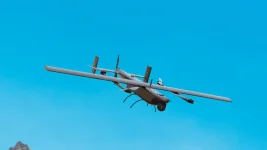
Traditionally, unmanned vehicles need a direct line of sight with their controllers to function properly. The SGV-500 overcomes this hurdle by using an autonomous flying drone that acts as a signal bridge.
This airborne node keeps the vehicle connected to its human operator, ensuring that the mission goes on smoothly even if the UGV travels behind mountains, dense forests, or tall city buildings that usually block radio waves.
By using this relay technology, the SGV-500 can operate Beyond-Line-of-Sight (BLOS) without relying on permanent communication towers.
This gives military forces exceptional flexibility during urban warfare, mountain deployments, and other challenging battlefield scenarios where communication is difficult.
Built like a miniature tank, the 500-kilogram tracked vehicle is heavily armoured and designed to thrive in rough conditions.
Its strong suspension and continuous tracks allow it to easily cross uneven terrain, steep inclines, and debris-filled areas that would stop regular wheeled robots.
Founded in 2021 by Shrey Mehta, Svaayatt Systems recently completed successful field trials of the SGV-500 with the Indian Army, proving its ability to navigate harsh environments and cover more than 40 kilometres on a single charge at speeds up to 30 km/h.
To help operators understand their surroundings, the SGV-500 features a complete 360-degree sensor and camera suite.
This setup provides real-time, all-around visibility of the battlefield. It allows forces to scout areas, watch for enemy movement, and evaluate threats safely, drastically lowering the need to send human soldiers into dangerous zones.
It also features a unique virtual reality setup that lets the operator simply turn their head to aim cameras and weapons, offering a natural, first-person view of the battlefield.
The SGV-500 is highly adaptable thanks to its modular design. Depending on what the mission requires, it can be quickly equipped with various tools. It can serve in roles such as intelligence gathering, bomb disposal, delivering supplies, rescuing injured troops, or launching smaller drones.
In combat, it can be fitted with remote weapon stations holding machine guns or grenade launchers, using artificial intelligence to identify targets in under three seconds. This flexibility means armed forces can use one core vehicle for many different jobs.
Designed to work both autonomously and via remote control, the vehicle lessens the burden on human operators while keeping them at a safe distance.
Thanks to the drone relay, operators can maintain full command of the UGV from up to 10 kilometres away—or much further with the aerial drone bridge—even in environments where communication is actively being jammed by adversaries.
Svaayatt Systems built this platform to serve multiple sectors, including national defence, border security, disaster relief, and the protection of critical infrastructure.
With its blend of tough mobility, smart navigation, and long-range communication, it is an ideal solution for tasks that are too risky or difficult for humans to undertake.
The launch of the SGV-500 highlights a major shift in modern warfare toward the use of robotics. Recent global conflicts have shown how vital unmanned ground systems are for safe scouting, delivering supplies, and fighting on the front lines.
By successfully tackling the problem of lost communication through its airborne drone relay, Svaayatt Systems has removed one of the biggest hurdles facing military ground robots today, marking a proud moment for India's indigenous defence sector.