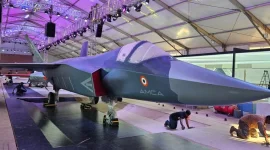
In a historic shift for India’s defence manufacturing sector, the Ministry of Defence has exclusively invited private companies to bid for the production of the Advanced Medium Combat Aircraft (AMCA).
The government recently issued a Request for Proposal (RFP) to three major private consortiums: Tata Advanced Systems, an L&T-BEL-Dynamatic partnership, and a Bharat Forge-BEML-Data Patterns group.
Valued at ₹15,000 crore, this project deliberately bypasses state-owned Hindustan Aeronautics Limited (HAL) to nurture a robust, private-sector ecosystem capable of building India's first homegrown fifth-generation stealth fighter.
This landmark decision has ignited discussions around a critical strategic dilemma: should the winning AMCA consortium join a European sixth-generation fighter project—like the UK-Italy-Japan Global Combat Air Programme (GCAP) or the France-Germany-Spain Future Combat Air System (FCAS)—before the AMCA even completes its first flight?
Recent reports confirm that the Indian Air Force and the Ministry of Defence are actively exploring partnerships with these next-generation international programmes to ensure India does not fall behind in future air combat technologies.
The Case for Early Collaboration
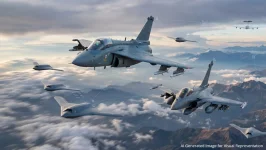
Advocates for immediate international collaboration point out that modern aerospace engineering has evolved dramatically.Today, sixth-generation projects are not just about building planes; they focus on creating massive combat networks that incorporate artificial intelligence, unmanned "loyal wingman" drones, advanced sensor fusion, and next-generation engines.
If India waits for the AMCA to finish its flight trials—currently targeted for around 2028-2029—it risks delaying access to these cutting-edge advancements.
By joining these global initiatives early, the Indian defence industry could learn directly from global leaders instead of playing a continuous game of catch-up.
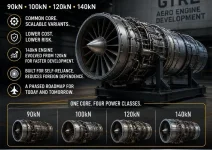
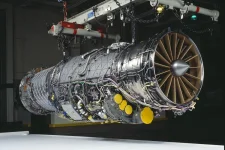
Engine technology is another crucial motivation. The advanced Mk2 variant of the AMCA will need a powerful 110-120 kN thrust engine, which New Delhi intends to co-develop with a foreign partner, such as France's Safran.
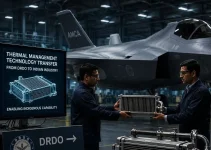
Because sixth-generation jets will also demand revolutionary propulsion systems, integrating the chosen AMCA consortium into these early research phases could yield massive long-term benefits in engine manufacturing, heat management, and advanced materials.
Furthermore, constructing the AMCA demands huge investments in digital engineering, stealth coatings, composite materials, and modern automated assembly lines.
Developing these sophisticated facilities—which the winning bidder must set up, reportedly at a greenfield site in Andhra Pradesh—will instantly make the Indian consortium an appealing partner for any international aerospace coalition, even before the AMCA officially enters military service.
The Risks of Overextension
Despite these advantages, many experts advise caution. The AMCA is the most complex aerospace initiative India has ever attempted. Engineering, testing, and certifying a stealth jet requires intense dedication over a span of many years.Taking on a parallel sixth-generation project could overburden the private consortium's engineering resources, which might ultimately delay the much-needed AMCA delivery timelines.
Credibility and technology-sharing are also major hurdles. Foreign sixth-generation consortiums generally prefer partners with a proven track record in advanced aviation manufacturing.
Successfully delivering the fifth-generation AMCA would serve as undeniable proof of India's capabilities, making a far stronger case for partnership than mere future promises.
Additionally, navigating the intellectual property (IP) of ultra-sensitive defence technologies—like AI software and stealth materials—is incredibly complicated.
Balancing these foreign IP restrictions while building a completely indigenous fighter would require extremely delicate legal and export control agreements.
Strict clauses in the current AMCA RFP already mandate complete Indian ownership and restrict foreign control to ensure self-reliance, which could complicate deep integration with foreign intellectual property.
A Phased Strategy for the Future
Given these complexities, a phased integration strategy might be the most effective solution.Initially, the chosen AMCA consortium could contribute to specific technical fields within a sixth-generation project, rather than attempting full aircraft development.
By focusing on niche areas like drone wingmen, advanced composites, or electronic warfare, Indian companies could gain invaluable experience without pulling critical resources away from the AMCA.
This balanced approach would enrich India's local manufacturing base while keeping the primary goal intact: delivering a top-tier stealth fighter to the Indian Air Force by the mid-2030s.
After the AMCA successfully takes to the skies and proves India's ability to build low-observable jets, New Delhi will hold significantly more bargaining power.
With a demonstrated industrial base and a massive requirement for future fighters, the country could then negotiate a major, equal-partner role in programmes like GCAP or FCAS.
Ultimately, India’s vision reaches far beyond a single stealth jet; the true goal is to build a self-sustaining defence ecosystem capable of designing, producing, and exporting advanced combat aircraft for generations to come.