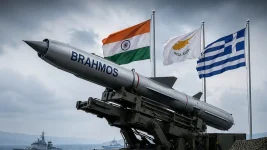
The United Arab Emirates is currently exploring the purchase of India's BrahMos supersonic cruise missile in preliminary talks, potentially introducing this advanced weaponry to the Gulf region.
According to recent reports, four Indian officials have confirmed Abu Dhabi's interest in the system as a means to broaden its military capabilities in the wake of recent regional tensions.
These negotiations represent a notable shift, given that the UAE has historically depended on Western nations, such as the United States and France, for its military hardware.
While Abu Dhabi currently uses high-tech American defence infrastructure, including THAAD and Patriot systems, purchasing the BrahMos would diversify its supply chain.
Furthermore, it would equip the nation with a highly accurate, fast-moving strike system produced in India.
Abu Dhabi's interest in this new weaponry arises from a rapidly shifting security landscape in the Middle East.
With recent drone and missile strikes highlighting the exposure of Gulf countries to dangers across the Strait of Hormuz, the UAE is prioritizing robust countermeasures.
Enhancing its military readiness is essential to counteract new dangers and safeguard critical shipping lanes responsible for a massive portion of the world's energy trade.
Adding the BrahMos to its military would supplement the UAE's current long-distance strike tools.
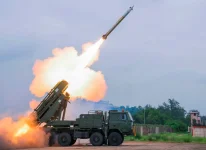
Developed jointly by India's Defence Research and Development Organisation (DRDO) and Russia's NPO Mashinostroyeniya, the versatile missile can be launched from ships, land bases, submarines, and aircraft.
In compliance with the Missile Technology Control Regime (MTCR), the export variant offered to foreign buyers features a maximum strike range of 290 kilometres.
Utilizing a land-based configuration would grant the UAE highly mobile strike forces for both coastal defence and ground attacks.
The system's ability to be easily transported allows the launch vehicles to be scattered across different locations, making it significantly harder for enemy forces to locate and destroy them.
The extraordinary speed of the BrahMos—which travels at Mach 2.8 to 3.0, making it one of the world's fastest cruise missiles—is a key selling point. Its supersonic capabilities drastically reduce the time an enemy's air-defence network has to react.
For a geographically smaller nation like the UAE, having mobile, long-range missile units creates a powerful deterrent, lessening the need to maintain an enormous fleet of manned fighter jets.
This potential deal would also pair well with the UAE's formidable aerial forces. The nation's air force already flies F-16E/F Block 60 and Mirage 2000-9 jets, and is in the process of incorporating French-made Rafale fighters.
The military's current precision weaponry includes the Black Shaheen cruise missile, among other advanced guided munitions.
Consequently, the BrahMos is not intended to replace Abu Dhabi's existing airborne weapons. Rather, it would serve as an additional layer of high-speed strike capability from the land and sea.
This gives military commanders the option to neutralize threats from a distance without placing their pilots and expensive aircraft in direct danger of enemy anti-aircraft fire.
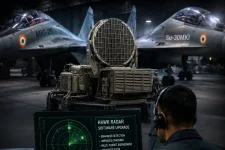
In addition to the missile, negotiations reportedly involve "Project Akashteer," a cutting-edge command-and-control system developed by India's Bharat Electronics Limited (BEL).
The integration of these two platforms would provide a comprehensive military solution. While the BrahMos delivers overwhelming offensive strike power, the AI-enabled Akashteer system manages the defensive side by seamlessly coordinating radar data and orchestrating air-defence responses.
From India's perspective, securing a contract with the UAE carries massive strategic weight that goes far beyond monetary profit.
As a dominant military force in the Gulf, an Emirati acquisition would signal to the world that India's domestic defence technology meets the rigorous standards of modern, well-equipped Middle Eastern militaries.
Furthermore, a successful agreement would cement New Delhi's growing status as a global arms exporter, building upon previous successes like the $375 million BrahMos export deal with the Philippines signed in 2022.
Recent government data indicated that India's defence exports surpassed the $4 billion mark in the fiscal year ending March 2026, showcasing the swift growth of its international military trade.
Despite the optimism, the dialogues between the UAE and India are still in their infancy. Specific details regarding contract finalization, the number of units, missile configurations, and delivery timelines have not been formally disclosed.
Additionally, because the missile is a joint product of India and Russia, any final export approval will likely require diplomatic coordination involving Moscow.
Should these talks culminate in a finalized deal, the strategic impact on the region will be profound. The introduction of the BrahMos would alter the missile dynamics in the Gulf, providing India with a prestigious international buyer for one of its most celebrated defence innovations.
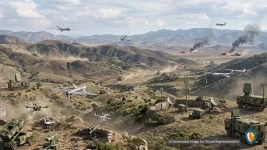
Ultimately, Abu Dhabi's pursuit of this technology is driven by the need for tactical versatility. Recent warfare in the region has proven that even the most advanced air forces and anti-aircraft networks are not entirely foolproof against the vulnerabilities tied to local geography and neighbouring hostilities.