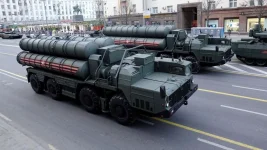
India’s remarkable success in neutralising aerial attacks during the May 2025 Operation Sindoor highlighted the strength of its integrated air defence network.
However, maintaining this tactical advantage against future, more sophisticated threats will require a national initiative on the scale of the historic Integrated Guided Missile Development Programme (IGMDP).
This assessment comes from Maj Gen Ashok Kumar (Retd.), Director General of the Centre for Joint Warfare Studies (CENJOWS), who recently spoke about the lessons learned from the conflict and the roadmap for India's future airspace security.
Announced by Prime Minister Narendra Modi in August 2025, Mission Sudarshan Chakra aims to establish a multi-layered, AI-enabled national air and missile shield by 2035.
According to General Kumar, achieving this ambitious goal demands a radical shift in how India develops and deploys its military technology.
The Power of Tri-Service Synergy
During Operation Sindoor—launched in response to the Pahalgam terror attacks—India faced retaliatory strikes from Pakistan involving loitering munitions, rockets, and drones.General Kumar observed that India's successful interception of these threats was not due to a single "silver bullet" weapon. Instead, it was the result of unprecedented digital integration across the armed forces.
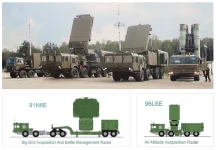
The Indian Air Force’s Integrated Air Command and Control System (IACCS), the Indian Army’s newly inducted Akashteer (a system developed by Bharat Electronics Limited), and the Indian Navy’s Trigun network were linked together.
This digital handshake created a unified, real-time operational picture. Commanders could instantly track incoming threats, identify them as hostile, and seamlessly assign the target to the best-positioned interceptor—regardless of whether that weapon belonged to the Army, Navy, or Air Force.
General Kumar pointed out that prior to the kinetic phase of the operation, Pakistan had already mobilised troops along the western border. Rather than matching this with a massive ground deployment, India strategically reinforced its air defence posture.
By layering surveillance radars, missile batteries, and anti-aircraft guns across the frontier, India created an overlapping defensive grid.
The integration of Akashteer—which acts as the Army's tactical brain for fusing radar data rather than a weapon itself—alongside IACCS and Trigun, served as a highly successful proof-of-concept for tri-service jointness ahead of the formal rollout of integrated theatre commands.
The Drone Threat and the Return of the Gun
The economics of modern warfare have fundamentally shifted.During the 2025 border escalation, hostile forces relied heavily on cheap, small-profile unmanned aerial vehicles (UAVs), including Turkish and Chinese variants.
Because these drones have minimal radar cross-sections, they are notoriously difficult for traditional, high-cost radar-guided missiles to track and destroy efficiently.
General Kumar noted that while missile systems played a critical role, it was traditional air defence guns that truly shined by forming an impenetrable "wall" of fire along the border.
Because guns do not require a radar lock to engage and can unleash a massive volume of fire economically, they proved highly effective against drone swarms.
Looking to the future, he stressed that air defence will rely on a hybrid approach: kinetic weapons like guns and missiles working in tandem with non-kinetic technologies, such as electronic warfare jammers and directed-energy (laser) weapons.
Addressing concerns that high-firing guns could quickly deplete India's ammunition reserves during a prolonged drone conflict, General Kumar remained optimistic.
He explained that as electronic warfare systems take on a larger role in disabling drones, the reliance on physical ammunition will naturally decrease.
Furthermore, India’s drive for self-reliance has already resulted in the indigenisation of over 90 per cent of its air defence ammunition.
Thanks to long-term procurement policies that give private domestic industries the confidence to scale up manufacturing, the country expects to reach 100 per cent indigenous production within the next two years.
A Mission-Mode Approach for Sudarshan Chakra
As India looks toward the 2030s, the threat matrix will only grow more complex, spanning from cheap micro-drones to advanced hypersonic glide vehicles backed by satellite guidance.To counter this, Mission Sudarshan Chakra is being designed to protect everything from major civilian population centres and nuclear power plants to forward military bases and logistics hubs.
However, General Kumar warned that a project of this magnitude cannot survive traditional bureaucratic delays.
He strongly advocated for an organisational structure mirroring the IGMDP—the legendary initiative spearheaded by Dr. A.P.J. Abdul Kalam that successfully gave India its Agni and Prithvi missile families.
This model would bring together the Defence Research and Development Organisation (DRDO), the armed forces, private defence contractors, and academic institutions to work in an urgent "mission mode," placing operational success above procedural hurdles.
Finally, he championed the strategy of "spiral development" for indigenous platforms. Rather than waiting years in the laboratory for a flawless, finalized weapon system, India should induct capable, homegrown technologies early.
By deploying these systems and upgrading them continuously based on real-world feedback from soldiers on the ground, India can rapidly build its domestic intellectual property while staying ahead of the curve in an era of rapidly evolving warfare.