The Defence Research and Development Organisation (DRDO) has engineered a groundbreaking solution known as the Tactical Advanced Range Augmentation (TARA) kit.
This indigenous system transforms conventional, unguided munitions into highly accurate stand-off glide bombs.
Developed primarily by the Hyderabad-based Research Centre Imarat (RCI) in collaboration with private industry partners, TARA offers world-class strike capabilities at a significantly lower financial burden compared to foreign-made equivalents.
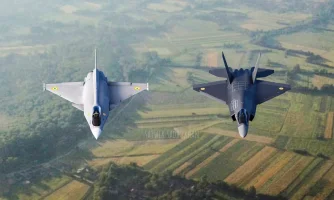
Recently tested from an Indian Air Force Jaguar aircraft off the Odisha coast, the system allows pilots to neutralise heavily fortified targets from well outside enemy air-defence zones.
When evaluated against renowned international systems, TARA’s cost-to-performance ratio is unmatched.
An imported American JDAM-ER kit typically costs nearly double the estimated ₹25 lakh price tag of a single TARA unit, while delivering a shorter range of 80 to 120 kilometres and a less precise margin of error (CEP) of 10 to 13 metres.
On the premium end, the Israeli SPICE-1000 system offers an excellent accuracy of 3 to 5 metres and a 100 to 125-kilometre range, but at a massive cost of ₹2 to ₹3 crore per weapon—roughly 12 times the expense of TARA.
By contrast, the Indian glide kit achieves an operational strike range that can extend up to 150–180 kilometres when dropped from an altitude of 5 kilometres, while maintaining a pinpoint accuracy of less than 3 metres.
This makes the domestic system vastly more economical and superior in reach compared to the JDAM-ER, while offering 6 to 12 times better financial value than the SPICE-1000.
The secret behind TARA's affordability lies in its smart, modular engineering.
Instead of relying on expensive rocket motors or complex propulsion systems, the kit uses deployable aerodynamic wings to glide towards its target.
It is guided by a low-cost, jam-resistant navigation suite combining an Inertial Navigation System (INS), satellite positioning, and an electro-optical or infrared seeker for the final approach.
More importantly, it leverages the vast stockpile of High Speed Low Drag (HSLD) gravity bombs already sitting in the military's inventory, upgrading them into modern precision weapons rather than forcing the procurement of entirely new missile systems.
Financially, this translates to a massive strategic advantage.
For the price of acquiring a single SPICE kit from abroad, the Indian Air Force can deploy 10 to 12 TARA-equipped weapons.
This volume enables sustained military operations and dramatically boosts the impact of each combat flight, perfectly aligning with the national vision of self-reliance in defence manufacturing.
With mass production already initiated alongside Development-cum-Production Partners, the scale of output is expected to further drive down unit costs.
Ultimately, TARA represents a vital force multiplier for the armed forces.
It ensures that older, unguided munitions are not rendered obsolete but are instead upgraded into cutting-edge assets.
Following its successful maiden flight trials, the kit is being integrated across multiple IAF platforms, including the Jaguar, Mirage 2000, Su-30MKI, and the indigenous HAL Tejas.
India is now uniquely positioned to field a high-volume, cost-effective precision strike force that confidently rivals the most advanced military technologies on the global stage.