- Views: 3K
- Replies: 13
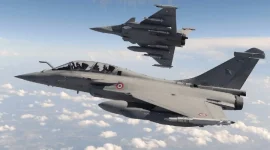
Military experts are currently debating whether the responsibility for funding the next-generation Rafale F5 fighter jet will shift to India following the United Arab Emirates' (UAE) sudden exit from the project.
The reality is that France will now have to shoulder the entire financial weight of the development on its own.
The breakdown in cooperation reportedly stemmed from a disagreement over technology sharing. Specifically, Paris declined to give Abu Dhabi access to highly sensitive optronics systems.
The UAE had originally planned to provide €3.5 billion toward the project's total estimated cost of €5 billion.
This withdrawal, which reportedly culminated after a tense meeting between French President Emmanuel Macron and UAE President Sheikh Mohamed bin Zayed, leaves the French government covering the massive shortfall, a situation expected to cause timeline setbacks.
This separation has notable geopolitical consequences. France considers the UAE its most crucial ally in the Arabian Peninsula and operates military installations within the country.
Furthermore, France is a primary weapons supplier to the UAE. Past agreements include a €16 billion contract for 80 Rafale jets, alongside advanced naval vessels, missiles, and comprehensive defence networks.
Their bond extends far beyond politics into deep military and industrial integration. For instance, when the UAE faced regional security threats, France stepped in directly to bolster its air defence capabilities.
Given this strong history, the UAE's choice to abandon the Rafale F5 initiative is a major blow to Paris. It highlights the strict boundaries of their alliance, particularly regarding how much sovereign defence technology France is willing to export.
The F5 standard is not just a routine update; it is a profound technological evolution of the fighter.
Scheduled for deployment between 2033 and 2035, the jet will be equipped with superior sensors, upgraded electronic warfare suites, and advanced communication links.
These improvements will enable it to function within a massive, interconnected network alongside satellites and other military assets.
A key feature of the F5 is its ability to command unmanned combat drones, known as "loyal wingmen," which will assist the manned fighter in scouting, jamming enemy signals, and launching strikes.
Furthermore, the F5 is being designed to carry France’s upcoming ASN4G hypersonic nuclear missile, ensuring its role as a premier strategic deterrent.
The economic fallout for France is severe. Creating the F5 variant requires an investment of roughly €5 billion, pushing the total long-term Rafale programme costs closer to €11.7 billion.
Without the UAE's €3.5 billion contribution, the French Ministry of Armed Forces must now find a way to finance this within its own national budget. This unexpected financial strain is highly likely to stretch resources thin and push back the aircraft's operational timeline.
While the loss of the UAE's financial safety net will undoubtedly slow down F5 development in France, the situation presents a much more stable outlook for India.
The Indian Defence Acquisition Council recently paved the way for a historic ₹3.25 lakh crore (approximately $40 billion) procurement of 114 French-made Rafale fighters under the Multi-Role Fighter Aircraft (MRFA) programme.
These new jets, intended to be manufactured domestically under the "Make in India" initiative, come with a built-in roadmap for future upgrades to the F5 standard.
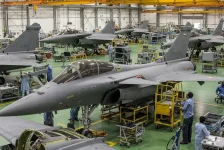
By adding 114 jets to its existing fleet of 36 Air Force Rafales and 26 upcoming Naval variants, India guarantees Dassault Aviation a massive, long-term production pipeline.
This enormous commercial volume gives the French manufacturer the financial security required to push forward with the F5's expensive research and development.
Historically, India has paid for "India Specific Enhancements" (ISE) to tailor the aircraft to its unique operational needs.
Although this is not direct funding for the F5's foundational research, the investments India makes in custom technologies—such as specialized radar sensors and drone integration—closely align with the capabilities planned for the F5.
Unlike the UAE, which demanded shared intellectual property and access to highly classified systems in return for its cash, India operates primarily as a mega-buyer.
While France has chosen to take on the direct legal and financial risks of creating the F5 to protect its sovereign technology, India is acting as the commercial anchor.
By being the largest international customer, New Delhi ensures that the Rafale production line remains highly profitable, indirectly enabling France to afford the F5's solo development.
Ultimately, the sheer size of India's procurement grants New Delhi massive influence without exposing it to the risks of early-stage development.
A core component of the MRFA deal is the establishment of local assembly lines through joint ventures, which will heavily boost India's domestic aerospace industry and create jobs.
More importantly, this framework guarantees that the Indian Air Force will receive F5-level capabilities as soon as they mature, likely by the mid-2030s.
While the UAE's departure might cause minor scheduling delays for the overall F5 programme, India's multi-billion dollar commitment serves as a crucial economic stabilizer.
It provides Dassault with the certainty needed to maintain heavy investments despite tightening defence budgets in Paris.
From a broader perspective, this situation highlights how major international buyers like India have evolved into the lifeblood of premier European defence projects.
France successfully protects its exclusive rights to the F5’s core secrets, but it is New Delhi's commercial reliability that truly guarantees the fighter's future.
For the Indian Air Force—which already boasts the largest and most capable Rafale fleet outside of France—this partnership is a strategic win.
It guarantees long-term access to next-generation warfare tools, including drone teaming and advanced strike capabilities, without ever having to write a cheque for the underlying research and development.