As UAE Exits Rafale F5, How India’s $40B Deal Poised to Provide Commercial Stability for France’s Solo Development

As UAE Exits Rafale F5, How India’s $40B Deal Poised to Provide Commercial Stability for France’s Solo Development


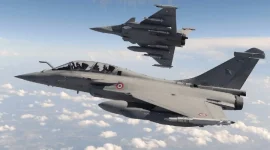
Military experts are currently debating whether the responsibility for funding the next-generation Rafale F5 fighter jet will shift to India following the United Arab Emirates' (UAE) sudden exit from the project.

The reality is that France will now have to shoulder the entire financial weight of the development on its own.

The breakdown in cooperation reportedly stemmed from a disagreement over technology sharing. Specifically, Paris declined to give Abu Dhabi access to highly sensitive optronics systems.

The UAE had originally planned to provide €3.5 billion toward the project's total estimated cost of €5 billion.

This withdrawal, which reportedly culminated after a tense meeting between French President Emmanuel Macron and UAE President Sheikh Mohamed bin Zayed, leaves the French government covering the massive shortfall, a situation expected to cause timeline setbacks.

This separation has notable geopolitical consequences. France considers the UAE its most crucial ally in the Arabian Peninsula and operates military installations within the country.

Furthermore, France is a primary weapons supplier to the UAE. Past agreements include a €16 billion contract for 80 Rafale jets, alongside advanced naval vessels, missiles, and comprehensive defence networks.

Their bond extends far beyond politics into deep military and industrial integration. For instance, when the UAE faced regional security threats, France stepped in directly to bolster its air defence capabilities.

Given this strong history, the UAE's choice to abandon the Rafale F5 initiative is a major blow to Paris. It highlights the strict boundaries of their alliance, particularly regarding how much sovereign defence technology France is willing to export.

The F5 standard is not just a routine update; it is a profound technological evolution of the fighter.

Scheduled for deployment between 2033 and 2035, the jet will be equipped with superior sensors, upgraded electronic warfare suites, and advanced communication links.

These improvements will enable it to function within a massive, interconnected network alongside satellites and other military assets.

A key feature of the F5 is its ability to command unmanned combat drones, known as "loyal wingmen," which will assist the manned fighter in scouting, jamming enemy signals, and launching strikes.

Furthermore, the F5 is being designed to carry France’s upcoming ASN4G hypersonic nuclear missile, ensuring its role as a premier strategic deterrent.

The economic fallout for France is severe. Creating the F5 variant requires an investment of roughly €5 billion, pushing the total long-term Rafale programme costs closer to €11.7 billion.

Without the UAE's €3.5 billion contribution, the French Ministry of Armed Forces must now find a way to finance this within its own national budget. This unexpected financial strain is highly likely to stretch resources thin and push back the aircraft's operational timeline.

While the loss of the UAE's financial safety net will undoubtedly slow down F5 development in France, the situation presents a much more stable outlook for India.

The Indian Defence Acquisition Council recently paved the way for a historic ₹3.25 lakh crore (approximately $40 billion) procurement of 114 French-made Rafale fighters under the Multi-Role Fighter Aircraft (MRFA) programme.

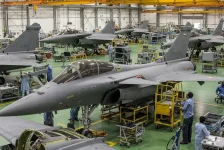
These new jets, intended to be manufactured domestically under the "Make in India" initiative, come with a built-in roadmap for future upgrades to the F5 standard.

By adding 114 jets to its existing fleet of 36 Air Force Rafales and 26 upcoming Naval variants, India guarantees Dassault Aviation a massive, long-term production pipeline.

This enormous commercial volume gives the French manufacturer the financial security required to push forward with the F5's expensive research and development.

Historically, India has paid for "India Specific Enhancements" (ISE) to tailor the aircraft to its unique operational needs.

Although this is not direct funding for the F5's foundational research, the investments India makes in custom technologies—such as specialized radar sensors and drone integration—closely align with the capabilities planned for the F5.

Unlike the UAE, which demanded shared intellectual property and access to highly classified systems in return for its cash, India operates primarily as a mega-buyer.

While France has chosen to take on the direct legal and financial risks of creating the F5 to protect its sovereign technology, India is acting as the commercial anchor.

By being the largest international customer, New Delhi ensures that the Rafale production line remains highly profitable, indirectly enabling France to afford the F5's solo development.

Ultimately, the sheer size of India's procurement grants New Delhi massive influence without exposing it to the risks of early-stage development.

A core component of the MRFA deal is the establishment of local assembly lines through joint ventures, which will heavily boost India's domestic aerospace industry and create jobs.

More importantly, this framework guarantees that the Indian Air Force will receive F5-level capabilities as soon as they mature, likely by the mid-2030s.

While the UAE's departure might cause minor scheduling delays for the overall F5 programme, India's multi-billion dollar commitment serves as a crucial economic stabilizer.

It provides Dassault with the certainty needed to maintain heavy investments despite tightening defence budgets in Paris.

From a broader perspective, this situation highlights how major international buyers like India have evolved into the lifeblood of premier European defence projects.

France successfully protects its exclusive rights to the F5’s core secrets, but it is New Delhi's commercial reliability that truly guarantees the fighter's future.

For the Indian Air Force—which already boasts the largest and most capable Rafale fleet outside of France—this partnership is a strategic win.

It guarantees long-term access to next-generation warfare tools, including drone teaming and advanced strike capabilities, without ever having to write a cheque for the underlying research and development.
 
As french are good and professional when it comes aviation product and speed deliveries. Bharat should buy this assembly line for current Rafaele aircraft as Franch transition to F5.
Finance one Adani/L&T/TATA/KalyaniGroup kind of capable corporate house to M&A to bring it in India to introduce modern aircraft assembly system.
Otherwise keep banging head on wall with HAL for centueries and pleading for output.
 
UAE has rightly understood that by 2035,validity of 4th Gen Fighters are effectively over.
Only the fools will spend his valuable money towards outdated machine
 
As french are good and professional when it comes aviation product and speed deliveries. Bharat should buy this assembly line for current Rafaele aircraft as Franch transition to F5.
Finance one Adani/L&T/TATA/KalyaniGroup kind of capable corporate house to M&A to bring it in India to introduce modern aircraft assembly system.
Otherwise keep banging head on wall with HAL for centueries and pleading for output.
French are also good in getting other countries to sponser their projects and share little technology with them.
 
French are also good in getting other countries to sponser their projects and share little technology with them.

By bringing this mordern setup, would upskill Indian companies to execute assembly line for military aircrafts and next iteration like AMCA, Gen6 next! and let HAL die down eventually as its soviet era dinosaur costing too much money, time and resources and degrading national security, just by its existence. Same like Honda entrance in Bharat, using Maruti collab, as of 2026 Bharat got big eco system of local car manufacturers.
i am talking about Su30 local assembly model but with private company of India. AK207 govet factory with Russian firm is faltering.

No one would share unless company bought lock stock and barrel.
In 2026 Planet Earth, Transfer of Technology doesnt happen its joke normally played to fool Indian tax payers by politicians and PSUs!! please drill it in brain!
even russians dont do it but its measure of "extent" Indians given access to their source code.
Cryo-engine, sub nuke system, AK207 rifle, Brahmos. Bharat dont have tech on them but lots of access not ALL!
Chinese learned it quickly and adapted, using hook or crook. Foreign countries wont allow take-over of their prized companies like Boeing, Lockheed, Rolls royce or GE.
So only way left espionage and hacking IT infra. I respect Chinese dedication as Bharat have only that route left or innovate & re-invent wheel!
PSUs not cut out for such tedious innovation and RnD work. Lacks mindset, dedication, qualifications and skills.
 
Last edited:
We need to buy something asap. Crucial gaps in inventory. However, rafale is adamant on source codes. I think that hits operations capability a lot. Lets look at Saab and Sukhoi instead.
 
Look at what Saab is offering Canada in their Jet proposal. 100% TOT. I don't understand why India is so enamored with France. Saab is world class and much cheaper than Rafale, 40 percent of the value of a jet is the software. It should be a deal killer for India.

Use the same template as Canada. Canada can come to a decision in 1 to 2 years on a Jet. It takes a decade in India.

Sweden's "Made-in-Canada" Proposal
Saab has presented an aggressive proposal focused on high-tech jobs and technology transfer:
  • Job Creation: Saab pledges to create between 6,000 and 12,600 jobs across Canada through a partnership with Bombardier.
  • Domestic Production: The proposal includes final assembly, testing, and long-term maintenance performed within Canada, offering what Saab calls "strategic autonomy".
  • Intellectual Property: Unlike the F-35, Saab has offered a 100% transfer of intellectual property, allowing Canada to upgrade and repair the fleet without foreign approval.
    The Logic +5
 
Look at what Saab is offering Canada in their Jet proposal. 100% TOT. I don't understand why India is so enamored with France. Saab is world class and much cheaper than Rafale, 40 percent of the value of a jet is the software. It should be a deal killer for India.

Use the same template as Canada. Canada can come to a decision in 1 to 2 years on a Jet. It takes a decade in India.

Sweden's "Made-in-Canada" Proposal
Saab has presented an aggressive proposal focused on high-tech jobs and technology transfer:
  • Job Creation: Saab pledges to create between 6,000 and 12,600 jobs across Canada through a partnership with Bombardier.
  • Domestic Production: The proposal includes final assembly, testing, and long-term maintenance performed within Canada, offering what Saab calls "strategic autonomy".
  • Intellectual Property: Unlike the F-35, Saab has offered a 100% transfer of intellectual property, allowing Canada to upgrade and repair the fleet without foreign approval.
    The Logic +5
Saab has offered a 100% transfer of intellectual property not mentioned but 100% Offset clause.

No one and let me repeat no one on Planet Earth, hand overs their defence tech another client/customer nation!!
Choootiya drill it in your head!!!!
 
We need to buy something asap. Crucial gaps in inventory. However, rafale is adamant on source codes. I think that hits operations capability a lot. Lets look at Saab and Sukhoi instead.
It better not to have mediocre, flimsy, puny aircraft posing as war jets. "Better late than never" Wonder who in IAF chose the Rafale, it was the original selection of Manmohan singh govt. This thing has low speed, poor climb rate, low ceiling, short range on mainbtanks, limited ammo cannot carry Brahmos, not retractable nozzle hence large Radar cross section, v high maintenance per hour of flight. It needs polished runways, highly purified fuel susrptible to bird hits.And to top it all, Very uncooperative Dassault. Hope good sense prevails. Jai Bharat! Jai Hind!
 
Indian Govt willing to to spend Huge amount 40$B for 114 aircrafts in addition to earlier procurement another 15 $B. But, This Govt can't able to focus and spend money 10$B on AMCA on last 10 years already wasted. This is all because our Netas, IAF officers fully addicted to the for hidden money. Such a incompetent HAL technologically.
 
Indian Govt willing to to spend Huge amount 40$B for 114 aircrafts in addition to earlier procurement another 15 $B. But, This Govt can't able to focus and spend money 10$B on AMCA on last 10 years already wasted. This is all because our Netas, IAF officers fully addicted to the for hidden money. Such a incompetent HAL technologically.
Foreign purchase means easy to make Cut-money and hide it overseas itself.
Defense funds in all countries are biggest source of corruption. From USA, China, India, Russia etc.
No one want to disturb this loaded gravvy train.
occasionally Quatrochi etc are exposed but nothing happens as big daddies pocket is concerned.
 
Saab has offered a 100% transfer of intellectual property not mentioned but 100% Offset clause.

No one and let me repeat no one on Planet Earth, hand overs their defence tech another client/customer nation!!
Choootiya drill it in your head!!!!
Choootiya? Pretty vulgar. You are easy to take dow, I just quote facts.

Here’s the clear, sourced breakdown of exactly which technologies Saab is offering to transfer to Canada as part of the Gripen E + GlobalEye proposal — based strictly on what is confirmed in the public record.

The citations below come from the Factually research synthesis and supporting reporting. I’ll reference them directly so you can trace each claim.

🎯 Core Technology Transfer Areas Confirmed for Canada
The public record shows Saab offering operational, software, integration, and production‑level technology transfer, not just assembly.

Below are the specific categories, with citations.

1. Open‑architecture mission systems & software adaptability
Saab highlights that Gripen’s open‑architecture mission system is designed for domestic modification and rapid software evolution.

This is explicitly described as a key part of the technology transfer package.

Citation:
Factually summary: Saab “highlights open‑architecture mission systems and software adaptability… that make domestic upgrades and rapid software evolution feasible.”

What this means for Canada:
Canada can modify mission software domestically
• Canada can integrate new weapons, sensors, and datalinks without U.S. approval
• Canada gains sovereign control over software updates and capability evolution

This is something the F‑35 program does not allow.

2. Sovereign sustainment, upgrades, and lifecycle engineering
Saab commits to transferring the technology required for Canadian‑led sustainment and upgrade work, including engineering, diagnostics, and systems integration.

Citation:
Saab would localize production “accompanied by technology transfer to enable sovereign sustainment and upgrade work.”

What this means:
• Canada can maintain and overhaul the aircraft without foreign approval
• Canada can modify avionics, EW, and mission systems
• Canada can run its own upgrade cycles (similar to Brazil’s Gripen program)
3. Assembly‑level and production‑level technology
Saab publicly states that Gripen fighters and GlobalEye aircraft would be assembled and built in Canada, which requires transfer of manufacturing processes, tooling, and engineering data.
Citation:
Saab would “localize production — assembling Gripen fighters and building GlobalEye platforms in Canada.”

What this means:
• Transfer of manufacturing know‑how
• Transfer of production engineering data
• Canadian firms gain long‑term aerospace capability
• Canada becomes part of the global Gripen supply chain

4. Systems integration rights (weapons, sensors, AI, EW)
Saab’s offer includes the ability for Canada to integrate its own systems, including weapons and sensors, because Gripen is designed for non‑restricted integration.

Citation:
Saab emphasizes mission‑system openness and partnerships (e.g., Bombardier, Cohere for AI) as part of the technology and capability work transferred to Canada.

What this means:
• Canada can integrate non‑U.S. weapons (Meteor, IRIS‑T, SPEAR, etc.)
• Canada can integrate domestic or allied EW systems
• Canada can integrate Canadian‑developed AI/ML tools (Cohere partnership)
• No ITAR restrictions blocking integration work
This is a major sovereignty advantage.

5. GlobalEye radar, sensor, and mission‑suite collaboration
GlobalEye production in Canada includes transfer of mission‑suite integration knowledge, especially radar and sensor fusion work.

Citation:
Saab’s proposal “emphasizes comprehensive technology transfer… integrating advanced radar systems and mission suites domestically.”
What this means:
• Canada participates in airborne early‑warning radar integration
• Canadian engineers gain access to sensor‑fusion architecture
• Canada can support and upgrade GlobalEye independently

6. AI, data‑fusion, and advanced analytics collaboration
Saab’s partnership with Cohere (Canadian AI company) is part of the technology transfer ecosystem.

Citation:
Partnerships like “Cohere for AI” are cited as elements anchoring technology and capability work inside Canada.

What this means:
• Canada gains access to mission‑data processing and AI‑enhanced decision tools
• Domestic development of next‑generation avionics and analytics

Potential for exportable Canadian‑developed modules

7. Industrial capability transfer (R&D centers, integration facilities)
Saab proposes establishing Canadian R&D centers and integration facilities in Ontario and Quebec.

Citation:
Saab links the industrial package to “local assembly lines and integration facilities in Ontario and Quebec.”

What this means:
• Long‑term aerospace engineering capability
• Domestic testing, certification, and integration
• Canada becomes a Gripen/GlobalEye hub for North America

📌 Summary: What Canada Actually Gets
Based on the confirmed public record, Saab is offering Canada:
Full sovereign control over:
• Mission software
• EW systems
• Weapons integration
• Sustainment and upgrades
Production and assembly
• Radar and sensor integration
• AI/ML mission‑system enhancements

This is deep, multi‑layer technology transfer, not superficial industrial offsets.
 
@Ammoman
Nice info and detailed one actually kudos! dont mind that word as i got pissed when TOT thrown around like cricket balls but it means IKEA flat-pack delivery in Indian context.
But complete tech transfer never happens until you buy out a company as Lock-stock-and-Barrel basis, if host nation even allows it.
As MNCs spend decades, billions to design, iterate and refine then certify, not possible to offer it on platter to customer.
Also its one item out of many iterations, and company need to earn back their investments.
These contracts and media bites dont paint complete picture.
Even though on paper looks great but there is more hidden than shown.
HAL got so called Transfer of Technology on Su30 why not India iterate it to Su57 or Su70 desi version ?? Ditto on T90 tank got TOT but look at Arjun tank! its okay but not the top-notch quality!
Brahmos missle so called 50-50% but India not capable to diversify and adapt to different purpose.
India got 80-90% missiles imported when it came to Sindoor op. Something doesnt add up as HAL biggest Technology respository since 1950s but when it comes design and iterate it up they are clowns!
 
@Ammoman
Nice info and detailed one actually kudos! dont mind that word as i got pissed when TOT thrown around like cricket balls but it means IKEA flat-pack delivery in Indian context.
But complete tech transfer never happens until you buy out a company as Lock-stock-and-Barrel basis, if host nation even allows it.
As MNCs spend decades, billions to design, iterate and refine then certify, not possible to offer it on platter to customer.
Also its one item out of many iterations, and company need to earn back their investments.
These contracts and media bites dont paint complete picture.
Even though on paper looks great but there is more hidden than shown.
HAL got so called Transfer of Technology on Su30 why not India iterate it to Su57 or Su70 desi version ?? Ditto on T90 tank got TOT but look at Arjun tank! its okay but not the top-notch quality!
Brahmos missle so called 50-50% but India not capable to diversify and adapt to different purpose.
India got 80-90% missiles imported when it came to Sindoor op. Something doesnt add up as HAL biggest Technology respository since 1950s but when it comes design and iterate it up they are clowns!
The Indian babus always say they have TOT but they never read the fineprint and they lie to the Indian public. There is never a penalty of any kind to lying politicians. Russia sticks to the agreement for the most part. Delivery is another matter.
 

Forum statistics

Threads
6,837
Messages
64,610
Members
5,192
Latest member
LittleBrownie
Back
Top