- Views: 2K
- Replies: 1
Data Patterns (India) Ltd., a prominent domestic electronics manufacturer, is stepping up as a crucial contributor to India’s Light Combat Aircraft (LCA) Mk2 programme.
The company is developing advanced cockpit and avionics systems for the upcoming medium-weight fighter jet.
Crucially, the technological foundations laid for the Tejas Mk2—which is currently targeting its maiden flight by mid-2026—are expected to be adapted for India’s ambitious fifth-generation Advanced Medium Combat Aircraft (AMCA) programme.
The firm is designing a "smart cockpit" and a sophisticated avionics architecture aimed at dramatically improving a pilot's situational awareness and mission control.
By integrating high-level sensor fusion, these systems are built to process multiple data streams simultaneously.
Because the design prioritises future upgrades, experts believe this digital infrastructure will eventually serve as the baseline for the AMCA stealth fighter, which is slated for a prototype rollout around 2028.
As the nation accelerates its self-reliance in military aerospace, private enterprises like Data Patterns are becoming indispensable to the domestic supply chain.
They are supplying the essential mission systems that empower modern jets to survive and dominate in highly contested combat zones, directly supporting the government's push to increase the indigenous content of the Tejas Mk2 to roughly 80%.
Smart Cockpit and Integrated Avionics for Next-Generation Fighter Operations
The Tejas Mk2’s new smart cockpit is engineered to surround pilots with a fully digital interface.This environment is specifically tailored to handle massive amounts of real-time battlefield data and sensor feedback without overwhelming the operator.
In contemporary air warfare, the cockpit functions as the ultimate command centre.
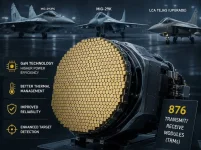
Data Patterns is building a unified display system that seamlessly merges inputs from the aircraft’s radar—such as the indigenous Uttam AESA radar planned for the Mk2—along with electronic warfare alerts, targeting pods, and secure communication channels.
This effort establishes a robust technological base for India's future airborne platforms.
These next-generation cockpits will feature high-resolution displays, intelligent algorithms for sensor fusion, and automated mission software.
This combination enables pilots to rapidly analyse complex tactical scenarios and make split-second decisions during high-intensity aerial engagements.
The engineering expertise gained from the LCA Mk2 project will be directly transferable to the AMCA stealth fighter.
For a fifth-generation aircraft like the AMCA, flawless sensor integration and data management are mandatory to maintain a low radar profile while executing multi-domain operations.
Advanced IRST and Missile Approach Warning Systems for LCA Mk2
Beyond cockpit displays, Data Patterns is supplying critical defensive and offensive sensors for the Tejas Mk2. This includes Missile Approach Warning Systems (MAWS) and Infrared Search and Track (IRST) capabilities.To build these high-tech sensors, the company is collaborating with a European tech firm. However, the manufacturing process is heavily focused on maximising 'Made-in-India' components, aligning with national self-sufficiency goals.
An IRST system is a game-changer in modern combat, allowing a fighter jet to locate airborne adversaries using their heat signatures instead of relying on traditional radar.
This passive tracking means the Tejas Mk2 can hunt enemy aircraft without emitting radar waves that would otherwise reveal its own location—a vital tactic in stealth and electronic warfare.
Complementing the IRST, the MAWS acts as a defensive shield. It detects incoming missile threats early and automatically deploys countermeasures, such as jamming signals or flares.
This automated defence mechanism is crucial for keeping the aircraft and pilot safe in hostile, heavily defended airspace.
Transitioning from Subsystem Supplier to Full Defence Systems Provider
Data Patterns is not just making isolated parts; it is undergoing a major corporate evolution.The company is moving away from being a basic subsystem vendor to becoming a primary provider of comprehensive defence solutions and fully integrated systems.
Notably, the firm is currently part of a broader private-sector consortium bidding to build the AMCA fighter itself.
This strategic pivot mirrors a broader transformation within the Indian defence industry.
Private corporations are stepping up to lead the integration of entire mission systems and advanced platform technologies, rather than merely delivering standalone hardware pieces.
By taking on end-to-end design and integration, Data Patterns is positioning itself as a primary technology ally for the armed forces.
Their portfolio is expanding to cover massive initiatives, ranging from fighter jets and missile networks to ground radars and electronic warfare arrays.
With the Tejas Mk2 and AMCA programmes gaining momentum, private Indian firms will play an increasingly dominant role.
This collaborative effort between the government and private sector is the cornerstone of the Aatmanirbhar Bharat initiative, ensuring the military is equipped with cutting-edge, homegrown technology.