Despite Significant Interest, IAF Hesitant on F-35 Acquisition Due to US End-Use Monitoring and Indigenous Weapon Integration Issues

Despite Significant Interest, IAF Hesitant on F-35 Acquisition Due to US End-Use Monitoring and Indigenous Weapon Integration Issues


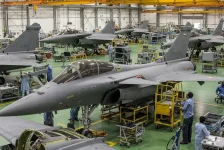
While the Ministry of Defence (MoD) has explored the American F-35 as a potential temporary solution for India’s fifth-generation fighter needs, the Indian Air Force (IAF) remains strongly opposed to the idea.

Recent high-level proposals from Washington have attempted to sweeten the deal, but Indian military leaders remain concerned about losing operational independence.

The primary fear is that American regulations would severely restrict how India could use the advanced jets and fit them into its current military setup.

The IAF has made it clear to the MoD that the F-35 is not a practical option because of strict U.S. usage rules and the inability to easily add Indian-made weapons to the aircraft.

For decades, India has relied on the freedom to mix and match weapons from different countries on its fighter jets.

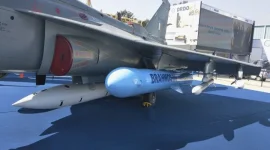
A prime example of this success is the Russian-origin Sukhoi Su-30MKI, which was heavily modified to carry the deadly Indian-Russian BrahMos cruise missile.

This adaptability proved crucial during recent missions like Operation Sindoor, demonstrating that full control over aircraft upgrades is a non-negotiable requirement for the IAF.

In stark contrast to the flexible Sukhoi, the F-35 operates in a highly restricted digital environment. The U.S. government maintains strict control over the jet's software, computer source codes, and upgrade protocols.

If India wanted to add its own missiles to the F-35, it would require explicit American permission, years of testing, and massive financial costs.

Consequently, India would be forced to buy highly expensive Western bombs and missiles, completely defeating the nation's ongoing push to build a self-reliant defence manufacturing sector.

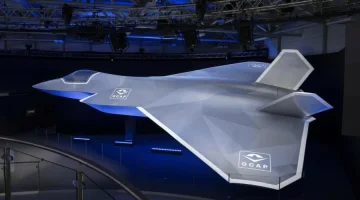
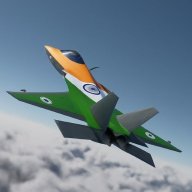
Rather than accepting these strict terms, the IAF prefers to focus its resources on India's own Advanced Medium Combat Aircraft (AMCA) project.

According to recent developmental roadmaps, the indigenous AMCA is expected to see its first prototype rollout by late 2028 or 2029, with mass production targeted for 2035.

While the IAF does face a temporary shortage of stealth fighters until the AMCA is ready, military planners believe that waiting for a homegrown jet is better than compromising the country's strategic independence with a restrictive foreign purchase.

History also plays a major role in the IAF’s hesitation.

Indian military planners often point to the strict End-Use Monitoring agreements the United States forced upon Pakistan when selling them F-16 fighter jets.

Washington placed severe limits on where Pakistan could fly the planes, what modifications they could make, and how the weapons could be used.

Indian defence experts view this as a clear warning sign, arguing that relying on American combat aircraft could leave India politically handcuffed during a major national security crisis.

Ultimately, the IAF's strategy is focused on long-term freedom rather than a quick fix.

The military is prioritising aircraft that allow for complete customisation, the unrestricted addition of locally made weapons, and zero foreign interference during combat missions.

This approach perfectly matches India’s wider national defence policy, which is dedicated to breaking free from foreign suppliers and building a powerful, self-sustaining military-industrial base.
 
India can't afford it and the F-35 operating cost and maintenance is not feasible for anyone.

1774901997389.webp


1774902068017.webp

1774902132275.webp

1774902176432.webp
 
India can't afford it and the F-35 operating cost and maintenance is not feasible for anyone.

1774901997389.webp

1774902068017.webp
1774902132275.webp
1774902176432.webp
Oh India can afford it all right. Money is not the problem. Loss of operational independence is the issue. Let the US address that 100%, and India would be happy to buy.

Everyone knows the US wont do that, and India wouldn't buy.
 
Oh India can afford it all right. Money is not the problem. Loss of operational independence is the issue. Let the US address that 100%, and India would be happy to buy.

Everyone knows the US wont do that, and India wouldn't buy.
It's not only about affording...main issue is serviceability. F35 requires approx 30-50 maintenance hours after every flight to maintain it's coating. Also, as it;s just a single engine jet, any loss due to malfunction is extremely severe. It requires climate controlled hangars

 
It's not only about affording...main issue is serviceability. F35 requires approx 30-50 maintenance hours after every flight to maintain it's coating. Also, as it;s just a single engine jet, any loss due to malfunction is extremely severe. It requires climate controlled hangars

Yes, agree with that. I do expect serviceability to improve as the support ecosystem matures. My basic point was about operational freedom and the fact that it was insinuated that India can"t afford it financially.
 
Oh India can afford it all right. Money is not the problem. Loss of operational independence is the issue. Let the US address that 100%, and India would be happy to buy.

Everyone knows the US wont do that, and India wouldn't buy.
India can't afford it and you are correct it is a trap that gives US control of India.

India is polluted, look at Delhi, if India had money they would fix it. Sanitation is what makes you a developed country. India is a garbage dump. They let the so called untouchable climb into sewers to clean them. Everyone else in the world bring trucks with pumps. Maybe it's the class system where the upper class keep the bottom 50% from moving up from poverty. I was in Delhi shopping at a high end Jewelry store. Beautiful inside but garbage everywhere outside. I said why don't you hire people to clean up the garbage on the street. He said I get the untouchables to do it for free, just give them a few rotis. How sick is that, when half the population is treated like that, India is going nowhere. I walked out and gave a family 5000 rupees and said I am hiring you to clean the street. I came back the street was clean except infront in front of the jewelry store. They said the owner beat them, said next week, you come and clean in front of my business for free and maybe I will give you a few rotis. That is India.
 
India can't afford it and you are correct it is a trap that gives US control of India.

India is polluted, look at Delhi, if India had money they would fix it. Sanitation is what makes you a developed country. India is a garbage dump. They let the so called untouchable climb into sewers to clean them. Everyone else in the world bring trucks with pumps. Maybe it's the class system where the upper class keep the bottom 50% from moving up from poverty. I was in Delhi shopping at a high end Jewelry store. Beautiful inside but garbage everywhere outside. I said why don't you hire people to clean up the garbage on the street. He said I get the untouchables to do it for free, just give them a few rotis. How sick is that, when half the population is treated like that, India is going nowhere. I walked out and gave a family 5000 rupees and said I am hiring you to clean the street. I came back the street was clean except infront in front of the jewelry store. They said the owner beat them, said next week, you come and clean in front of my business for free and maybe I will give you a few rotis. That is India.

Incorrect example and generalization.

Pollution in Delhi -> Main issue is Delhi is in a landlocked basin within the Indo-Gangetic plain. Himalayas to North and Aravalli hills to west and south west restrict the air movement. This isn't a problem in Mumbai, Kolkata or Chennai as the sea breeze sweeps away the SMOG, while cities like Bengaluru are at a higher elevation.
NCR engine entirely is heavily industrialized, all the pollutants from nearby industrial towns are stuck in that basin with delhi. The rapid expansion of Construction industry for economic boom comes with a cost which aggravates the geographic constraints.

Not sure if you're aware, but Delhi operates highest number of EV buses in india. 2,300 Crore INR worth of project to automate street cleaning is launched which will replace manual sweeping to vaccum based mechanical cleaning.

Delhi has a population which is larger than many entire countries like Australia. While Delhi is obstructed with it's geography, the amount of transition it's urban infra is going through. Most urban centers in west have never even had to manage such scale of complexity.
 

Forum statistics

Threads
6,781
Messages
64,420
Members
5,163
Latest member
okramjohnkeplersingh
Back
Top