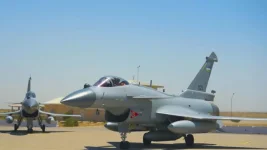
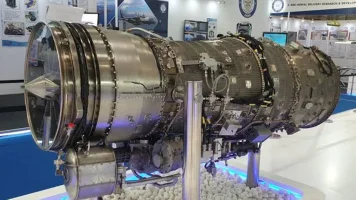
The progression of the Indian Air Force's (IAF) Tejas Mk1A fighter jet programme heavily depends on the timely arrival of GE Aerospace's F404-IN20 turbofan engines.
With August 2026 now over, the defence community is closely monitoring the latest delivery timelines.
However, there has been no official announcement regarding the receipt of two engines that were scheduled to be handed over to Hindustan Aeronautics Limited (HAL) this past month.
In July 2026, GE Aerospace successfully delivered the seventh F404-IN20 engine to HAL. This handover brought temporary relief and momentum to the production line, which has faced significant setbacks due to prolonged global supply chain disruptions.
These powerplants are part of a major $716 million contract signed in 2021 for 99 units, intended to power the new fleet of 83 Light Combat Aircraft (LCA) Tejas Mk1A jets.
According to the revised roadmap agreed upon by HAL and GE Aerospace, August was designated as the target for the first twin-engine batch delivery.
The arrival of this batch would have increased the total number of received engines from seven to nine, establishing a steady expected production rate of roughly two engines per month.
Despite the month concluding, neither HAL nor GE Aerospace has issued a public statement confirming that the eighth and ninth engines have reached the manufacturing facility.
The absence of an official update does not automatically mean the deliveries have been delayed.
The engines might currently be in transit, undergoing customs clearance, or handed over without an immediate press release. However, an official statement from HAL is increasingly crucial given the growing production backlog.
Reports indicate that nearly 30 Tejas Mk1A airframes are already in advanced stages of assembly—fully equipped with radars and electronic warfare suites—waiting exclusively for the mechanical integration of these engines.
The immediate question is whether these two critical components have safely reached HAL's facilities. If they have arrived, the next priority is whether HAL has begun inserting them into the waiting aircraft on the production line to kickstart flight tests.
An official update from either the Ministry of Defence or the manufacturers would provide much-needed clarity on whether the broader goal of supplying 20 to 22 engines through the 2026–2027 financial year remains on track.