- Views: 3K
- Replies: 3
India's monumental ₹63,000-crore "Super Sukhoi" modernisation initiative for the Indian Air Force (IAF) has reached a major breakthrough.
The indigenous Virupaksha Active Electronically Scanned Array (AESA) radar, engineered by the Defence Research and Development Organisation's (DRDO) Electronics and Radar Development Establishment (LRDE), has transitioned from the drawing board to physical prototype construction.
This advanced sensor is the cornerstone of the strategy to upgrade the formidable Su-30MKI fleet into 4.5-generation combat platforms.
Prototype Assembly Underway
Following the successful conclusion of the design phase, technical teams are currently building the initial full-scale radar prototype.Dedicated assembly lines and production rigs, which were established toward the end of 2025, are now actively supporting the integration and ground-testing of the radar's fundamental hardware before airborne evaluations commence.
Evolution from the Uttam Radar
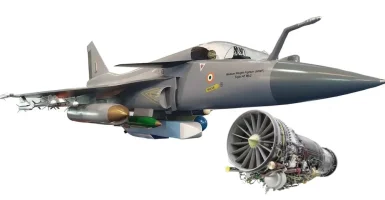
The Virupaksha system represents a massive leap forward from the Uttam AESA radar, which is actively being tailored for the Tejas fighter after completing over 125 successful test flights.Because the Su-30MKI is a heavy air superiority fighter, the Virupaksha requires a significantly larger footprint, higher energy output, and a more intricate integration process than its predecessor.
Next-Generation GaN Technology
At its core, the new radar houses roughly 2,400 Transmit/Receive (TR) modules built on cutting-edge Gallium Nitride (GaN) semiconductors.This represents a generational shift from the older Gallium Arsenide (GaAs) components and the Russian-origin N011M Bars passive (PESA) radar currently equipping the jets.
GaN technology allows the system to emit much stronger signals while running cooler. This drastically extends the jet's detection range—reportedly up to 400 kilometres—and drastically improves overall operational efficiency.
Industry Consortium
To manufacture this complex system, DRDO is leveraging a consortium of domestic aerospace and defence manufacturers.Astra Microwave Products Limited has taken the lead on producing the high-frequency GaN modules, with heavyweights Larsen & Toubro (L&T) and Hindustan Aeronautics Limited (HAL) assisting in the overarching manufacturing and integration efforts.
Early Testing Phases
Initial laboratory assessments, known as "First Light" or power-on tests, kicked off in late February 2026.These crucial preliminary checks are designed to fine-tune the radar's sophisticated beam-steering software and verify that the liquid cooling systems can effectively manage the intense heat produced by the high-power modules.
Ground and Sub-System Trials
Before the radar ever takes to the skies in a fighter, it will undergo rigorous ground examinations.Technicians are readying a stationary Su-30 nose cone to perform electromagnetic compatibility (EMC) checks, ensuring the powerful new sensor seamlessly interacts with the aircraft's existing avionics without causing electronic interference.
Simultaneously, specific sub-components are being flight-tested aboard DRDO’s trusted Hawker 800 executive jet, which serves as a dedicated flying testbed for airborne sensors.
Flight Testing Timeline
Following these meticulous validations, the programme will advance to full-scale airborne trials.Projected to launch in early 2028, these flights will utilise a specially modified Su-30MKI operated by the Aircraft and Systems Testing Establishment (ASTE).
Pilots will push the radar to its limits in realistic combat scenarios, testing its ability to detect hostile aircraft, track multiple targets simultaneously, and operate in heavy electronic warfare conditions.
Strategic Impact
Ultimately, the Virupaksha AESA radar is the technological heart of the Super Sukhoi programme.Once fielded, it will replace the ageing Russian sensors, equipping the IAF to seamlessly track stealthy targets, resist intense jamming, and deploy long-range indigenous weapons like the Astra Mk-III missile.
This vital upgrade will secure the Su-30MKI's position as the backbone of India's aerial defence network well into the 2050s.