India’s premier defence research agency is fully prepared to launch the development of the highly anticipated Agni-VI intercontinental ballistic missile (ICBM), awaiting only the green light from the central government.
Speaking at the recent ANI National Security Summit 2.0, Defence Research and Development Organisation (DRDO) Chairman Dr. Samir V. Kamat confirmed that the fundamental groundwork and technological research for the advanced missile are already mature.
He stressed that the timeline for the project now rests entirely on a formal policy decision, explicitly stating, "We are ready whenever the government gives us the go-ahead."
Expected Capabilities of Agni-VI
Set to be a massive technological upgrade over the existing Agni-V, the proposed Agni-VI will significantly boost India’s long-range strategic strike capabilities.While official blueprints remain classified, defence experts and open-source intelligence suggest the four-stage, solid-fueled ICBM could boast an impressive operational range between 10,000 and 12,000 kilometres.
Furthermore, reports indicate the system will feature Multiple Independently Targetable Re-entry Vehicle (MIRV) technology, allowing a single missile to deploy up to 10 independent warheads at distinct targets.
It is also expected to utilize Maneuverable Re-entry Vehicles (MaRV), decoys, and radar-absorbent coatings to successfully evade sophisticated modern missile defence shields.
The Role of Political Clearance
Dr. Kamat’s remarks highlight the standard protocol governing India’s strategic arms initiatives, where the highest levels of political leadership hold the authority for final clearance.Because long-range ICBMs like the Agni-VI are powerful tools for global deterrence and carry profound geopolitical weight, their development extends far beyond just scientific achievement.
The decision to proceed requires careful consideration of international diplomacy, arms control dynamics, and the broader national security doctrine, making the central government's approval an absolute necessity before metal is cut.
Technological Maturity and Reduced Risk
On the technical front, DRDO’s confidence stems from the extensive expertise gained during the creation of earlier Agni variants.Essential components—such as rocket propulsion systems, advanced guidance, re-entry vehicle dynamics, and heat-resistant composite materials—have already been perfected and tested over decades.
By leveraging the foundational technologies developed for these previous missiles, the organisation can seamlessly evolve its existing platforms.
This evolutionary approach not only cuts down on future development time but also severely minimizes the financial and operational risks typically associated with building next-generation weaponry from scratch.
Broader Missile Developments
In addition to the Agni-VI update, Dr. Kamat shared significant progress regarding India’s wider missile ecosystem.He noted that the Long-Range Anti-Ship Missile (LR-AShM) hypersonic glide program has reached an advanced phase, with initial trials expected very soon.
Unlike hypersonic cruise missiles that rely on scramjet engines throughout their flight, this glide vehicle utilizes an initial booster before gliding unpowered at extraordinary speeds to strike targets.
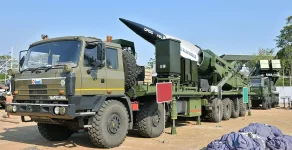
Meanwhile, tactical short-range systems like the Pralay ballistic missile are in the final stages of testing and are nearing induction, marking a comprehensive enhancement of India’s multi-layered conventional and strategic defence capabilities.