- Views: 3K
- Replies: 11
India’s classified hypersonic weapons initiative, Project Vishnu, has reached a vital stage of development.
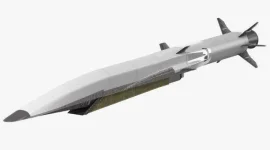
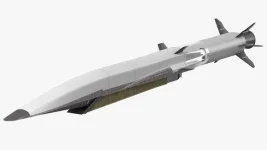
The Defence Research and Development Organisation (DRDO) has initiated the manufacturing of custom jigs and fixtures required for the booster integration of the Extended Trajectory Long Duration Hypersonic Cruise Missile (ET-LDHCM).
This seemingly routine manufacturing step is actually a major strategic leap, as these specialized tools are critical for guaranteeing the flawless alignment and structural strength needed to assemble highly advanced hypersonic propulsion systems.
The ET-LDHCM stands as the crown jewel of Project Vishnu, an overarching defence programme that aims to develop an array of next-generation hypersonic weapons, reportedly including up to 12 distinct systems for both offensive and defensive roles.
While companion projects such as the Dhvani Hypersonic Glide Vehicle (HGV) and the Long Range Anti-Ship Missile (LR-AShM) are tailored for specific combat roles, the ET-LDHCM is designed as a highly adaptable deep-strike asset.
Its deployment is poised to fundamentally transform India’s approach to long-range precision warfare and strategic deterrence in the region.
The driving force behind the ET-LDHCM is a cutting-edge, actively cooled scramjet engine.
Unlike conventional rocket motors that must carry heavy onboard oxidizers, a scramjet breathes in atmospheric oxygen during flight to sustain combustion, making it vastly more efficient and lighter for prolonged hypersonic travel.
Proving the viability of this complex design, DRDO scientists achieved a monumental milestone in January 2026. A full-scale ground test of the scramjet engine ran successfully for 12 minutes, proving the system's ability to safely manage extreme heat and maintain stable thrust over long durations.
When deployed, the missile is projected to tear through the sky at speeds nearing Mach 8—approximately 11,000 kilometres per hour. This places the ET-LDHCM among the most elite and rapid cruise missiles currently under development worldwide.
Operationally, the baseline version will be capable of striking targets 1,500 kilometres away.
Furthermore, open-source reports indicate that the missile can carry a payload ranging from 1,000 to 2,000 kilograms, allowing it to be armed with either conventional or nuclear warheads.
Future upgrades could push its maximum range to 2,500 kilometres through optimized fuel usage and varied mission profiles.
Surviving the friction of hypersonic speeds is one of aerospace engineering's greatest hurdles.
To prevent the missile from breaking apart at temperatures that can spike to 2,000 degrees Celsius, the ET-LDHCM relies on a combination of endothermic fuels and state-of-the-art ceramic matrix composites.
These specialized thermal barrier coatings, developed domestically, act as a robust heat shield to protect the missile's structural integrity and its sensitive internal electronics during its blazing flight path.
Strategically, what makes the ET-LDHCM so dangerous to adversaries is its unique flight behaviour.
Traditional ballistic missiles travel in predictable, high-arching arcs into space. In contrast, this new cruise missile maintains a much lower altitude and retains the ability to actively steer and change course mid-flight.
This deadly blend of blistering speed, unpredictable manoeuvrability, and a flattened trajectory makes the ET-LDHCM nearly impossible to track and shoot down, effectively neutralizing advanced air defence networks like the S-400 or THAAD systems.
Finally, the ET-LDHCM programme is designed with maximum battlefield flexibility in mind.
DRDO is engineering the missile to be launched from a variety of military assets, including ground-based mobile truck launchers, naval warships, submarines, and aerial platforms like the Su-30MKI fighter jet.
This tri-service compatibility ensures that the Indian Armed Forces can distribute their hypersonic strike capabilities across land, sea, and air, significantly boosting the country's rapid response options and overall survivability in any future conflict.