- Views: 2K
- Replies: 1
India has reached a major milestone in its quest to build a High Altitude Long Endurance (HALE) unmanned aerial vehicle (UAV).
The Aeronautical Development Establishment (ADE), a key laboratory under the Defence Research and Development Organisation (DRDO), has moved the project from the drawing board to the full-scale development stage using the Development-cum-Production Partner (DcPP) framework.
This upcoming 6-ton class "hunter-killer" drone is being designed to match the capabilities of advanced global systems like the American MQ-9B SkyGuardian.
Armed with a 2,000 kg payload capacity, it will drastically boost the Indian armed forces' intelligence, surveillance, target acquisition, and reconnaissance (ISTAR) missions, along with its precision strike power.
To power this massive aircraft, which features a planned wingspan of approximately 25 metres, the DRDO is actively looking to team up with both public and private sector companies to build a suitable propulsion system.
The goal is to develop an engine in the 1000 to 1200 horsepower range, the standard requirement for HALE drones worldwide.
A highly efficient engine in this class is essential to provide the necessary thrust, long endurance, and fuel economy.
It must be capable of carrying heavy, advanced surveillance equipment—such as synthetic aperture radars, electro-optical/infrared cameras, and electronic intelligence tools—while operating at altitudes well above 35,000 feet for continuous missions stretching beyond 24 hours.
The transition to the DcPP stage marks a critical shift toward building actual flight prototypes and establishing a concrete production line. Under this model, the ADE is closely cooperating with leading Indian private sector enterprises.
Defence industry giants such as Tata Advanced Systems, Larsen & Toubro (L&T), and the Adani Group are emerging as the frontrunners to collaborate on manufacturing the initial batch of five prototype aircraft.
This partnership strategy aligns with India's broader "Atmanirbhar Bharat" initiative, aiming to harness the manufacturing power of private industry to dramatically speed up domestic defence production timelines.
In terms of structural design, engineers at the ADE are simultaneously exploring two different airframe shapes to test which offers the best flight efficiency and mission flexibility.
The first design features a Y-tail setup, which is carefully engineered to lower aerodynamic drag and reduce the drone's radar cross-section, thereby increasing its chances of surviving undetected in hostile airspace.
The second option is a twin-boom layout, a design heavily focused on carrying maximum payloads with superior structural stability, similar to the proven architecture of platforms like the Israeli Heron TP.
Envisioned as a heavy-duty combat and surveillance platform, this indigenous HALE UAV is meant to loiter over target areas for long periods before executing precision strikes if required.
During the early development and flight testing phases, these prototypes will be equipped with foreign-made Honeywell TPE331-10 turboprop engines—the very same engines that power the famous American MQ-9 Reaper.
Utilizing this proven imported engine in a pusher configuration ensures that the testing phases will have a stable and highly reliable power source while the rest of the aircraft's complex systems are refined.
However, India’s ultimate goal is complete self-reliance in aerospace propulsion.
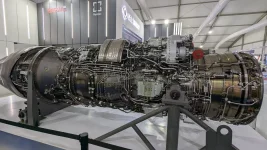
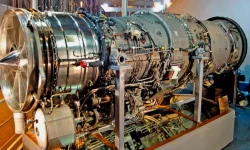
To achieve this, engineers are focusing on adapting the Hindustan Turbo Shaft Engine (HTSE-1200).
Originally created to power helicopters like the Advanced Light Helicopter (ALH) and Light Utility Helicopter (LUH), the HTSE-1200 has emerged as the most viable homegrown engine for the new drone.
Capable of generating around 1,200 kW (roughly 1,600 horsepower), the core of this helicopter engine is currently being modified into a turboprop variant specifically suited for high-altitude UAV flight.
Once successfully adapted, this indigenous engine will completely replace foreign imports in all future production batches.
Simultaneously, considering the massive projected demand from the armed forces, the DRDO remains willing to develop a brand-new engine from the ground up if the HTSE-1200 adaptation falls short.
The Indian Army, Navy, and Air Force have jointly signaled a need for nearly 100 HALE-class drones. This staggering number is entirely separate from another ongoing project by Hindustan Aeronautics Limited (HAL) to develop a jet-powered stealth unmanned combat vehicle.
Furthermore, the Defence Ministry recently cleared a separate major acquisition for 87 Medium Altitude Long Endurance (MALE) UAVs. Together, these procurements represent a massive overhaul and expansion of India's multi-tiered robotic air fleet.
From a broader geopolitical and military perspective, this domestic HALE UAV project is a monumental leap toward cutting India’s reliance on costly foreign imports, such as the recently signed $4 billion deal for 31 US-made MQ-9B drones.
By bringing private industry into the fold through the DcPP model, the government is laying the foundation for a scalable, permanent unmanned aviation ecosystem within the country.
This collaborative approach is expected to smooth out production bottlenecks and spark rapid technological innovation across critical defence sectors like composite aerostructures, modern avionics, and homegrown propulsion systems.