Safran Aircraft Engines recently joined hands with the French military to celebrate a major milestone: the 40th anniversary of the M53 turbofan engine.
To honour the powerplant that has driven the iconic Mirage 2000 fighter jet since its inception, a special flypast took place over Safran’s Villaroche plant, followed by a landing at the Melun-Villaroche airfield.
This event highlighted four decades of reliable service for one of the most successful military jet engines produced by France.
In the past 40 years, the M53 engine has logged a remarkable 2.5 million flight hours globally, proving its durability and consistent performance across various air forces.
The Indian Air Force (IAF) stands out as one of its earliest international adopters. By inducting the Mirage 2000 in the mid-1980s, India became a pioneering export customer for the renowned French fighter aircraft.
Since its introduction, the Mirage 2000 has proven itself as an exceptionally capable multirole fighter within the IAF fleet. Known for its steady availability, precise strike capabilities, and rock-solid reliability, the aircraft has cemented its place in India's defence strategy.
Thanks to comprehensive mid-life upgrades, the IAF now expects to keep the Mirage 2000 in active frontline service until the late 2030s—and potentially up to 2038 or 2039—giving the jet an extraordinary operational lifespan of more than 50 years.
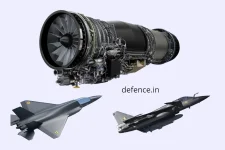
When India first received its Mirage 2000H fighters in the 1980s, the jets were powered by the original Snecma M53-5 engines.
This initial production model produced around 88 kilonewtons (kN) of thrust with the afterburner engaged, offering the aircraft excellent climbing speed and supersonic flight capabilities that perfectly matched the IAF’s needs at the time.
As aviation technology advanced, Safran—operating under the name Snecma at the time—rolled out the upgraded M53-P2 engine.
Generating an impressive 95 kN (approximately 21,400 pounds) of maximum thrust, this newer variant provided superior acceleration and shorter takeoff distances. Crucially, it offered better overall performance in challenging conditions, such as high altitudes and extreme temperatures.
Seeing the clear benefits of the more powerful engine, the Indian Air Force systematically upgraded its entire Mirage 2000 fleet to the newer standard.
Today, every single Mirage 2000I and Mirage 2000TI in the Indian inventory is powered exclusively by the M53-P2, making it the undeniable driving force behind the fleet’s modernised capabilities.
This critical engine upgrade went hand in hand with a broader mid-life modernisation effort that turned the aircraft into a highly sophisticated fourth-generation fighter.
The overarching upgrade package included the installation of a modern glass cockpit, cutting-edge mission computers, an advanced radar system, and upgraded electronic warfare suites, alongside the ability to deploy the latest precision-guided munitions and air-to-air missiles.
Through these continuous enhancements, the Mirage 2000 has maintained its edge as a highly lethal combat platform. Even though it is now one of the oldest fighter types in the IAF’s possession, it continues to hold its own in modern warfare scenarios.
The aircraft's real-world combat history further solidifies its legendary status.
During the 1999 Kargil War, the Mirage 2000 famously delivered precision-guided bombs to destroy heavily fortified enemy bunkers in high-altitude mountains.
The fighter has also played a crucial role in more recent strategic operations, such as the 2019 Balakot airstrikes, consistently proving its worth on the battlefield.
The enduring legacy of the M53 engine highlights just how vital continuous upgrades and dedicated maintenance are to military aviation.
Even after 40 years, the engine remains highly dependable, allowing the veteran Mirage 2000 to fly seamlessly alongside much newer and heavier IAF fighters, including the Dassault Rafale and the Sukhoi Su-30MKI.
Looking ahead, the Mirage 2000 remains a critical asset for India's defence during a complex transitional phase for its air power.
As the Indian Air Force steadily inducts the indigenous LCA Tejas Mk1A, readies the production of the Tejas Mk2, and develops the fifth-generation Advanced Medium Combat Aircraft (AMCA), the trusted Mirage 2000 fleet will continue to bridge the gap.
Aided by ongoing support from French manufacturers and a healthy supply of spare parts, this historic fighter is set to remain a cornerstone of Indian air defence well into the late 2030s.