The Indian Air Force (IAF) has recently released a tender for the upkeep of the technical zone at Air Force Station (AFS) Sulur.
While this might look like standard facility upkeep, it marks a crucial financial commitment to one of India’s most vital military aviation centres.
Serving as the primary base for the Light Combat Aircraft (LCA) Tejas and a critical maintenance hub, Sulur is essential for keeping various aircraft fleets combat-ready.
Situated in Tamil Nadu, AFS Sulur stands as the second-largest air base of the IAF and one of its most active operational sites.
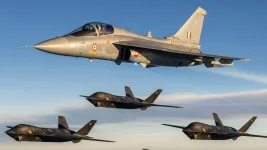
The station is home to a wide array of aircraft, such as the domestically built Tejas fighter, An-32 transporters, Mi-17 helicopters, and the famous Sarang helicopter display team.
Managing such a diverse collection of aircraft demands a highly developed maintenance framework that can perform everything from everyday servicing to extensive depot-level repairs.
A key element of Sulur’s capabilities is the No. 5 Base Repair Depot (5 BRD), which serves as a leading Maintenance, Repair, and Overhaul (MRO) establishment for the IAF.
This depot handles the intensive overhaul, repair, and restoration of aircraft parts and systems that cannot be managed by active frontline squadrons. Its role is especially critical in backing the LCA Tejas initiative as India's indigenous fighter fleet continues to grow.
The newly issued tender concentrates specifically on the base’s technical area. This sector contains highly specialised workspaces where aircraft are inspected, repaired, and subjected to rigorous systems testing.
Unlike regular administrative offices, these technical zones must strictly adhere to demanding engineering protocols, as they facilitate sensitive aerospace work involving modern propulsion, avionics, and mission systems.
Such specialised facilities demand robust flooring to bear the weight of heavy jets and support machinery, along with uninterrupted power sources for sensitive testing tools.
They also require climate-controlled spaces that prevent dust or contamination during intricate repair work.
Maintaining these high standards is absolutely essential when dealing with next-generation aircraft equipped with active electronically scanned array (AESA) radars, digital flight controls, and modern mission computers.
The maintenance infrastructure at Sulur is taking on unprecedented importance for the Tejas programme.
With the IAF having ordered 180 Tejas Mk1A fighters—and with deliveries expected to gain momentum by late 2026 following the recent resumption of GE F404 engine supplies—maintenance demands are projected to surge.
Boosting maintenance capabilities is necessary to accommodate a larger fleet and guarantee that these fighter jets remain ready for active duty rather than being grounded for repairs.
Keeping the base infrastructure in top condition directly boosts the operational readiness of the fleet.
Properly maintained repair bays, hangars, and workshops help minimise servicing delays while providing technicians with the right environment to handle advanced aerospace systems.
Avoiding infrastructure-related delays is becoming more critical as the rate of new aircraft inductions speeds up.
Sulur’s technical zones are also responsible for servicing Line Replaceable Units (LRUs), radar modules, flight control computers, and communication gear.
Servicing these delicate components requires strict anti-static conditions, along with stable temperature and humidity levels, to avoid any accidental damage.
Ongoing upkeep of the workshop facilities guarantees that these specific environmental parameters continue to meet strict military standards.
Another vital component of this maintenance tender is the enhancement of electrical and mechanical systems that back the repair operations.
The sophisticated equipment used for testing aircraft requires incredibly stable electricity with zero fluctuations to maintain precise diagnostics and calibration.
Upgrading the infrastructure typically involves better grounding setups, enhanced power distribution, and advanced electrical safety measures that protect both the expensive equipment and the personnel.
These maintenance initiatives frequently involve replacing outdated lighting in technical workshops and hangars.
By installing modern LED lighting, precision maintenance tasks benefit from superior visibility, while the base simultaneously cuts down on energy usage and long-term costs.
Better lighting also ensures a much safer environment for technicians who are working on aircraft around the clock.
The constant movement of heavy ground support equipment and fighter jets takes a toll on the taxiways, aprons, and workshop floors.
Regularly repairing and reinforcing these surfaces ensures that the specialised machinery required for aircraft maintenance can be moved safely without causing delays in the repair schedule.
This type of upkeep becomes even more necessary as the frequency of aircraft flights and maintenance cycles increases.
Beyond supporting everyday flying operations, AFS Sulur is central to developing homegrown maintenance protocols for the Tejas aircraft.
As India’s first indigenous fighter jet enters widespread service, the methods for its inspection, overhaul, and daily servicing are constantly maturing.
The physical infrastructure that supports this work must therefore evolve in tandem with the aircraft's own technological advancements.
This tender also sheds light on the frequently ignored but vital role of military infrastructure in maintaining overall defence capabilities.
While public interest naturally gravitates toward the purchase of new fighter jets, missiles, and advanced radars, true combat readiness relies just as much on the quality of the maintenance facilities that keep those weapons operational.
Ultimately, every successful combat mission starts and finishes in the technical areas where these aircraft are prepared and certified for flight.
Finally, the maintenance project highlights the increasing teamwork between the Indian Air Force and specialised civilian contractors.
Upkeep of major air base infrastructure now regularly involves private engineering firms collaborating with Air Force technicians and the Military Engineer Services (MES).
This collaborative approach enables the armed forces to upgrade their facilities swiftly, allowing military personnel to remain focused on the core operational and technical duties related directly to aircraft readiness.