- Views: 2K
- Replies: 1
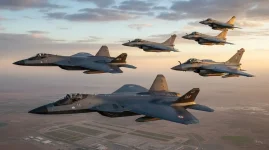
The swift growth of China’s Chengdu J-20 stealth aircraft arsenal is drastically altering the security dynamics across Asia.
Current open-source intelligence and defence analysts observe that China's production is surging, with the J-20 fleet already surpassing 350 operational jets by early 2026 and rapidly approaching the 500 mark.
Manufacturing rates at Chengdu's expanded facilities are estimated at over 100 aircraft per year.
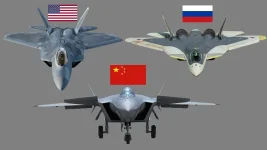
This makes the People's Liberation Army Air Force (PLAAF) the operator of the second-largest fifth-generation fighter force on the planet, posing a complex strategic hurdle for India that goes well beyond a simple comparison of fighter numbers.
In light of this development, a common debate is whether the Indian Air Force (IAF) should fast-track the acquisition of 114 combat jets under the Multi-Role Fighter Aircraft (MRFA) initiative, heavily focused on the Dassault Rafale.
Even though procuring more Rafales would significantly boost India's aerial firepower, conventional jets alone are not enough to completely counter the unique threats posed by a massive swarm of modern stealth fighters.
Without a doubt, the Rafale stands out as a highly potent 4.5-generation combat platform on the global stage.
Armed with state-of-the-art systems like the RBE2 Active Electronically Scanned Array (AESA) radar and the formidable SPECTRA electronic warfare package, it also boasts lethal Meteor beyond-visual-range missiles and pinpoint strike capabilities.
These jets are already top-tier assets for the IAF. The current squadrons have seamlessly blended into India’s digitally networked battle systems, vastly improving combat preparedness along the crucial borders with Pakistan and China.
Consequently, adding more Rafales to the inventory would bring instant tactical advantages.
Because it is an active and proven machine rather than an experimental design, the IAF already has the necessary maintenance protocols, supply chains, and pilot training facilities in place.
Procuring more of these jets would help halt the alarming drop in India's total combat squadrons, while phasing out older aircraft such as the MiG-21s, Jaguars, and ultimately the MiG-29s.
Nevertheless, the issue presented by the Chinese J-20 goes beyond merely comparing the individual quality of the jets.
The true threat lies in the dangerous mix of cutting-edge technology and sheer numbers.
With its fleet heading toward 500 stealth jets—and potentially 1,000 by 2030—China gains the ability to conduct non-stop missions across various conflict zones at once.
This massive volume also means the PLAAF can sustain battle damage much better than air forces with limited inventories. While the Rafale is extremely lethal, its original design does not include full stealth capabilities.
The core strength of fifth-generation stealth jets is their capacity to see the enemy on radar long before they are spotted themselves.
Because their radar signature is minimized, these aircraft can leverage the critical "first-look, first-shot" opportunity. When this stealth is paired with their own advanced radars, silent sensors, and long-range weaponry, it produces a massive battlefield advantage.
Conventional fighters are forced to rely heavily on flawless communication, intense electronic jamming, and clever manoeuvres just to survive and fight back.
Thankfully for India’s defence apparatus, a multi-layered counter-strategy is actively taking shape.
The ultimate foundation of India’s future aerial dominance is the homegrown Advanced Medium Combat Aircraft (AMCA) initiative.
Designed as a fully domestic project, the AMCA will equip the military with true fifth-generation features, including radar-evading shapes, hidden internal weapons bays, integrated sensors, and top-tier electronic countermeasures.
As of 2025-2026, the programme has gained major momentum with a government-approved budget of over ₹15,800 crore and a new execution model that invites private companies to form consortiums for production.
While full induction is slated for the mid-2030s, the rollout of the first prototype is targeted for 2028, and a dedicated manufacturing hub is being planned in Andhra Pradesh to speed up delivery.
China's aggressive stealth buildup is guaranteeing that this project receives maximum financial and political backing.
However, fifth-generation jets are only one piece of the puzzle in tomorrow's aerial warfare.
The next monumental shift in military aviation is the concept of Manned-Unmanned Teaming (MUM-T).
The Indian defence sector is heavily funding radar-evading combat drones, notably the DRDO's Ghatak drone, as well as "loyal wingman" systems designed to fly in formation with human pilots.
In upcoming battles, a lone Rafale or AMCA pilot will be able to control a swarm of robotic drones that can scout ahead, jam enemy radars, act as bait, or launch targeted missile strikes.
Using automated drones as force multipliers provides a realistic method to balance the scales against an enemy with superior numbers, meaning India does not have to match China jet-for-jet on the factory floor.
A robust network of ground-based surface-to-air missiles forms another vital component of India's overall security posture.
Currently, batteries like the Russian-made S-400 Triumf offer long-distance protection against a variety of airborne dangers.
Looking ahead, ambitious domestic efforts like Project Kusha (India's own long-range air defence system) and the Phase III of the Ballistic Missile Defence shield will establish overlapping zones of protection.
These systems are being designed to shoot down enemy jets, cruise missiles, and even advanced hypersonic weapons.
Instead of depending solely on expensive fighter squadrons for protection, the Indian military is focusing on an integrated air defence umbrella to ensure enemy aircraft cannot operate freely near Indian airspace.
Additionally, specialized support aircraft are just as crucial as combat jets.
Today's dogfights are often won by whichever side has better data, not just faster planes.
India’s upcoming Netra Mk2 Airborne Early Warning and Control (AEW&C) planes, along with other advanced radar platforms, will be essential for spotting incoming stealth fighters, guiding defending jets to their targets, and providing a clear picture of the battlefield.
By linking fighter planes, radar jets, military satellites, and ground stations into one seamless digital network, the military dramatically increases its chances of tracking and destroying stealthy threats.
The realm of electronic warfare (EW) is also taking center stage.
The Rafale's onboard SPECTRA system already gives pilots a massive survival boost by jamming threats and managing enemy radar locks.
The next generation of Indian-made EW systems, which will be fitted onto the AMCA and other future aircraft, aim to further blind enemy radars, confuse incoming missiles, and make it incredibly difficult for adversaries to get a clean shot.
The manufacturing capabilities behind the military cannot be overlooked.
China's success in churning out vast numbers of the J-20 is a direct result of its massive and highly efficient aerospace industry.
To keep pace, India is urgently working to scale up its own aviation manufacturing through the Tejas Mk1A, Tejas Mk2, and AMCA projects, heavily involving private companies to speed up production lines.
In a long-term rivalry, the ability to build jets continuously is just as vital as the combat performance of the aircraft themselves.
In the end, attempting to build a stealth fleet as large as China's is neither a practical goal nor a strict necessity for India.
History has shown time and again that winning a war relies on how well a military blends its radars, missiles, communication hubs, electronic jamming, and supply chains, rather than simply having the most planes on the tarmac.
While buying more Rafale jets will undoubtedly inject immediate strength and capability into the Indian Air Force, the reality of a massive Chinese J-20 fleet proves a larger point. Acquiring foreign multi-role fighters is just one small part of a much wider, more complex master plan to secure India's skies.