- Views: 8K
- Replies: 29
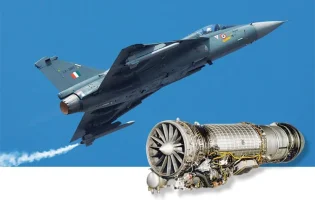
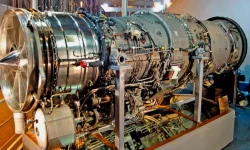
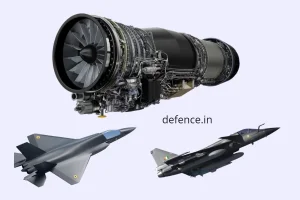
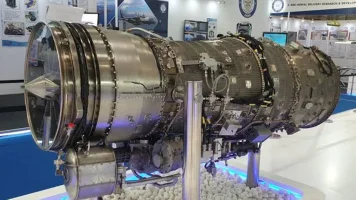
India is taking a major step forward in its quest to build its own jet engines. The Gas Turbine Research Establishment (GTRE) has announced plans to develop the Kaveri 2.0 engine.
Building upon the foundation of the Kaveri Dry Engine (KDE), this advanced powerplant is intended to eventually replace the American-made GE F404-IN20 engines that currently fly the Tejas Mk1A fighter jets.
Rather than a simple update, the Kaveri 2.0 represents a complete rebirth of the nation’s aviation propulsion goals.
Engineers are designing it to produce much higher thrust levels, meeting the future needs of the Indian Air Force (IAF) as the Tejas Mk1A jets undergo major mid-life modernization in the next decade.
Currently, the GE F404-IN20 engine provides about 54 kilonewtons (kN) of standard dry thrust and up to 85 kN when using the afterburner. The existing baseline Kaveri engine only reaches about 49 kN, which is not powerful enough for modern combat aircraft.
However, the Kaveri 2.0 is expected to overcome this limitation. GTRE aims to achieve a standard thrust of 55 to 59 kN and an impressive 90 to 100 kN with the afterburner engaged.
This would actually make it more powerful than the F404, putting it in the same league as the heavier F414 engine planned for the Tejas Mk2.
To achieve this massive boost in power, designers are improving the core structure of the engine and utilizing better manufacturing materials.
There is also the possibility of working with international aerospace companies, such as France's Safran, to improve the engine's hottest sections and overall fuel efficiency.
A major reason for speeding up the Kaveri 2.0 project is the unreliability of foreign supply chains.
For example, Hindustan Aeronautics Limited (HAL) has recently imposed penalties on General Electric due to severe delays in delivering the F404 engines required for the Tejas Mk1A. GE has delivered only a handful of engines out of the 99 ordered, forcing India to push aircraft delivery timelines deeper into 2026.
Looking 10 to 15 years into the future, the IAF must consider if it can continue to rely on foreign engines for upgrades. Without full technology transfer or guaranteed shipments, India's fighter fleet could face serious grounding risks.
As a result, the new domestic engine is not just an option, but a vital strategic safeguard. It ensures that the country maintains total control over its defence aviation manufacturing while also getting the engine power it needs.
A standout feature of the Kaveri 2.0 will be its "flat-rating" capability. This means the engine can deliver the exact same amount of power even in extreme weather, such as the intense heat of Rajasthan or the high humidity of coastal bases.
While imported engines often lose power in these harsh climates, the homegrown engine is being custom-built to thrive in them, giving Indian pilots a real advantage in local conditions.
Additionally, scientists are working to solve a historical problem with the Kaveri program: excess weight. The older engine core was heavier than its American counterpart, which negatively impacted the balance of the aircraft.
To fix this, GTRE is now using advanced lightweight materials, including composite structures and single-crystal turbine blades, which are stronger, lighter, and better at handling extreme heat.
Even with these improvements, building a jet engine is extremely difficult. The F404 has been refined over decades and is known worldwide for its reliability, whereas the Kaveri 2.0 is still an experimental project.
Past versions of the engine struggled with unstable combustion, known as "screeching," when the afterburner was used. Thankfully, GTRE has made noticeable progress in fixing these stability issues during recent tests in early 2026.
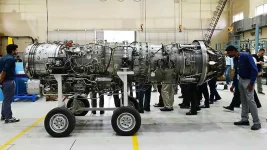
The foundation of this project, the non-afterburning Kaveri Dry Engine, is currently undergoing rigorous high-altitude trials in Russia on an Il-76 flying testbed.
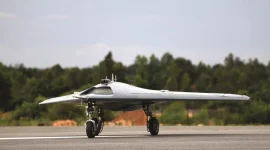
With over 140 cumulative testing hours completed, it is on track to receive its final certification in 2026 for use in India's Ghatak stealth drone program.
The more powerful Kaveri 2.0, however, will still need hundreds of hours of ground and flight testing before it is safe enough to be installed in a fighter jet.
Fitting the new engine into the existing Tejas jets will be a complex task. Jet engines cannot simply be swapped out like car batteries. Variations in size, airflow needs, and weight distribution often require the aircraft's body to be redesigned.
For the Kaveri 2.0 to easily replace the F404, it must have almost the exact same physical size and connection points, otherwise, the Tejas will require expensive structural changes.
Reports suggest that GTRE is carefully considering these size constraints during the design phase to make the swap as easy as possible. Still, this integration process is a major risk that will decide how smoothly the IAF can upgrade its fleet.
Overall, India is taking a step-by-step approach. The first goal is to install the simpler Kaveri Dry Engine into the Ghatak stealth drone, where the risks are lower because there is no pilot on board.
Once the technology is proven and the afterburning Kaveri 2.0 becomes highly reliable, it will be the primary choice for upgrading the Tejas fleet in the 2030s. This will give the jets better performance while ending the reliance on foreign suppliers.
In the longer term, this engine technology could be used in upcoming twin-engine fighter aircraft. Using two Kaveri 2.0 engines together would provide massive thrust, paving the way for India to design and build much heavier and more advanced fighter planes entirely on its own.