In a major boost to India’s deep-strike capabilities, the Defence Research and Development Organisation (DRDO) successfully flight-tested the Long Range Land Attack Cruise Missile (LRLACM) on June 15, 2026.
Conducted from Dr APJ Abdul Kalam Island off the coast of Odisha, the latest trial was highlighted by the debut of a cutting-edge canisterised launch system mounted on an 8×8 high-mobility vehicle.
This upgrade represents a massive leap forward in how the missile will be deployed and operated in the field.
A Shift to Agile, High-Mobility Platforms
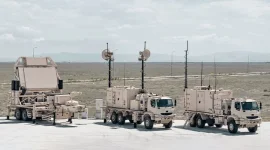
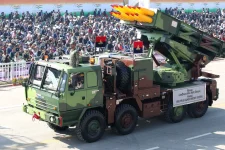
The most noticeable upgrade in the recent test was the departure from the legacy 18-tyre, multi-axle Tatra transport vehicles.The LRLACM is now integrated with a new Transporter Erector Launcher (TEL) based on the Ashok Leyland Super Stallion 8×8 High Mobility Vehicle.
This transition to a more compact, domestically produced platform significantly improves both on-road and off-road performance across India's varied and rugged terrains.
Furthermore, the new configuration shrinks the logistical footprint of missile batteries and strongly aligns with the nation's Atmanirbhar Bharat objectives.
Crucially, this modernized 8×8 launcher is designed to carry multiple missiles—potentially up to four per vehicle.
This increased capacity drastically scales up the salvo firepower available to commanders, allowing for high-volume, consecutive strikes during intense combat scenarios.
Canisterisation and Cold Launch Technology
The LRLACM system is now fully canisterised, a critical advancement that facilitates "cold launch" capabilities.In a cold launch, the missile is ejected from its tube using pressurized gas before the engine actually ignites in the air.
This method protects the launcher from extreme thermal stress and exhaust damage, ensuring better safety for the crew and enabling much faster reload and firing sequences.
For frontline troops, a canisterised system also means the missile is protected from environmental elements, ensuring rapid deployment and easier concealment from enemy surveillance.
Deadly Precision and Indigenous Power
Designed by the Aeronautical Development Establishment (ADE) in Bengaluru, the LRLACM is a subsonic cruise missile capable of travelling at speeds of approximately Mach 0.8.Designed to hug the terrain at incredibly low altitudes to evade enemy radar, the weapon can deliver a conventional payload of up to 450 kg to targets positioned 1,000 to 1,500 kilometres away.
The recent trial successfully validated the missile's advanced guidance and navigation systems, alongside its indigenous Manik turbofan engine, developed by the Gas Turbine Research Establishment (GTRE).
This successful integration cements the LRLACM's place alongside other formidable weapons like the BrahMos and Pralay in India’s precision-strike arsenal.
A Unified Multi-Platform Future
While the 8×8 Super Stallion secures superior land mobility for the Indian Army, the LRLACM is fundamentally a multi-platform weapon.It is designed to complement existing maritime strike capabilities by launching from naval warships via the Universal Vertical Launch Module (UVLM).
Backed by major domestic production partners such as Larsen & Toubro (L&T) and Bharat Dynamics Limited (BDL), the LRLACM programme highlights DRDO's commitment to delivering user-friendly, highly mobile, and locally sourced defence solutions.
As the Indian armed forces continue to modernize for networked warfare, this 8×8 canisterised cruise missile system will serve as a cornerstone of the nation's self-reliant deterrent strategy.