- Views: 2K
- Replies: 4
The pace of India's indigenous aero-engine programs is set to increase significantly.
The Gas Turbine Research Establishment (GTRE), a key laboratory under the Defence Research and Development Organisation (DRDO), has initiated a proposal to transform two Su-30MKI fighter jets into dedicated flying testbeds (FTB).
This move will provide crucial real-world flight evaluation and streamline the certification process for homegrown engine technologies.
Under this new initiative, the chosen Su-30MKI jets will be heavily modified with advanced instrumentation to capture extensive in-flight data.
This represents a major transition from traditional ground-level laboratory tests to actual airborne validation.
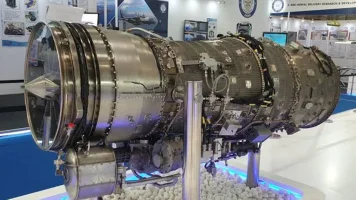
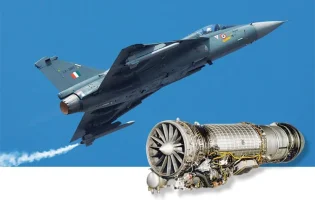
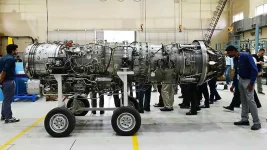
Such real-time data collection is an absolute necessity for perfecting sophisticated propulsion systems, including the upcoming Kaveri 2.0 and other future high-thrust powerplants meant for next-generation fighters.
A core objective of this project is to directly compare the performance of Indian-made engine parts with those built by established foreign manufacturers.
By testing these components side-by-side in the air, engineers can set clear performance standards and pinpoint any existing shortcomings.
Key areas of focus will include how well the materials handle intense operational stress, their pressure handling capabilities, and overall heat management.
To guarantee maximum safety, the GTRE will conduct rigorous Failure Modes, Effects, and Criticality Analysis (FMECA) during the flight trials.
This systematic process helps researchers detect exactly where and how engine parts might fail while airborne.
Proving the reliability of these components under true flight conditions is a mandatory step before any indigenous engine can be certified for regular military use.
The testing strategy will be gradual and methodical. Instead of trying to validate an entire engine design all at once, the initial focus will be on testing individual components to ensure their manufacturing processes are sound.
This step-by-step method means that vital subsystems will be proven safe and effective before they are combined into a fully finished engine architecture.
The plan also incorporates a "staircase approach" to certification through limited Airworthiness Monitoring Trials (AMT).
In practice, an engine part will first be approved for a very restricted amount of flight time.
As the part proves itself and more positive data is gathered, its permitted operational limits will be safely expanded.
This iterative model is a proven global standard in aerospace development, designed to minimize danger while keeping the project moving swiftly.
Ultimately, possessing a domestic flying testbed will drastically cut down the time required to certify new engines.
Ground facilities simply cannot recreate the extreme, dynamic realities of actual flight, such as sudden altitude changes, intense vibrations, air intake distortions, and severe temperature shifts.
By gathering precise data in these real-world environments, the DRDO hopes to fast-track the approval of critical aviation technologies.
Choosing the Su-30MKI for this role is a highly strategic decision.
Its heavy payload capacity and powerful data-processing systems make it ideal for carrying experimental testing gear.
More importantly, its twin-engine layout provides a crucial safety net; one side can test the experimental Indian engine while the standard Russian-origin engine keeps the aircraft flying safely, mirroring standard testbed practices used worldwide.
This initiative is a cornerstone for India’s grander aerospace ambitions, particularly the 73-90kN-class Kaveri 2.0 and the future 110-120kN Advanced High Thrust Class Engine (AHTCE) meant for stealth fighters like the AMCA.
Historically, India has been severely handicapped by the lack of a native testbed, previously having to rely on foreign facilities, such as sending the original Kaveri prototypes to Russia for testing on leased Il-76 transport aircraft.
Securing a dedicated Su-30MKI testbed will finally bridge this historical gap, allowing for rapid prototyping and much faster integration of domestic jet engines.
By eliminating the reliance on overseas testing platforms, this program will drastically boost India’s self-reliance and cement its capabilities in the highly complex and strategic field of national defence.