- Views: 4K
- Replies: 8
India's pursuit of a homegrown jet engine is experiencing a major resurgence.
Recent statements from Dr Ganesan have affirmed that the Defence Research and Development Organisation’s (DRDO) Gas Turbine Research Establishment (GTRE) is pushing ahead with the next-generation Kaveri engine, widely known as Kaveri 2.0.
This development signals a pivotal moment for the nation's aerospace ambitions, as scientists focus on securing flight certification for the current engine models while simultaneously engineering more powerful versions for future aircraft.
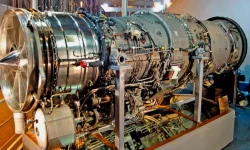
The immediate priority for GTRE is achieving official certification for the baseline GTX-35VS Kaveri architecture through rigorous airborne trials.
Earning this flight-worthy status is an essential milestone, as it will practically prove the engine's durability, power output, and overall suitability for active military operations.
Such validation is expected to involve high-altitude trials, possibly utilising modified Ilyushin Il-76 transport aircraft as flying testbeds.
To achieve this, GTRE has adopted a step-by-step roadmap.
The initial phase is dedicated to certifying the dry, non-afterburning Kaveri Derivative Engine (KDE).
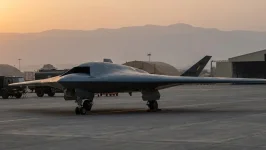
This specific configuration, which consistently demonstrates around 49 kilonewtons (kN) of dry thrust in ground trials, is primarily intended for India's upcoming stealth drones, such as the Ghatak Unmanned Combat Aerial Vehicle (UCAV).
Proving this baseline model is vital before engineers scale up the complex core technology.
Following the KDE's clearance, the agency plans to evaluate an afterburner-equipped variant.
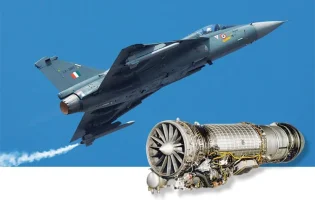
In a strategic move, GTRE intends to integrate this upgraded engine into an older, limited-series Light Combat Aircraft (LCA) Tejas Mk1 to serve as a flying laboratory.
Testing the engine on a fighter airframe will allow researchers to accurately measure real-time metrics that ground facilities cannot replicate, such as heat dissipation, mid-air fuel consumption, and the effectiveness of the afterburner's thrust boost.
The ultimate goal of this research is the much-anticipated Kaveri 2.0. Designed to correct the weight and power shortfalls of earlier prototypes, this advanced iteration is projected to deliver between 55 and 59 kN of dry thrust.
More importantly, when the afterburner is engaged, it is expected to generate an impressive 90 to 100 kN of thrust. This places it in the same league as modern foreign engines like the General Electric F414.
Progressing towards the Kaveri 2.0 is a monumental step in patching a historic vulnerability in India's defence manufacturing sector. Mastering complex core engine technology would drastically cut the nation's reliance on expensive imported hardware.
Furthermore, possessing a proprietary, high-performance engine grants the Indian military absolute freedom to export, modify, and upgrade its future fleet without seeking foreign permissions.
Repurposing the Tejas Mk1 as a dedicated test platform is a highly pragmatic approach to speeding up this complex development cycle.
While stationary ground tests are important, observing how the engine handles the dynamic aerodynamic stresses, sudden throttle changes, and extreme altitudes of actual flight will provide the critical data needed to refine the final design.
Although designing military-grade jet propulsion remains one of the most difficult engineering challenges in the world, GTRE’s current methodical and phased strategy offers a realistic path to success.
If the agency meets its thrust and reliability targets, the Kaveri 2.0 will inevitably become the beating heart of India’s next-generation fighters, including the Advanced Medium Combat Aircraft (AMCA) and future Tejas variants, securing true self-reliance in the skies.