- Views: 2K
- Replies: 3
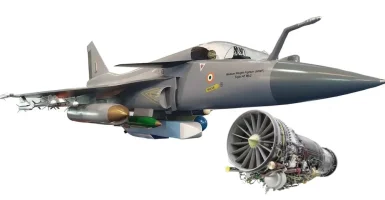
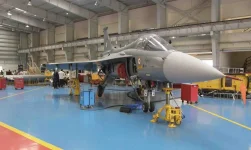
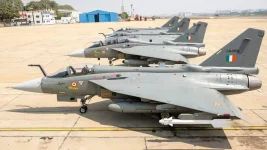
Hindustan Aeronautics Limited (HAL) has assured that the supply chain challenges regarding Israeli radar and electronic warfare (EW) systems for the Light Combat Aircraft (LCA) Tejas Mk1A are firmly under control.
Despite the ongoing geopolitical instability in West Asia, HAL's Chairman and Managing Director, Dr. DK Sunil, expressed confidence that the project's technological requirements are being managed effectively.
The advanced Tejas Mk1A utilises the Israeli-designed EL/M-2052 Active Electronically Scanned Array (AESA) radar and a comprehensive EW suite, which are vital for the fighter jet's targeting and self-defence capabilities.
Dr. Sunil explained that the primary bottleneck was related to software updates rather than the physical hardware.
Drawing parallels to past regional conflicts, he observed that while Israeli manufacturing plants experienced brief operational pauses, they successfully fulfilled their hardware commitments.
Necessary software upgrades eventually followed, allowing HAL to navigate the minor delays without significant disruption.
For the fighter jets currently in advanced production stages, the required Israeli equipment is already safely in HAL's inventory.
Dr. Sunil acknowledged that the continuing war might pose minor risks to future shipments, but he remains optimistic that HAL will easily recover any lost time once normal operations resume.
He expressed hope for a rapid conclusion to the regional conflict, which would permanently clear these logistical constraints.
Additional Programme Context & Challenges
While the radar supply from Israel is stabilising, the broader Tejas Mk1A programme is currently navigating more pressing hurdles.The Indian Air Force (IAF), which has placed cumulative orders for 180 Mk1A aircraft to modernise its ageing fighter fleet, is still awaiting the commencement of deliveries.
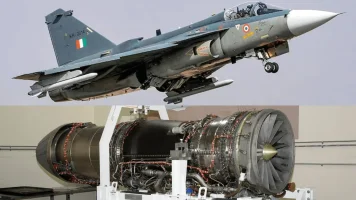
Recent reports from April 2026 indicate that the primary obstacle is the severe delay in the supply of F404-IN20 jet engines by the American manufacturer, GE Aerospace.
GE has delivered only six out of the 99 engines contracted in 2021, prompting HAL to recently invoke financial penalty clauses against the US firm to enforce accountability.
Furthermore, the proprietary software control of the Israeli EL/M-2052 radar has caused temporary complexities in integrating India's indigenous Astra Mk1 beyond-visual-range air-to-air missile.
To reduce such foreign dependencies and strengthen India's self-reliance in the defence sector, future batches of the Tejas Mk1A—reportedly starting from the 41st production jet—are slated to be equipped with the domestic DRDO-developed Uttam AESA radar.
In the meantime, the IAF is expected to conduct a comprehensive review of the Tejas Mk1A programme in May 2026 to assess the final validation of its systems, weapon packages, and revised delivery timelines.