- Views: 1K
- Replies: 1
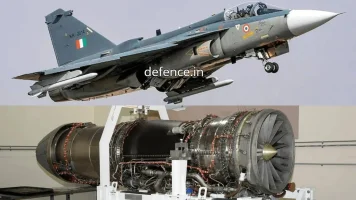
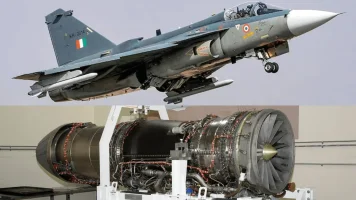
India’s state-owned aerospace manufacturer, Hindustan Aeronautics Limited (HAL), has invoked a penalty clause against American firm GE Aerospace due to ongoing delays in supplying F404-IN20 engines.
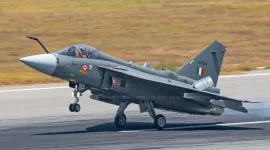
These engines are essential for the Light Combat Aircraft (LCA) Tejas Mk1A fleet.
This rare enforcement action highlights HAL’s commitment to holding global suppliers to their agreements as severe supply chain breakdowns continuously hinder India's fighter production.
Notably, reports reveals that out of the 99 engines ordered under a $716 million contract signed in 2021, GE has managed to deliver only six units as of April 2026.
HAL officials state that the financial penalties, known as Liquidated Damages (LD), are being calculated and applied for every single engine that misses its scheduled delivery date.
This contractual mechanism serves a dual purpose: ensuring the supplier takes immediate corrective action while financially offsetting the severe manufacturing disruptions faced by HAL.
Under standard Indian defence procurement guidelines, such liquidated damages are typically capped at up to 10% of the overall contract value.
The F404-IN20 powerplants are the driving force behind the Tejas Mk1A, and their scarcity has become the primary obstacle preventing HAL from handing over the jets to the Indian Air Force (IAF).
Although the first aircraft delivery was originally scheduled for March 2024, the timeline has repeatedly slipped.
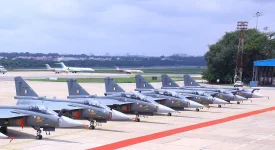
Currently, HAL has approximately 20 airframes fully constructed and waiting on the assembly line, with only five currently fitted with engines. This shortage has resulted in a massive bottleneck that threatens the timely modernisation of India’s combat squadrons.
By actively pursuing Liquidated Damages, HAL is sending a strong message regarding the strict observance of delivery schedules, especially in high-stakes defence agreements where delays directly impact national security and fleet readiness.
This decision also brings to light the strategic vulnerabilities of relying on global supply chains—which GE attributes to pandemic-era disruptions and component shortages from international sub-contractors—and reinforces India’s growing demand for strict accountability in military manufacturing.
Despite the financial penalties, HAL and GE Aerospace maintain an active dialogue to untangle the supply chain knots and speed up subsequent shipments.
Recent developments offer a cautious glimpse of recovery; HAL Chairman and Managing Director D.K. Sunil recently confirmed that GE has promised to supply 20 additional engines between June and December 2026.
With the sixth engine just arriving to facilitate further aircraft testing, both companies are aiming to stabilize deliveries to get the Tejas Mk1A induction back on track ahead of the IAF's scheduled program review in May.