- Views: 3K
- Replies: 17
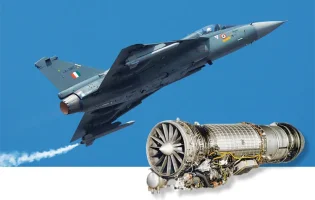
Hindustan Aeronautics Limited (HAL) is poised to hand over the first batch of the highly anticipated Tejas Mk1A fighter jets to the Indian Air Force (IAF) by late August or early September 2026.
This critical delivery will officially kick off the formation of the IAF’s first squadron dedicated to this advanced indigenous combat aircraft, marking a major leap forward in India's self-reliance in aerospace defence.
The programme's timeline previously faced hurdles largely due to global supply chain issues that delayed the shipment of F404-IN20 engines from the American firm General Electric (GE).
Despite these setbacks, HAL kept its manufacturing lines active. As a result, approximately 30 Tejas Mk1A airframes have already been fully built.
These airframes are currently stationed on the assembly line, requiring only engine integration and final flight testing before they can be officially inducted into the military.
Fortunately, the supply chain bottleneck is finally clearing. HAL recently received six GE F404 engines, allowing engineers to fast-track the completion of the first jets meant for the IAF.
According to industry reports, GE Aerospace is expected to drastically scale up its dispatch rates after October, with an additional 20 engines slated to arrive in India before the close of the year.
If this renewed supply chain stability holds, defence industry experts project that HAL will deliver between 18 and 24 Tejas Mk1A fighters by the end of 2026.
This impressive recovery in production pace would enable the IAF to swiftly establish its first Mk1A squadron and potentially lay the groundwork for a second one before the year concludes.
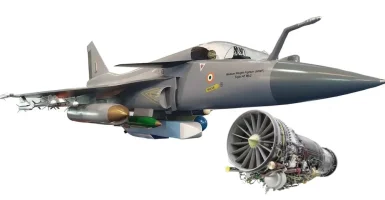
The Tejas Mk1A is a formidable upgrade over the initial Mk1 variant. It comes equipped with advanced capabilities, including an Active Electronically Scanned Array (AESA) radar, a modern Electronic Warfare (EW) suite, mid-air refuelling systems, and the ability to fire Beyond Visual Range (BVR) missiles.
To equip its fleet, the Ministry of Defence signed a Rs 48,000 crore contract for 83 Mk1A jets in February 2021, and the Defence Acquisition Council has already cleared the procurement of an additional 97 aircraft.
In parallel with HAL's manufacturing efforts, the Indian Air Force has been proactively advancing its operational readiness.
Enough pilots to operate at least two full squadrons have already completed their specialized conversion training at the Sulur Air Force Station in Tamil Nadu—the same base that currently houses the IAF's existing Tejas Mk1 squadrons, the "Flying Daggers" and "Flying Bullets."
Under the IAF's standard force structure, each new Tejas Mk1A squadron will feature 20 aircraft, comprising 16 single-seat combat fighters and four twin-seat trainers.
With pilot training already finished ahead of the large-scale deliveries, the IAF is fully prepared to press these new indigenous fighters into active service the moment they roll off the production line.