- Views: 2K
- Replies: 5
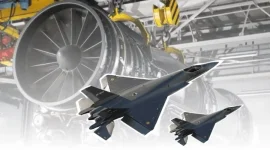
Hindustan Aeronautics Limited (HAL) has officially defined the power requirements for its upcoming supersonic trainer, the HLFT-42.
By requesting a powerplant capable of generating between 95kN and 100kN of thrust, the aircraft manufacturer has signaled a shift toward high-performance foreign engine technology, effectively moving away from the indigenous Kaveri engine for the platform's primary configuration.
Strategic Alignment with Tejas Mk2
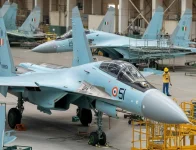
The HLFT-42 is being developed as a "Lead-In Fighter Trainer" (LIFT), designed to bridge the gap between basic trainers and advanced frontline fighters.With a maximum take-off weight of approximately 16.5 tons, the aircraft’s specifications closely mirror those of the Tejas Mk2 (17.5 tons).
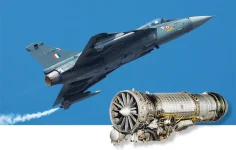
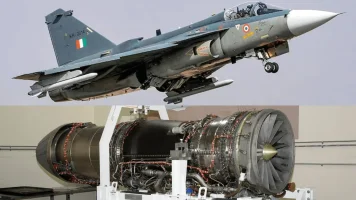
By selecting an engine in the 100kN class, HAL is prioritizing operational commonality. This thrust range aligns perfectly with the General Electric F414-INS6 engine, which India has already cleared for local production through a major technology transfer agreement.
Utilizing a shared engine family offers the Indian Air Force several advantages:
- Simplified Logistics: A unified supply chain for spare parts and maintenance.
- Seamless Transition: Pilots can move from the HLFT-42 trainer to the Tejas Mk2 fighter with minimal adjustments to handling and acceleration characteristics.
- Dual-Role Capability: The high thrust ensures the trainer can be deployed as a potent light combat aircraft during active conflicts.
The Status of the Kaveri Engine
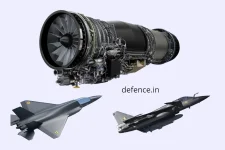
The decision highlights a significant pivot in India’s defence propulsion strategy. The indigenous Kaveri engine, which currently targets a thrust output of approximately 75-78kN with modern upgrades, lacks the raw power required for the HLFT-42’s heavy design.While some analysts suggest that the trainer could have served as a vital testbed for the Kaveri, the current RFI suggests that performance and immediate operational readiness have taken precedence over domestic engine integration for the main fleet.
Global Export and Strategic Autonomy
Despite the focus on high-thrust foreign engines for domestic use, the reliance on international powerplants brings the HLFT-42 under strict export control regulations, such as the U.S. ITAR (International Traffic in Arms Regulations). This could limit India’s ability to sell the aircraft to certain nations.To counter this, industry experts suggest a two-tier strategy:
- Primary Model: Powered by the 98kN GE F414 for the Indian Air Force.
- Export Variant: A potentially lighter version powered by an evolved Kaveri engine.
Future Outlook
The HLFT-42 represents HAL's ambition to produce a world-class training platform that doubles as a combat asset.While the choice of a high-thrust engine secures the aircraft's performance near the Tejas Mk2 level, it leaves the future of indigenous jet propulsion in a specialized niche.
The path HAL chooses for export markets will ultimately determine if the HLFT-42 becomes a symbol of strategic autonomy or a platform permanently tethered to global engine suppliers.