- Views: 1K
- Replies: 3
Hindustan Aeronautics Limited (HAL) has achieved a vital breakthrough in its long and frequently scrutinised mission to develop India's first home-grown turbofan engine, shifting the narrative from sluggish updates to substantial momentum.
According to HAL's latest annual disclosures, the core of the HTFE-25 engine has undergone rigorous testing—successfully demonstrating reliable light-up, smooth acceleration, and reaching 99.5 percent of its maximum design speed.
For a project that has faced nearly a decade of criticism over delayed timelines, this near-maximum speed achievement strongly indicates that the fundamental design is solid and that the development phase is finally back on track.
What the HTFE-25 Is Meant to Do
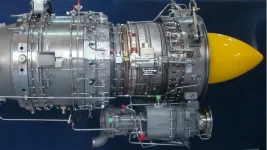
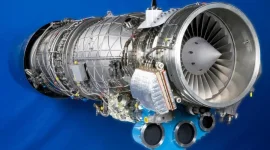
The Hindustan Turbo Fan Engine-25 (HTFE-25) is engineered to generate 25 kilonewtons of thrust.Initiated in 2013 at HAL's Aero Engine Research and Development Centre in Bengaluru, it is a low-bypass, twin-spool engine featuring a three-stage low-pressure compressor, a five-stage high-pressure compressor, and air-cooled turbine blades.
Notably, the engine incorporates advanced 3D-printed components made from a titanium-aluminium-vanadium alloy (Ti-6Al-4V) to ensure high structural strength while keeping weight low, giving the engine a thrust-to-weight ratio of 5.56 and a maximum flight altitude of 11 kilometres.
This specific thrust capacity makes it highly suitable for basic and advanced military trainers, small business jets, and heavy unmanned aerial vehicles (UAVs). It can power aircraft weighing up to five tonnes in a single-engine setup, or scale up to power nine-tonne aircraft in a twin-engine configuration.
HAL estimates a domestic and export market demand of 200 to 250 units, targeting platforms like the HJT-36 Sitara trainer and the Combat Air Teaming System (CATS) drones.
Independent Funding and Its Impact
Significantly, HAL has financed the entire HTFE-25 project using its own internal corporate funds, rather than relying on direct financial backing from the Indian Air Force or the Ministry of Defence.This financial independence has allowed the company the flexibility to carefully develop domestic technological capabilities without the immediate pressures of external deadlines.
However, the company has also admitted that this lack of external programme oversight is partly responsible for the schedule delays that have impacted the effort since its early days.
A Decade of Incremental, Occasionally Painful Progress
The engine's development journey has seen both triumphs and long pauses over the past ten years.The core engine first ran successfully in December 2015. By 2019, HAL had constructed two core engines that had collectively completed over 300 test runs, successfully achieving full core speed and passing high-altitude cold-start trials.
However, progress slowed drastically following those initial successes.
By mid-2024, the full technology demonstrator engine had only reached 55 percent of its design speed during acceleration trials. This sluggish pace attracted sharp criticism from government watchdogs regarding unclear developmental goals and a lack of proper testing infrastructure.
In response, HAL opened a massive new 10,000-square-metre design and test facility in December 2023, featuring dedicated dual test beds specifically for the HTFE-25 and its sister project, the HTSE-1200.
This major infrastructure investment has renewed confidence that the engine will be ready for production by the 2030 target, despite the naturally lengthy testing and certification process.
Why 99.5 Percent Core Speed Actually Matters
Reaching 99.5 percent of the core engine speed is a monumental leap compared to the 55 percent full-engine speed reported a few years prior.The core engine—which houses the high-pressure compressor, combustor, and high-pressure turbine—is the most critical and thermodynamically demanding section of any turbofan.
Successfully running this core at near-maximum rotational speed proves that it can handle extreme temperatures, immense pressures, and intense mechanical stress without suffering structural failure.
Essentially, this milestone proves that the most complex engineering challenges of the HTFE-25 have been overcome. The primary focus will now shift to integrating this proven core into the complete engine and completing the rigorous endurance tests required for final production certification.