- Views: 2K
- Replies: 8
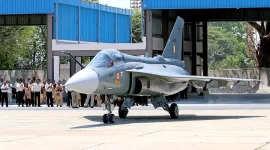
Hindustan Aeronautics Limited (HAL) has successfully launched a third assembly line for the indigenous Light Combat Aircraft (LCA) Tejas Mk1A at its Nashik facility.
This major upgrade expands India's aerospace manufacturing ecosystem, scaling up the total production rate to 24 jets annually.
The enhancement is a crucial step towards fulfilling the growing defence needs of the Indian Air Force (IAF).
Constructed in a rapid timeframe of roughly two years, the new facility signifies a significant leap in domestic aircraft manufacturing.
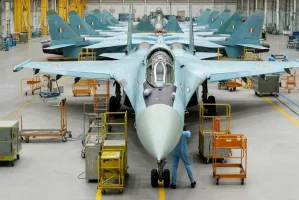
It features over 30 highly specialised structural assembly jigs designed to handle all primary sections of the Tejas Mk1A.
These precision tools provide essential support for building critical components like the wings, air intakes, and the front, centre, and rear fuselage sections.
While HAL’s established Bengaluru plants currently produce 16 aircraft a year, the new Nashik line adds the capacity to manufacture eight more, bringing the total to 24 jets annually.
This ramped-up output is vital for executing the IAF’s initial 2021 order for 83 Tejas Mk1A fighters, aimed at bolstering squadron numbers and phasing out the older Soviet-era MiG-21 fleet.
Furthermore, in September 2025, the Ministry of Defence signed an additional mega contract worth over ₹62,370 crore for 97 more Mk1A jets, making the boosted production rate even more critical to deliver the combined 180 aircraft.
The upgraded infrastructure moves away from older, labour-heavy methods in favour of a modular and highly accurate manufacturing process.
The core of this upgrade lies in the advanced assembly jigs spread across the shop floor.
These massive, precision-engineered frames securely lock aircraft parts in their exact locations during drilling, riveting, and joining tasks.
By holding each piece perfectly steady, the jigs guarantee that the final modules slot together flawlessly.
HAL's domestically built jigs are tailored for every major structural zone of the fighter jet. The front fuselage jig supports the nose section, containing the cockpit, avionics, and radar bays.
The central jig constructs the core framework where the engine and wings attach, while the rear jig secures the exhaust and vertical tail assemblies.
Specialised rigs are also dedicated to the complex geometries of the delta wings and air intakes.
To achieve an unprecedented level of exactness, these holding frames are integrated with automated alignment tools and laser-tracking technology.
This allows engineers to join components with sub-millimetre precision.
Consequently, it drastically cuts down on manufacturing errors and the need for structural rework—a hurdle that had previously caused delays and inflated costs during earlier stages of the Tejas programme.
By implementing these advanced assembly tools, HAL anticipates slashing the overall build time of each aircraft by 25 percent.
This leap forward enhances production efficiency without compromising the rigorous quality standards required for military aviation.
Ultimately, the use of these jigs signals a departure from manual assembly, steering the Tejas programme towards true industrial-scale mass production.
Before the Nashik facility's expansion, the Bengaluru hub was restricted to an output of about 16 jets each year.
The operationalisation of the new jig-assisted line pushes the projected national output to 24 jets annually.
To make this a reality, HAL injected around ₹500 crore to modernise the Nashik division specifically for the LCA project.
This same facility also recently launched the production line for the indigenous HTT-40 basic trainer aircraft, further cementing its importance to national aerospace manufacturing.
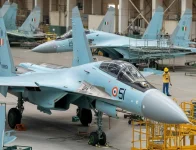
The Nashik plant is no stranger to advanced military aviation, having previously served as the main production hub for the IAF's frontline Su-30MKI fighters.
By outfitting the existing factory with new, indigenous tools, HAL has proven its ability to swiftly adapt and retool veteran aerospace infrastructure to serve modern domestic defence initiatives.
Beyond HAL's internal operations, this standardised, jig-based approach offers immense benefits to the broader defence manufacturing network.
The Tejas project depends on over 40 private-sector partners who supply various structural parts and sub-assemblies.
Because the new jigs establish strict dimensional guidelines, private suppliers can confidently manufacture parts that will slot seamlessly into the master assembly back at HAL.