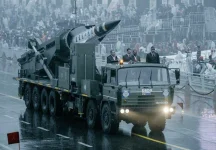
India is gearing up to conduct the first firing trial of its highly advanced, domestically developed air defence system under Project Kusha.
Set for late July, this debut test of the Extended Range Air Defence System (ERADS) interceptor represents a critical leap in India’s pursuit of absolute self-reliance in military capabilities.
By operationalising this multi-layered aerial shield, the nation aims to robustly secure its airspace against increasingly complex modern threats.
Spearheaded by the Defence Research and Development Organisation (DRDO), Project Kusha is an ambitious initiative designed to deliver a sovereign long-range surface-to-air missile network capable of rivalling elite foreign platforms like the Russian S-400.
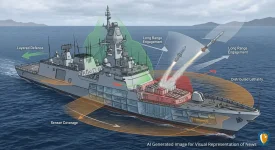
The system is built upon a sophisticated three-tier architecture to guarantee overlapping protection across different altitudes and distances.
Open-source reports indicate that DRDO has ingeniously utilised a universal "base missile" modular architecture across the interceptor variants to accelerate manufacturing and streamline logistics.
The ERADS features three primary interceptors.
The foundational M1 variant is designed to strike targets up to 150 kilometres away.
The M2 interceptor, which utilises a larger booster stage, extends this protective perimeter to 250 kilometres.
The outermost shield is provided by the M3 missile, which is capable of neutralising threats at distances between 350 and 400 kilometres.
Hurtling toward targets at speeds around Mach 5.5, these missiles are built to destroy a wide variety of hostile assets, ranging from agile fighter jets and stealth drones to subsonic cruise missiles and heavy Airborne Warning and Control System (AWACS) aircraft.
Analysts note the system boasts an impressive single-shot kill probability exceeding 80 percent.
A major operational advantage of Project Kusha is its digital interoperability with India’s existing military infrastructure.
The system will be intricately linked with the Indian Air Force’s Integrated Air Command and Control System (IACCS) and the Indian Army’s Akashteer automated air defence network.
Supported by advanced Multi-Function Control Radars (MFCR), this network-centric approach allows for real-time intelligence sharing, automated threat prioritisation, and seamless coordination across the tri-services during high-intensity combat.
Recognising the system's strategic value, the Indian Air Force has already cleared the acquisition of five squadrons of ERADS.
The project was granted an Acceptance of Necessity (AoN) with an estimated budget of ₹21,700 crore (approximately $2.27 to $2.6 billion).
Alongside the Air Force's deployment, the Indian Navy is also slated to integrate naval variants of the Kusha system to safeguard the nation's critical maritime operations and coastal infrastructure.
To meet the production demands of this massive undertaking, state-owned enterprises Bharat Electronics Limited (BEL) and Bharat Dynamics Limited (BDL) have been roped in as the primary manufacturing partners.
Both companies are currently expanding their production infrastructure to support the rapid rollout of the system, perfectly reflecting the government's Atmanirbhar Bharat vision for a self-reliant domestic defence industry.
As India faces a volatile regional security landscape filled with advanced aerial weaponry, Project Kusha stands out as the future backbone of the country's sovereign air defence grid.
Successfully fielding this technology will drastically reduce India's reliance on expensive imported hardware while providing the armed forces with superior tactical flexibility.
Following successful initial developmental ground tests earlier this year, the highly anticipated intercept test in late July will critically evaluate the M1 variant's propulsion, onboard guidance, and active seeker performance.
Defence experts view this upcoming trial as a definitive milestone, keeping the programme on track for phased induction between 2028 and 2030, and cementing India’s status as a premier developer of world-class missile technology.