- Views: 3K
- Replies: 6
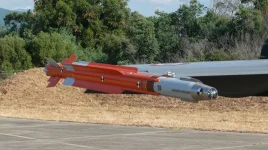
India is preparing to give its domestically produced Astra Mk1 beyond-visual-range air-to-air missile a massive upgrade, significantly increasing its striking distance from 110 km to an impressive 160 km.
This improvement is driven by sophisticated energy management, refined flight paths, and advanced propulsion technologies, such as dual-pulse rocket motors.
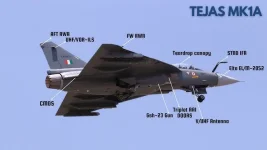
Crucially, these upgraded missiles are slated to be mounted on India’s Medium Altitude Long Endurance (MALE) and High Altitude Long Endurance (HALE) drones, alongside plans to arm future unmanned combat aerial vehicles (UCAVs) and existing fighter jets like the Su-30MKI and LCA Tejas.
This integration represents a major leap in India’s ability to control the skies and conduct long-range strikes along its western frontier.
Squeezing the Opponent's Reaction Time
This expanded range poses immediate and severe tactical challenges for the Pakistan Air Force (PAF).Several key Pakistani airbases, including Kamra, Sargodha, and Chaklala (Nur Khan), are situated just 100 to 150 km from the Indian border.
Because of this proximity, Indian drones or fighter jets patrolling safely within their own airspace could potentially lock onto and fire at Pakistani aircraft the moment they lift off the runway.
The Astra Mk1 hurtles through the air at speeds up to Mach 4.5, meaning it can cross 160 km in less than two minutes.
This leaves adversary pilots with almost no time to react, reposition, or deploy countermeasures after their warning systems sound.
Shrinking the Frontier Airspace
Defence experts assess that this upgraded weapon could effectively neutralize up to half of Pakistan's operational airspace along the border when Indian forces are actively patrolling.To safely avoid the maximum reach of the Astra Mk1, Pakistani jets would be forced to retreat and fly at least 160 to 170 km deep into their own country.
Such a massive buffer zone would severely cripple their ability to conduct routine patrols or mount offensive operations near the International Border or the Line of Control.
Furthermore, even if an aircraft manages to detect the missile at a distance, the Astra features a deadly "No-Escape Zone" — a specific distance where the missile's energy and speed make it almost impossible for a target to dodge.
For this upgraded version, that highly lethal inner circle is estimated to stretch between 50 and 80 km.
Any enemy jet caught within this range would be in extreme peril and forced into violent, immediate evasive maneuvers.
A High-Stakes Aerial Standoff
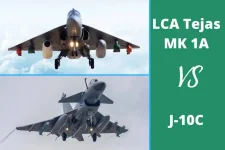
To counter India's growing aerial dominance, the PAF has turned to its Chinese-supplied arsenal, specifically the PL-15 missiles mounted on their J-10CE and JF-17 Block 3 fighter jets.These foreign-made weapons offer varying ranges between 145 and 200 km. This dynamic has transformed modern border patrols into a tense, mutual standoff.
Both air forces are now compelled to operate from deep within their own borders, relying on advanced sensors and the critical advantage of firing the first shot without ever crossing the actual boundary line.
This escalating situation highlights how rapidly modern aerial warfare is changing, with traditional "safe zones" vanishing due to better missile technology and advanced radar systems.
Looking ahead, India’s Defence Research and Development Organisation (DRDO) is already actively testing the Astra Mk2.
Expected to feature an extended range of 200 to 240 km, this next-generation missile will likely push the threat zone even deeper into hostile territory, continuously tipping the scales of regional air superiority.