CSIR-DRDO Plans Indigenous Turboprop Engine for Saras Mk2 Transport Aircraft and Future HALE UCAVs

CSIR-DRDO Plans Indigenous Turboprop Engine for Saras Mk2 Transport Aircraft and Future HALE UCAVs


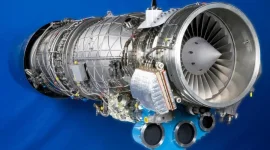
In a major step toward total self-reliance in aviation, the Council of Scientific and Industrial Research (CSIR) and the Defence Research and Development Organisation (DRDO) are drafting a joint proposal to create a homegrown turboprop engine.

This ambitious project, which will seek funding from the Ministry of Defence (MoD), aims to power the indigenous Saras Mk2 light transport aircraft and lay the groundwork for future High-Altitude Long-Endurance (HALE) Unmanned Combat Aerial Vehicles (UCAVs).

The proposal is currently in its early planning phases. Whether the MoD grants financial approval will depend heavily on the long-term manufacturing potential of the Saras Mk2 and the new engine's ability to be adapted for other civilian and military aircraft.

Because aero-engine development requires massive financial investment and long testing timelines, a strong economic justification based on volume is essential.

Currently, the Saras Mk2—a 19-seater transport aircraft spearheaded by CSIR’s National Aerospace Laboratories (CSIR-NAL)—is powered by twin Pratt & Whitney Canada PT6A-67A engines.

The PT6 family is highly regarded globally, but relying on foreign propulsion systems remains a critical bottleneck for India’s premier light transport programme. Replacing these imported powerplants is a mandatory step to achieve true manufacturing independence.

If given the green light by the government, this engine project will act as a foundational pillar for India's aerospace sector rather than a simple replacement part. Defence experts view the proposed powerplant as the base for a completely new family of turboprop engines that will serve the country for decades.

One of the most strategic applications for this engine will be in India’s future HALE UCAV projects. Large, heavily armed drones designed for long-endurance missions require highly reliable propulsion.

Having an indigenous engine will secure the supply chain against geopolitical disruptions and give Indian scientists the unrestricted freedom to integrate specific mission hardware and perform structural upgrades without needing foreign clearance.

Beyond combat drones and the Saras Mk2, a locally developed medium-power turboprop would be highly valuable for other military assets.

It could be integrated into upcoming maritime patrol platforms, specialized military surveillance planes, intelligence, surveillance, and reconnaissance (ISR) systems, and utility transport aircraft requiring long flight durations.

The ultimate financial viability of the engine, however, relies on substantial aircraft orders. The Indian Air Force (IAF) has already provided a solid starting point by committing to purchase 15 Saras Mk2 aircraft.

To bolster the numbers, CSIR-NAL is actively pitching the aircraft to regional operators to support the government's UDAN (Ude Desh ka Aam Nagrik) regional flight connectivity scheme.

While the IAF order guarantees an initial production run, securing firm orders from commercial airlines is crucial to absorbing the immense research and development costs of the new engine.

For years, India’s domestic engine development focus—such as the DRDO's GTRE Kaveri project—has been heavily heavily concentrated on jet propulsion for fighter aircraft.

This new initiative signals a strategic broadening of India's aerospace ambitions into the turboprop sector, which sees massive demand across both military and commercial markets.

Aligned with the Atmanirbhar Bharat initiative, successfully developing this engine would permanently reduce import dependency and secure India's position as a capable manufacturer of transport aircraft and unmanned aerial systems.
 
we could have earned so much money exporting such engines if we developed them years ago even for civil aviation . We needed a terrorist attack to wake us up! better late than never i guess! Hope govt funds and fast tracks all these projects!
 
we could have earned so much money exporting such engines if we developed them years ago even for civil aviation . We needed a terrorist attack to wake us up! better late than never i guess! Hope govt funds and fast tracks all these projects!
I find the idea of exporting loads of turboprop engines extremely unlikely.

Sure, develop an engine for Saras Mk2 as a first step towards making turboprops. GOI can pay Indian users subsidies to operate an uncompetitive home-produced aircraft.
 
Not little too late, but very very late. Nonetheless it's better to have your own then depend on others(Russia USA Israel France Etc). India must also compensate for not having fifth generation fighters by deploying precision guided missiles rockets and drones containing nuclear and high intensity blast chemicals on the Borders with Pakistan China and Bangladesh.
 
"Currently, the Saras Mk2—a 19-seater transport aircraft spearheaded by CSIR’s National Aerospace Laboratories (CSIR-NAL)—is powered by twin Pratt & Whitney Canada PT6A-67A engines.

The PT6 family is highly regarded globally, but relying on foreign propulsion systems remains a critical bottleneck for India’s premier light transport programme. Replacing these imported powerplants is a mandatory step to achieve true manufacturing independence."

Pointless, buy the proven engines from the Canadian company.

This means India will never deliver the Saras MK2. Another way to pay graft in India. This plane will never fly.

The engine is proven, decades old and parts and expertise available around the world.

FOOLS
 
Last edited:
"Currently, the Saras Mk2—a 19-seater transport aircraft spearheaded by CSIR’s National Aerospace Laboratories (CSIR-NAL)—is powered by twin Pratt & Whitney Canada PT6A-67A engines.

The PT6 family is highly regarded globally, but relying on foreign propulsion systems remains a critical bottleneck for India’s premier light transport programme. Replacing these imported powerplants is a mandatory step to achieve true manufacturing independence."

Pointless, buy the proven engines from the Canadian company.

This means India will never deliver the Saras MK2. Another way to pay graft in India. This plane will never fly.

The engine is proven, decades old and parts and expertise available around the world.

FOOLS
I, too, think it would be foolish to switch away from a proven, working engine. Much better to me would be to build the aircraft around PT6A engine and run a parallel project to develop an Indian engine. If the indigenous engine project succeeded, Saras Mk2 could then be offered with 2 engine options.

If the new engine worked but was not efficient/competitive Indian forces might still be prepared to use it on Saras Mk2. The chances of matching the performance of the PT6A engine would be tiny but an engine for Saras Mk2 might give India a chance to develop better engines later.

I don't think any commercial air carriers would be interested without being paid a subsidy unless the indigenous engine matched or improved on PT6A performance.
 
Last edited:
I, too, think it would be foolish to switch away from a proven, working engine. Much better to me would be to build the aircraft around PT6A engine and run a parallel project to develop an Indian engine. If the indigenous engine project succeeded, Saras Mk2 could then be offered with 2 engine options.

If the new engine worked but was not efficient/competitive Indian forces might still be prepared to use it on Saras Mk2. The chances of matching the performance of the PT6A engine would be tiny but an engine for Saras Mk2 might give India a chance to develop better engines later.

I don't think any commercial air carriers would be interested without being paid a subsidy unless the indigenous engine matched or improved on PT6A performance.
No one in the world, including airlines in India will buy this plane without a proven engine platform available.

Its A WAY OF SAYING, NO ONE WANTS OUR PLANE. WHAT WERE WE THINKING?
 
No one in the world, including airlines in India will buy this plane without a proven engine platform available.

Its A WAY OF SAYING, NO ONE WANTS OUR PLANE. WHAT WERE WE THINKING?
When I looked at Wiki, it said Saras Mk2 was designed for a crew of 3. If so, the only users it will ever have will be the Indian forces and other governmental departments. It is a non-starter as an airliner.

Still, if not cancelled it will give India an insight into the challenges involved in building 19 seat feederliners.
 
Becareful what you whish for. Bombardier was almost bankrupt in 2016.
Bombardier’s current market cap and profit (latest available 2026 data)

Takeaway:
Bombardier’s market cap is ~CA$34 billion, and its most recent quarterly profit was US$191 million, with full‑year 2025 profit of US$975 million. The company is now highly profitable after its turnaround.


The Bombardier passenger plane that nearly bankrupted the company was the CSeries, later taken over by Airbus and rebranded as the Airbus A220.


🛩️​

The Bombardier CSeries (CS100 and CS300) program almost bankrupted Bombardier due to massive cost overruns, years-long delays, and weak early sales. Bombardier ultimately had to give majority ownership of the program to Airbus for $0, effectively exiting commercial airliner production.


📘​

1.​

  • The CSeries was Bombardier’s attempt to build a clean‑sheet 100–150 seat airliner.
  • Development costs ballooned to over US$6 billion, roughly double initial estimates.
  • Bombardier had to seek government bailouts from Quebec and federal Canada.

2.​

  • New composite structures and Pratt & Whitney geared turbofan engines caused multi‑year delays.
  • Early engine issues slowed deliveries and increased support costs.

3.​

  • Airlines were hesitant to commit to a new aircraft from a smaller manufacturer.
  • Bombardier struggled to compete against Boeing and Airbus, who aggressively discounted their existing models.

4.​

  • Boeing accused Bombardier of dumping aircraft at unfairly low prices.
  • The U.S. Department of Commerce initially imposed ~300% tariffs, creating major uncertainty (later overturned).

5.​

  • By 2015–2016, Bombardier was burdened with:
    • Heavy debt
    • Cash flow shortages
    • A commercial division losing billions
Bombardier’s survival was in question.


🛫​

In 2017, Bombardier transferred 50.01% of the CSeries program to Airbus for free, in exchange for Airbus’s marketing and production support.

Airbus rebranded the aircraft as the A220, which is now a commercial success.

Bombardier later sold its remaining stake, fully exiting commercial aviation.


📌​

The CSeries was technologically excellent—quiet, fuel‑efficient, and modern—but its development nearly destroyed Bombardier. The company now focuses exclusively on business jets (Global and Challenger families), which are profitable and far less risky.
 

Forum statistics

Threads
7,873
Messages
68,056
Members
5,710
Latest member
ayush0804
Back
Top