- Views: 1K
- Replies: 2
What was initially presented as a landmark military agreement between China and Pakistan now appears to be a sophisticated exercise in strategic misinformation.
Recent developments suggest that the highly publicised plan for the Pakistan Air Force (PAF) to acquire the Chinese J-35A fifth-generation stealth fighter has stalled, raising questions about whether the deal was ever intended to be finalised in its reported form.
The Rise and Fall of the "Stealth Deal"
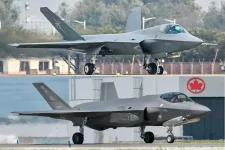
In early 2025, official circles in Islamabad suggested a transformative agreement was underway to procure approximately 40 Shenyang J-35A aircraft.This multirole fighter, designed to rival the American F-35, was reportedly offered to Pakistan at a significant 50% discount with highly flexible payment terms to accommodate the country's ongoing financial challenges.
However, the narrative shifted abruptly. After initially confirming the interest, Pakistan’s Defence Ministry later characterised the reports as mere media speculation.
Analysts now suggest that Beijing has deferred any potential sale by at least three to four years.
This delay is attributed to several factors, including:
- Domestic Priority: The People’s Liberation Army Air Force (PLAAF) requires the initial production units to meet its own operational requirements.
- Technical Maturity: The J-35A is still undergoing low-rate production and continues to face integration challenges with its domestic engine systems.
- Security Concerns: Beijing remains wary of "technology leakage." Fears persist that sensitive Chinese stealth secrets could be compromised through Pakistan’s existing military ties and technical cooperation with the United States regarding F-16 maintenance.
Strategic Distraction and "Psyops"
Open-source intelligence and discussions on Chinese social platforms like Weibo indicate the "deal" may have been a deliberate "psychological operation" (psyop).The objective, according to some regional experts, was to provoke India into a reactionary and expensive procurement cycle.
By hinting at a massive stealth capability jump for Pakistan, Beijing likely hoped to force New Delhi into abandoning its indigenous Advanced Medium Combat Aircraft (AMCA) project in favour of immediate foreign purchases from Russia or the U.S.
Such a move would potentially create friction in India’s burgeoning defence partnership with Washington or lock India into long-term dependency on Russian hardware.
Impact on Indian Defence Strategy
The provocation has had a tangible impact on Indian naval and air strategy.While India continues to develop the AMCA—slated for a 2032 debut—the Indian Air Force (IAF) has reportedly accelerated evaluations for an interim fleet of 40 to 60 foreign fifth-generation jets.
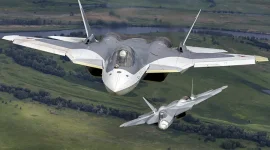
Russia has seized this opening, offering co-production of the Su-57 Felon under the "Make in India" initiative.
Conversely, India remains cautious regarding the American F-35 due to high lifecycle costs and stringent data-sharing requirements, opting instead for a diversified procurement strategy.
Regional Blowback: The BrahMos Counter-Move
The perceived Chinese attempt to destabilise the regional balance has resulted in significant diplomatic blowback.India has responded by aggressively expanding the export of the BrahMos supersonic cruise missile—a weapon specifically designed to counter large naval vessels.
| Nation | Status of BrahMos Acquisition (2025-26) |
|---|---|
| Philippines | Initial batteries deployed; further orders under negotiation. |
| Vietnam | Major deal finalised in early 2025 to bolster coastal defence. |
| Malaysia/Thailand | Currently in advanced procurement queues for air-launched variants. |
With a new production facility in Lucknow capable of manufacturing 100 missiles annually, India is successfully arming Southeast Asian nations concerned with maritime security.
This "BrahMos diplomacy" effectively creates a strategic hedge against Chinese naval expansion in the South China Sea, turning what began as a stealth fighter rumour into a tangible disadvantage for Beijing’s regional influence.