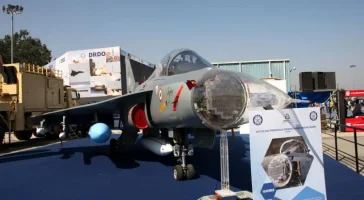
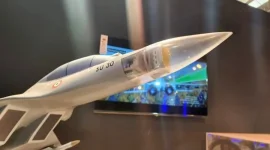
Astra Microwave Products Limited has revealed major progress on the much-anticipated Virupaksha Active Electronically Scanned Array (AESA) radar project.
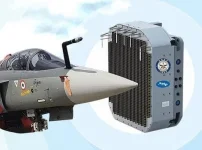
During a financial performance briefing on May 27, 2026, the company confirmed that the radar's core component, the Active Antenna Array Unit (AAAU), is in its final stages of development.
The complete radar system is projected to be fully assembled and ready for the Indian Air Force by the close of 2026.
Designed by the Defence Research and Development Organisation's (DRDO) Electronics and Radar Development Establishment (LRDE), the Virupaksha radar is a cornerstone of the Indian Air Force's massive ₹63,000 crore "Super Sukhoi" upgrade programme.
This ambitious modernisation effort initially targets 84 Su-30MKI fighter jets before eventually expanding to the wider fleet.
The new indigenous system will replace the aircraft's ageing, Russian-made N011M Bars passive radar, delivering superior range, advanced multi-target tracking, and exceptional resistance to enemy electronic warfare.
Serving as the Development Cum Production Partner (DcPP), Astra Microwave is tasked with building the AAAU.
This critical unit functions as the technological heart of the radar, housing approximately 2,400 advanced Gallium Nitride (GaN) Transmit/Receive modules.
GaN technology allows the radar to emit stronger signals and handle heat more efficiently while weighing significantly less than older systems.
Once Astra Microwave completes this unit, it will be integrated into the broader platform, clearing the path for rigorous flight trials and eventual mass production.
The integration of the Virupaksha radar will fundamentally transform the operational effectiveness of the Su-30MKI, elevating it to a 4.5-generation standard.
The radar is capable of tracking up to 100 aerial targets simultaneously and can detect conventional fighter jets from over 300 to 400 kilometres away.
Crucially, it is highly tuned to identify low-signature stealth aircraft at distances exceeding 200 kilometres.
When paired with India's long-range indigenous weapons, such as the Astra Mk-III missile, the upgraded fighters will possess a formidable "first look, first shot" advantage.
Beyond its vital role in national defence projects, Astra Microwave also shared promising updates regarding its broader business strategy.
The firm plans to introduce several proprietary products based on its own intellectual property before Diwali 2026, which will be marketed to both domestic and international buyers.
By successfully balancing critical DRDO contracts with the creation of independent commercial lines, the company continues to cement its status as a leading force in India's rapidly expanding defence electronics sector.