- Views: 4K
- Replies: 11
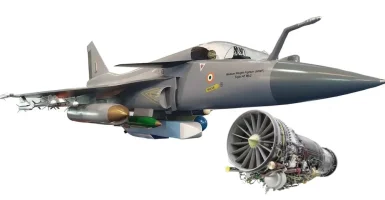
Officials within the Indian Air Force (IAF) are expressing strong concerns regarding persistent delays in the delivery of the indigenous Tejas Mk1A fighter aircraft.
The primary issue stems from Hindustan Aeronautics Limited (HAL) underestimating the rigorous and complex software testing required for the advanced jet.
While the physical structure and hardware for the upgraded Light Combat Aircraft (LCA) variant are largely complete, the integration of crucial systems—specifically the EL/M-2052 Active Electronically Scanned Array (AESA) radar and the newly designed Digital Flight Control Computer (DFCC)—requires extensive software validation that has fallen far behind schedule.
This miscalculation in software testing requirements has severely stalled the aircraft's path to combat readiness.
Initially, HAL projected that deliveries would begin just three to four months after the jet's first flight.
Now, the process has stretched into a complex delay of more than two years, indicating that the IAF may not receive its first fully cleared Mk1A until after March 2026.
Mounting Pressure on Squadron Strength
These delays are occurring at a critical juncture for India's national defence.The IAF is currently operating with only 31 fighter squadrons, well below the authorized and strategically necessary strength of 42.
This operational shortage is worsening as the military continues to phase out its aging fleets of MiG-21 interceptors.
The Ministry of Defence originally envisioned the Tejas Mk1A as a rapid solution to bolster India's aerial combat edge.
The government signed a ₹48,000 crore contract for 83 jets in February 2021, which was followed by an additional ₹66,500 crore approval for 97 more units in August 2025.
Despite this financial commitment, supply chain bottlenecks and technical integration hurdles have transformed initial optimism into operational urgency.
The Software and Integration Bottleneck
According to defence sources, while the core airframe and structural upgrades are finished, creating a seamless synergy between the new hardware and avionics remains a significant hurdle.HAL misjudged the volume of iterative flight trials necessary to certify the DFCC's fly-by-wire precision and the AESA radar's multi-mode functions.
These systems are vital for electronic warfare resilience and beyond-visual-range (BVR) combat capabilities.
A prime example of these software challenges occurred during weapons trials in March 2025.
An attempted test of the indigenous Astra Mk1 BVR air-to-air missile failed to communicate correctly with the aircraft's radar.
This "handshake" failure was entirely due to a software interoperability issue rather than a physical hardware defect.
Compounding Factors: Engine Shortages
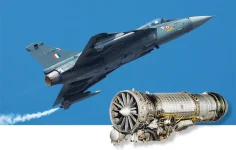
Software validation is not the only obstacle hindering the program.Global supply chain issues have heavily impacted the delivery of General Electric F404-IN20 engines, which power the Mk1A.
While HAL expected to receive 30 engines by late 2025, only five have been delivered to date.
Internal assessments at HAL now recognize that the combination of engine shortages, radar maturation delays, and missile integration challenges are creating a severe bottleneck.
Although the first production model successfully completed its maiden flight in February 2024—followed by a brief 18-minute sortie in March—the subsequent certification flights required for Final Operational Clearance (FOC) have been exceedingly slow.
Public Frustration and Mitigation Efforts
The IAF leadership has openly addressed these frustrations.During Aero India in February 2025, Air Chief Marshal A.P. Singh openly criticized the delays, pointing out that the Mk1A prototypes on display lacked complete integration and were not authentic representations of the final combat aircraft.
He reinforced this stance at the Confederation of Indian Industry’s Annual Business Summit in May 2025, highlighting the critical state of the IAF's squadron numbers and emphasizing the urgent need for HAL to reach a production capacity of 40 aircraft annually.
In response to the mounting pressure, HAL has taken steps to accelerate the program.
In July 2025, HAL Chairman D.K. Sunil acknowledged the delays but defended the firm's progress, noting that the company is actively rotating available engines between testing facilities in Bengaluru and Nashik to maximize flight trials.
To boost manufacturing capacity, Defence Minister Rajnath Singh inaugurated a third Tejas production line at the Nashik division in October 2025, marked by a water cannon salute for a maiden flight.
This new line is designed to produce eight aircraft per year, though formal induction into the IAF remains paused pending successful software and weapons trials.
Tejas Mk1A Program Timeline Breakdown
The shifting schedule of the Tejas Mk1A highlights the friction between ambitious indigenous manufacturing goals and the technical realities of aerospace engineering:Contract Signing:
- Planned: February 2021
- Status: Achieved successfully.
- Planned: Late 2023
- Status: Achieved in February/March 2024 (Delayed by initial integration tests).
- Planned: May/June 2024 (3–4 months post-first flight)
- Status: Slipped initially to March 2025 (Delayed by engine shortages).
- Planned: October 2025
- Status: Currently projected for March 2026 or later (Delayed by software validation and radar trials).
- Planned: 2024–2028
- Status: Extended to 2031 (Delayed by global supply chain issues and certification hurdles).
- Planned: 16–24 jets annually starting in 2025-2026
- Status: Targeting 11 jets by the end of 2026 (Restricted by engine inflow stabilization).