Recent satellite imagery from July 2026 reveals that the People's Liberation Army Air Force (PLAAF) has deployed at least a dozen of its premier Chengdu J-20 "Mighty Dragon" stealth fighters at the Hotan and Damxung airbases near the Indian border.
Recognised globally as a formidable fifth-generation combat aircraft, the J-20 is built for deep-strike missions and maintaining air dominance.
With its internal weapons carriage, radar-evading shape, and long operational reach, the jet marks a major advancement in China's military aviation.
Despite its advanced profile, the J-20 possesses inherent vulnerabilities. Military experts suggest that specific design elements and flight characteristics can be exploited by adversaries.
Because the Indian Air Force (IAF) does not currently operate a fifth-generation stealth fighter, New Delhi's counter-strategy does not rely on a stealth-versus-stealth dogfight.
Instead, India is building a comprehensive, network-centric defence model that integrates diverse sensors, extensive situational awareness, and a multi-layered air defence grid.
A major talking point among aviation experts is the J-20's forward canards—small wing-like structures near the nose. While these control surfaces give the heavy twin-engine jet excellent lift and agility, especially at high angles of attack, they come at a stealth cost.
Unlike the American F-22 Raptor, which avoids forward control surfaces entirely, the J-20's moving canards can significantly increase its radar cross-section. When these surfaces tilt and turn during flight, they create radar reflections that sophisticated tracking systems can easily pick up.
The aircraft's heat emissions also remain a subject of intense scrutiny. Earlier versions of the J-20 powered by WS-10 engines produced highly noticeable thermal signatures compared to Western stealth fighters.
While China has recently introduced the upgraded WS-15 engine to boost thrust and performance, there is no public evidence proving it features advanced infrared-masking exhaust nozzles. As a result, the jet's heat footprint remains a critical weakness against modern passive tracking technologies.
Beyond physical hardware, true fifth-generation dominance requires flawless sensor fusion—the ability to merge data from radar, electronic warfare systems, and optical sensors into one clear battlefield picture.
Although Chinese airborne electronics have rapidly improved, global defence monitors note that perfecting this software takes years of real-world testing and combat experience.
Because the PLAAF keeps its software architecture highly classified, the actual effectiveness and maturity of the J-20's sensor integration remain unverified.
To neutralise the J-20 threat, the IAF's approach revolves around exploiting the strengths of a broader air defence ecosystem rather than trusting a single fighter jet.
A key pillar of this strategy involves passive detection, particularly Infrared Search and Track (IRST) technology. Because IRST sensors scan for heat rather than radar waves, they completely bypass traditional radar-stealth shapes.
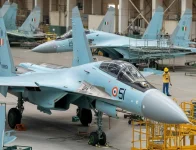
The IAF's frontline fighters, such as the Su-30MKI and the Dassault Rafale, are heavily equipped with highly capable IRST and electronic warfare suites that can identify the J-20's thermal footprint from a distance without revealing their own positions.
Additionally, the IAF is leaning on multi-frequency radar networks. While stealth planes are specially shaped to hide from high-frequency targeting radars, they are often visible to low-frequency VHF and UHF early-warning radars.
By linking long-range, low-frequency sensors with high-frequency fire-control radars, India's air defence network can spot stealth jets early and guide missiles to the target.
This layered tracking is further strengthened by India's deployment of the S-400 "Sudarshan Chakra" missile defence system, which possesses advanced radars specifically designed to track and engage low-observable targets at extreme ranges.
The realities of aerial combat further diminish the J-20's stealth advantage. In the midst of aggressive dogfights or evasive actions, the jet's canards, rudders, and elevons must constantly shift to keep the aircraft stable.
These sudden structural movements momentarily spike the jet's radar signature, offering a crucial window of opportunity for Indian radar networks and guided missile seekers to lock onto the aircraft.
The logistical demands of operating heavy fighters at high-altitude Himalayan bases also present strategic hurdles.
While the J-20 boasts a large internal fuel capacity for extended patrols, maintaining constant combat readiness over vast mountainous terrains burns significant fuel and demands heavy aerial refuelling and maintenance support.
India's integrated network of Airborne Early Warning and Control (AEW&C) aircraft, ground sensors, and upcoming High-Altitude Pseudo-Satellites (HAPS) forces the enemy to stay in the air longer. This constant surveillance drains PLAAF resources and heightens operational fatigue.
Ultimately, the era of relying on a single "wonder jet" to secure the skies is over. Future victories in aerial warfare will not be decided by one stealth fighter, but by how seamlessly a nation can weave its combat jets, early warning planes, passive sensors, electronic warfare tools, and ground-based missile defences into an unbreakable, unified operational network.