- Views: 2K
- Replies: 5
The Indian Air Force (IAF) is set to significantly bolster its aerial dominance with the introduction of the "Made in India" Rafale in the advanced F4 Plus configuration.
This specialized version represents a tailored evolution of the French multi-role fighter, integrating indigenous technology to meet India's specific security requirements and "Atmanirbhar Bharat" objectives.
A Tailored Evolution for Indian Skies
The F4 Plus variant builds upon the existing 3FR standards currently operated by the IAF.While the physical hardware of the RBE2-AA Active Electronically Scanned Array (AESA) radar remains a proven component, the "Plus" designation signifies a massive leap in internal software and data processing.
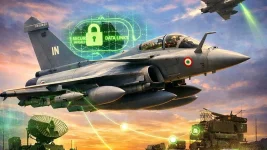
Unlike the standard French F4 baseline, the Indian version will incorporate indigenous secure data links.
These homegrown integrations allow the aircraft to communicate seamlessly with India’s existing network of ground-based radars, indigenous sensors, and national command-and-control infrastructures.
Collaborative Combat and Enhanced Lethality
A primary focus of the F4 Plus upgrade is "collaborative combat."New software enhancements allow a single Rafale to share its high-resolution radar picture with other aircraft in the formation via silent data links.
This enables a wingman to track and engage targets without activating their own radar, maintaining a low electromagnetic profile and increasing stealth.
Furthermore, the upgrade optimizes the performance of the Meteor beyond-visual-range air-to-air missile.
Faster and more reliable mid-course guidance updates ensure that the missile remains nearly impossible for adversaries to evade, even at extreme distances.
Resilience in Contested Environments
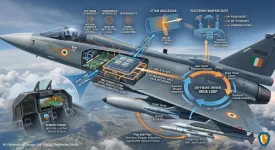
To counter modern electronic warfare (EW) threats, the F4 Plus introduces advanced algorithms designed to maintain radar locks despite heavy enemy jamming.The heart of this capability lies in the upgraded Modular Data Processing Unit (MDPU), which fuses radar data and EW information into a single, intuitive interface.
Technical Context
The integration of the SPECTRA (Self-Protection Equipment to Counter Threats for Rafale Aircraft) suite allows the jet to passively locate enemy surface-to-air missile sites.The RBE2-AA radar can then use a "low probability of intercept" (LPI) high-energy beam to confirm coordinates for a precision strike using HAMMER or SCALP missiles, all while SPECTRA actively jams the enemy's tracking systems.
Strategic Impact and Local Production
As India moves forward with the planned procurement of 114 Multi-Role Fighter Aircraft (MRFA), the F4 Plus configuration is expected to be the standard for locally manufactured units.Key features of this roadmap include:
- Fleet Uniformity: Existing Rafales in the IAF fleet are slated for retrofitting to ensure all squadrons possess the same high-tier capabilities.
- Information Dominance: Enhanced satellite links will allow for the collaborative sharing of electronic warfare data across the battlespace.
- Operational Continuity: For pilots, the transition from the current 3FR jets to the F4 Plus will be seamless, offering a familiar cockpit environment with significantly sharper combat tools.