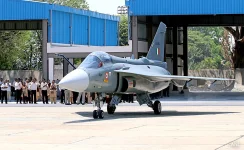
India’s most ambitious medium-weight fighter project, the Tejas Mk2, has reached a crucial manufacturing phase.
Hindustan Aeronautics Limited (HAL) has officially confirmed that the physical assembly of the aircraft's prototype is now in full swing.
With the forward and centre fuselage sections almost finished, the programme is successfully transitioning from the design phase to the actual building of the jet.
The first prototype is scheduled for a formal rollout around March 2027, which will be followed by extensive ground tests, systems checks, and taxi trials before it is ultimately cleared to take to the skies for its maiden flight.
While the physical construction marks a massive step forward, the journey to this point has been heavily influenced by a major government policy decision.
Halfway through the aircraft’s development, the Ministry of Defence mandated a strict new localization goal under the "Aatmanirbhar Bharat" initiative.
Originally designed to have about 65% domestically made components, the target was drastically raised to an 80% indigenous content requirement.
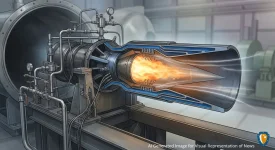
Open-source reports indicate this push for self-reliance will eventually see the jet's powerful GE F414 engines manufactured locally in India through an 80% technology transfer agreement, alongside the integration of the homegrown Uttam Active Electronically Scanned Array (AESA) radar.
Although this sudden shift in policy altered the original timeline, it was a necessary step for the country's long-term aerospace independence.
Parts and systems that were initially meant to be bought from foreign manufacturers had to be completely redesigned or sourced locally.
This massive effort fell upon Indian private companies and Micro, Small, and Medium Enterprises (MSMEs). For example, institutions like CSIR-NAL have recently stepped up to deliver advanced composite fuselage sections for the programme.
Engineers had to thoroughly test, qualify, and certify all these new domestic components to ensure they meet the strict safety and performance standards required for a frontline combat jet.
The extra engineering work and the time spent validating new local supply chains undoubtedly extended the prototype development phase.
However, defence strategists consider this a vital trade-off.
The Tejas Mk2 is designed to be the backbone of the Indian Air Force's fighter fleet throughout the 2030s and beyond.
By having absolute control over the production of critical subsystems, India is protecting itself from future international sanctions, foreign supply chain bottlenecks, and geopolitical pressures that have repeatedly plagued its military aviation projects in the past.
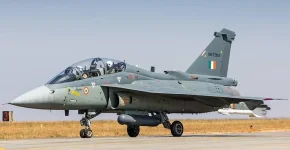
The Tejas Mk2 represents a massive technological leap over its predecessor, the lighter Tejas Mk1A.
It is a heavier, more capable platform built to fill the operational gap between light combat aircraft and heavier twin-engine fighters like the Rafale and the upcoming Advanced Medium Combat Aircraft (AMCA).
The new jet boasts a larger body, greater internal fuel capacity, a higher weapon payload, and cutting-edge electronics.
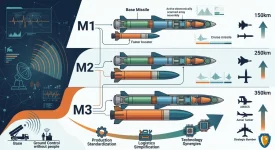
Furthermore, it will be heavily armed with advanced Indian-made weapons, including the Astra beyond-visual-range missiles and the Rudram anti-radiation missiles, making it a critical asset for modern, network-centric air warfare.
The current progress of the Tejas Mk2 assembly is a testament to the maturation of India’s aviation industry.
Moving away from a reliance on foreign integration assistance, the project is now supported by a wide network of domestic state-owned and private-sector manufacturers.
While pushing for 80% localization brings additional technical risks—since every new local part must be rigorously tested independently—Indian defence planners firmly believe that building a resilient domestic aerospace ecosystem is just as vital as building the fighter jet itself.